
Unifrost F410SS Upright Freezer in Hot Kitchens: Ventilation & Troubleshooting Guide
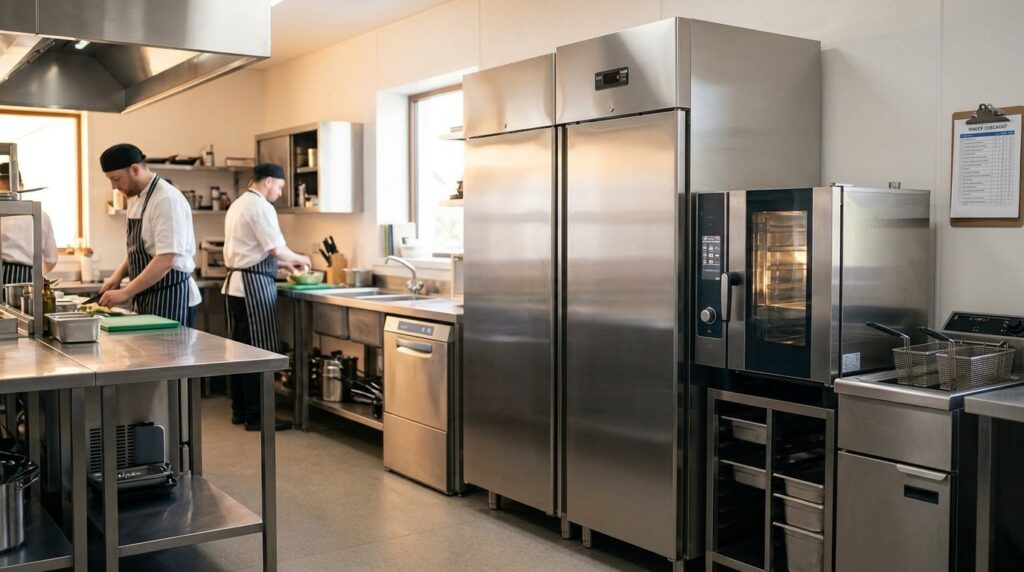
Optimize your Unifrost F410SS upright freezer in hot Irish kitchens. Learn about ventilation, GN layout, and troubleshooting.
Unifrost F410SS Upright Freezer in Hot Kitchens: Ventilation, GN Layout and Troubleshooting (Ireland)
If your Unifrost F410SS upright freezer sits in a very hot kitchen, small layout and loading choices can decide whether it holds temperature during service or throws alarms and racks up callouts. You need the unit to recover fast after door openings while staying practical for GN workflow and HACCP checks.
This guide walks you through the key operator decisions: where to position the F410SS relative to combi ovens, fryers and dishwashers, what clearance and ventilation to protect the condenser, and how to set up GN pans, trays and baskets so you do not block airflow. It also gives you a hot kitchen troubleshooting checklist for temperature swings, slow pull-down and high alarms, including the owner checks to run before you log an engineer or warranty call.
Understanding the Unifrost F410SS
The Unifrost F410SS is a single-door upright commercial freezer suited to Irish professional kitchens where you need quick access, organised storage, and steady day-to-day performance, rather than low-touch bulk “deep store” holding.
From a food safety point of view, your freezer setup needs to support your HACCP controls and the cold chain. In practice, most operators plan around holding frozen food at -18°C or colder, in line with FSAI HACCP guidance and your own documented procedures. See the FSAI overview here: <https://www.fsai.ie/business-advice/food-safety-management/haccp>.
An upright freezer is only as good as its siting and how it’s used. Put it beside heat, load it badly, or leave the door open during a rush, and you will feel it in temperature recovery and running costs.
What the F410SS is (and what it isn’t)
Think of the F410SS as a workhorse upright. It’s the type of freezer you position near prep or service so chefs can grab frozen proteins, chips, veg, desserts, or portioned items quickly, with decent stock visibility.
It’s not the best format if your main need is bulk storage with minimal door openings. A chest freezer or cold room arrangement often wins there. With an upright, the trade-off is simple:
Pros: Faster access, better organisation, easier stock rotation
Cons: More warm air ingress every time the door opens, so airflow and recovery time matter
Suitability for Irish kitchens (where it tends to earn its keep)
A single-door upright like this typically earns its keep in kitchens where speed and layout matter:
Hotel banqueting and function kitchens: Often used as a service-facing freezer with portioned stock in a consistent container format, so staff can replenish quickly without disrupting the line.
Restaurants and gastro pubs: Useful where floor space is tight and you want a dedicated upright for organised frozen storage close to prep or the pass.
Takeaways: Can work well, but location is critical. If it’s beside fryers, grills, hot holding, or a busy wash-up area, you are stacking the odds against stable temperatures.
What to confirm before specifying one for a hot, GN-led setup
If you’re putting an upright freezer into a warm kitchen and expecting it to hold temperature under pressure, treat installation and internal layout as part of the specification:
Placement: Avoid radiant heat and steam from combi ovens, grills, fryers, and dishwashers. Heat load drives longer compressor run time and can lead to temperature issues during busy periods.
Clearance and ventilation: Make sure it has the space it needs to breathe. Poor airflow around the cabinet is a common cause of performance complaints.
Storage format: Decide how you’ll store stock day to day (GN pans, trays, baskets, wire shelves). Overpacked or tightly stacked containers can block internal airflow and slow temperature recovery after door openings.
HACCP routine: Be realistic about service behaviour. If the door is held open while someone “has a look”, your controls need to cover that. Agree who checks temperatures, when, and how stock is labelled and rotated so the cabinet isn’t open longer than necessary.
Once you’re clear on how and where it will be used, you can judge whether an upright like the F410SS fits the workflow, or whether you need a different format. If you’re unsure, it’s worth getting advice based on your layout, service volume, and where the heat is in the kitchen.
Ventilation Needs for Hot Kitchen Environments
If you’re running an upright freezer like the Unifrost F410SS in a hot Irish kitchen, nuisance high alarms are usually about heat load and airflow, not “lack of cooling power”. Treat it like an operations and food safety issue first. If you cannot keep frozen stock reliably at safe temperatures, follow your HACCP process and use the FSAI’s temperature control guidance as your baseline for safe storage: <https://www.fsai.ie/business-advice/food-safety-training/temperature-control>.
1. Confirm the real ambient where the freezer actually sits
“Very hot” often means the freezer is:
in the exhaust path of a combi oven
beside a fryer bank or solid top
getting hit by potwash or dishwasher steam
Don’t guess. Take a few readings at air intake height during peak service and again after close. A unit that behaves at normal room temperatures can struggle when the cookline sits above 30°C for hours.
If it’s sitting in the hottest pocket, the most cost-effective fix is often moving it even a metre or two, away from radiant heat and steam plumes.
2. Give the unit consistent “breathing space”
In hot kitchens, problems often start with poor heat rejection. You want hot air to leave the unit, not recirculate in a dead pocket behind or above it.
Keep the rear and top area as open as the space allows.
Avoid boxing the cabinet into tight timber or stainless surrounds unless they’re properly ventilated.
If you must run tight, prioritise a clear vertical escape route above the unit and a clear path for cooler air to reach the condenser intake area.
When hot air is trapped, you’ll see longer run times and high alarms during busy periods with frequent door openings.
3. Reduce radiant heat and steam hitting the cabinet
Radiant heat can “cook” one side of an upright even if the room temperature looks acceptable. Steam is worse again because it brings heat and moisture into the condenser area, and helps grease stick to the fins.
Practical fixes in tight kitchens:
swap positions with a neutral piece of kit (a bench, shelving, dry store racking)
add a simple heat shield to break line-of-sight radiant heat
adjust extraction so the freezer is not sitting in the pull of a canopy that constantly drags hot air across it
if you’re near dishwash, use a small deflector or reposition to avoid the door-opening steam burst
4. Keep the condenser area clean enough to move air
Ventilation is not just clearance. A greasy condenser can behave like the unit has no ventilation at all because air cannot pass through the fins properly.
In hot cooklines, condenser care needs to be routine:
frequent light cleaning beats the occasional “big clean”, especially beside fryers and grills
if the intake grille area is hard to access or the freezer is boxed in, that’s a layout problem as much as a maintenance problem
5. Don’t block internal airflow with loading
Even with good external ventilation, you can trigger alarms if product blocks internal air paths:
GN trays stacked tight like a wall
overfilled baskets
product pushed hard against the back
Leave small gaps between pans and don’t use the back of the cabinet as a stop. If you’re loading warmer product (even recently chilled), spread it out. One dense warm mass will drive long run times right when kitchen ambient is peaking.
6. Do this owner check before logging a “not holding temp” call
If it struggles mainly during service but recovers overnight, start with heat load and usage pattern.
Work through this in order:
Is it in a hot air or steam stream (combi vent, fryer heat, dishwasher plume)?
Is there clear space for hot air to leave behind and above?
Is the front or lower intake area blocked by boxes, kickboards, packaging or dust?
Any obvious condenser choking (grease and dust build-up)?
Door seals intact, and is the door being held open during portioning?
Is loading blocking internal air paths (no solid walls of trays, nothing tight to the back)?
If alarms only happen at peak ambient and peak door-opening, that points back to placement, ventilation and workflow, rather than a sudden component failure.
Once ventilation and nearby heat sources are under control, your next lever is how you organise GN trays and baskets for faster recovery during service, especially in banqueting where doors open often and stock moves in bulk.
Efficient GN Pan and Basket Arrangement
If you’re using GN pans, trays, and baskets in an upright freezer like the Unifrost F410SS, the aim is simple: keep the air moving and keep the door shut. In a hot Irish kitchen, a layout that feels fine early in the day can start throwing alarms once service pressure and ambient heat ramp up.
Start by deciding what must be grabbed quickly during service, then set fixed “zones” so the door is open for seconds, not minutes. Load pans and baskets to keep clear vertical and rear air paths, and avoid tight stacking that insulates product and slows recovery. Once you settle on a layout, label it and stick to it so staff aren’t re-engineering shelves mid-service.
1. Zone the cabinet around service flow, not “whatever fits”
In hotels, carveries, and busy prep kitchens, workflow is usually the first thing that breaks. Put high-touch items (chips, veg, ice cream portions, pre-portioned proteins) between mid-shelf and eye level. That reduces rummaging, keeps door-open time down, and makes stock levels obvious at a glance.
Use the top and bottom for deep storage: bulk cartons, rarely used items, and back-up stock. It keeps service stock stable and reduces the temptation to pull out baskets or shuffle shelves during a rush.
2. Pick GN pans or baskets based on airflow and handling
GN containers are great for organisation, but solid-sided pans can block airflow if they’re packed tightly shelf after shelf. Baskets are usually more forgiving because air can move through and around them. Solid pans win for tidy grouping, portion control, and allergen separation.
A practical rule that works in most kitchens:
Use baskets for loose items, odd shapes, and anything staff grab repeatedly during service.
Use GN pans for portioned product, allergen separation, and prep that needs to stay together (banqueting mise en place, labelled portions).
Avoid building “solid blocks” of GN pans front-to-back across multiple shelves. In a warm kitchen, that’s when recovery times start to slip.
3. Leave deliberate air gaps so the cabinet can recover quickly
Upright freezers depend on forced air circulation. If product is pushed hard against the back or packed wall-to-wall, you’ll see slower pull-down, uneven temperatures across shelves, and nuisance alarms when the door is opened frequently.
Spacing habits that hold up under pressure:
Keep product off the back wall where you can, so air can circulate properly.
Don’t let GN pans overhang shelf edges and interrupt internal airflow.
If you’re mixing shelves and baskets, keep a clear “breathing lane” on each shelf instead of filling every last centimetre.
A useful test: if something is wedged in so tightly it takes two hands to remove, it’s probably too tight for good airflow as well.
4. Portion, label, and face items out to cut door-open time
The easiest win in a hot cookline is reducing search time. Portion into shallow packs, label clearly, and store labels facing outward so staff can grab without lifting, turning, and digging.
For HACCP routines, focus on maintaining frozen conditions during handling and limiting time with the door open, in line with FSAI guidance on safe food storage and temperature control: https://www.fsai.ie/business-advice/food-safety-and-hygiene/temperature-control. Even if the cabinet recovers, repeated long openings can lead to softening and re-freezing, which hurts quality and drives waste.
5. Stress-test the layout during a real busy spell, then change one thing at a time
Test the setup when the kitchen is genuinely under load: ovens on, extraction running, door openings frequent. If you notice slower recovery or more alarms, change one variable only so you can tell what helped (for example, swap one shelf of solid GN pans for baskets, or reduce the fill level on a problem shelf).
Once the internal layout is working, the next gains usually come from placement: whether the freezer has enough ventilation and isn’t being cooked beside the line. If you’re unsure, it’s worth getting advice based on your room layout and service pattern before you lock in a “this is how we do it” setup.
Troubleshooting Temperature Issues
Why does my Unifrost F410SS struggle to hold temperature or show high alarms during peak service in a very hot Irish kitchen, and what owner checks can I do before calling an engineer?
Start by separating a real product temperature breach from a short-term air temperature swing caused by frequent door openings. Then work through the usual hot-kitchen causes in order: heat load and door discipline, airflow inside the cabinet, ventilation around the unit, and basic condenser cleanliness. Finally, check for visible issues you can safely spot, like a damaged door seal or a door that is not closing cleanly. If food safety is at risk, move stock to a back-up freezer and follow your HACCP corrective actions.
1. Confirm it’s a product temperature issue (not just service pressure)
In a hot cookline, an upright freezer can show bigger swings during service because warm, humid air rushes in every time the door opens. A high alarm does not automatically mean your food has warmed through.
Check product temperature, not just the display. Use a clean probe thermometer between packs or in a sacrificial sample pack (avoid piercing outer packaging). Test a few points: top shelf, near the door, and the back of the cabinet. If product is still frozen solid, you are more likely seeing recovery swings from door openings and heat load.
If you suspect partial defrost, treat it as a food safety event and act quickly. The FSAI notes that food that is still frozen can remain frozen provided the freezer is still below -18°C, while fully defrosted high-risk foods should be discarded (FSAI guidance).
2. Reduce heat load and door openings during peak service
The quickest improvement is often operational. If the freezer sits beside grills, fryers, combi ovens, or a busy pass, it is taking repeated hits of warm air and then trying to recover under pressure.
For the next service:
Batch your picks: open once, take what you need, close.
Stop “door-open decision making”.
If you have banqueting on, pre-stage what you can in a colder store freezer away from the line, and use the cookline freezer for short-burst access.
Also check whether you are loading it with warm product. Upright freezers are for frozen storage, not rapid pull-down. Putting warm trays or recently cooked product straight in will trigger alarms, slow recovery, and create local thaw zones around that load.
3. Clear internal airflow problems (GN pans, baskets, over-stacking)
Poor airflow is one of the most common owner-caused reasons a freezer looks faulty in a hot kitchen. If GN pans, trays, or baskets are packed tight to the back, or product is stacked above shelf height, you can restrict circulation and get warm spots near the door.
What to do:
Leave space for air to move and avoid building “solid walls” of boxed product.
Keep dense, slow-to-cool product lower where it is less exposed to door-opening heat.
With GN containers, leave small gaps between pans and avoid oversized trays that bridge across shelves and block circulation.
If it’s crammed to the ceiling for a push, expect slower recovery. A slightly emptier cabinet that can circulate air properly will usually hold safer temperatures than an overfilled one that cannot.
4. Run the owner checks that fix most nuisance alarms
Before you assume a breakdown, go through these checks in order. They account for a lot of high-alarm call-outs in Irish kitchens during warm spells and busy weekends.
Make sure the door closes square and is not being held open by a tray lip, protruding box, or warped basket.
Inspect the door gasket for splits, hardened sections, or greasy build-up that stops it sealing, then clean with mild detergent and warm water.
Look for excessive ice build-up that could be restricting airflow, especially after lots of humid door openings.
Confirm shelves, baskets, and GN pans are not blocking internal vents or pushed tight to the back.
Check the unit is not boxed in by racking or pushed against hot equipment so it cannot reject heat.
If there has been a power interruption or the plug has been knocked, allow time to stabilise before judging performance.
Correct what you find, then watch the freezer over a proper period (a full cycle, not five minutes) before deciding it needs an engineer.
5. Check condenser and intake areas safely (grease and lint hurt performance)
Near fryers, grills, or dishwashers, grease and lint build up quickly. That coating reduces heat rejection, so the freezer runs longer, runs hotter, and takes longer to recover after door openings.
Do only what is safe and allowed on your site: isolate power, then remove accessible dust from vents and intake areas without forcing or bending anything. If you cannot reach it properly, do not improvise with brushes or tools. Put condenser cleaning on a planned maintenance schedule. “Just get through service” often ends in a weekend alarm and an emergency call-out.
6. Capture the right information before you log a service call
If loading, airflow, and basic cleanliness are not the issue and the unit still cannot pull down, collect the details your engineer will ask for.
Note:
When alarms occur (time of day, peak service vs quiet periods).
Whether anything changed recently (moved closer to hot kit, boxed into a corner, new racking).
Display temperature vs your probe reading of product.
Approximate ambient conditions around the freezer.
Any unusual sounds, repeated defrost behaviour, or consistent icing patterns.
This helps distinguish installation and operating conditions from true faults (fans, probes, control issues, or refrigeration components), and it speeds up diagnosis and parts decisions.
Daily and Weekly Maintenance Routines
In a hot Irish cookline, most “temperature issues” are made worse by simple hygiene and airflow problems. The good news is the best maintenance is usually a repeatable routine you can stick to during service. The FSAI guidance on prerequisite programmes (including cleaning and maintenance) in catering HACCP systems supports this approach: consistent cleaning and planned upkeep are controls, not optional extras.
What changes in a +30°C kitchen is frequency. Dust loads, grease film and door openings all increase, so tasks that might be monthly in a cooler prep room often need doing weekly, and some checks need to happen daily beside cooking equipment.
Day-to-day routine for an F410SS on a hot line
On a hot line, the F410SS spends a lot of time recovering from door openings. Your job is to remove the common blockers: poor door sealing, obstructed internal airflow, and a condenser that cannot get rid of heat because it is coated in grease and dust.
A routine that generally holds up in busy Irish hotel kitchens, prep areas and passes:
Daily (end of shift): wipe the door gasket and the mating surface so it seals properly, check the door closes cleanly (no “bounce”), remove packaging scraps, and make sure GN pans, trays or baskets are not blocking internal vents.
Daily (during service, if alarms start): stop working with the door open, pull product back behind the door line, and avoid stacking GN pans hard against the back where cold air needs to circulate.
Weekly: wash external surfaces properly (grease attracts dust), check hinges and handles for looseness, and look for gaps around the unit where hot air can be drawn back in.
Weekly in hot, greasy sites (fortnightly elsewhere): isolate the power safely and clean the condenser area and air intakes with a soft brush and vacuum so the system can reject heat again.
Condenser care in a greasy kitchen: what “clean” actually means
If the unit is near a fryer line, chargrill, combi-oven door or a dishwasher venting steam, you tend to get a stubborn mix of fluff and grease. That coating acts like insulation on the condenser. The freezer then runs longer to dump the same heat, and it shows up as poor pull-down or nuisance alarms right when you are busiest.
Two practical points:
Brush and vacuum. Brushing alone just shifts dirt and it often gets pulled straight back onto the coil.
Go easy on the fins. Avoid aggressive degreasers and heavy pressure unless an engineer has advised it. Bent fins restrict airflow and turn a clean-up job into an ongoing performance issue.
Door seals and door discipline: both affect performance
On an upright freezer in a warm kitchen, a slightly dirty gasket can be the difference between stable temperatures and repeated high alarms. Treat the seal like a food-adjacent surface: keep it clean, keep it intact, and replace it if it has gone hard, split, or no longer grips evenly.
If you are seeing ice building up around the door opening, it is usually warm, moist air getting pulled in repeatedly. Common causes on Irish sites include resting a GN tray on the door edge, propping the door while portioning, or placing the unit where staff regularly brush past and nudge it open.
Simple owner checks when performance drops during a hot service
Before you log a call, check the basics you can control quickly:
Is the condenser area visibly dusty or greasy?
Are internal air paths blocked by GN pans, trays or baskets pushed tight to the back?
Is the door actually closing fully every time during a busy service?
If the freezer “catches up” after service when the kitchen cools and door openings stop, that usually points to heat load, ventilation or loading habits rather than a sudden component failure.
If you have addressed the points above and it still struggles in normal use, placement and breathing space around the cabinet become the key variables, especially beside hot equipment in tight Irish back-of-house layouts.
Connecting with Unifrost Support Ecosystem
The right response depends on whether your F410SS has an actual fault, or whether it is struggling with heat load, poor loading, or restricted airflow. Either way, you still need to keep freezer temperatures under control as part of your HACCP-based food safety management, including monitoring and corrective action, as set out in the FSAI guidance on temperature control. In practice, good support is not just “call an engineer”. It is working through the right checks, in the right order, so you protect stock and avoid the same issue coming back during a busy service.
What Unifrost support is meant to do for F410SS owners
Think of support as three practical layers:
How to run the cabinet day to day: loading, door discipline, and airflow inside the compartment.
Safe checks you can do on-site: quick observations that rule out avoidable causes.
Escalation when it points to a control or refrigeration issue: the point where an engineer visit is justified.
In a hot kitchen, the biggest win is usually separating environment and airflow problems (positioning, blocked condenser area, door use, GN layout restricting circulation) from a true refrigeration fault. If every temperature alarm is treated as a breakdown, you can end up paying for call-outs while the root cause stays put.
Using Unifrost.ie content properly (and avoiding the common trap)
Unifrost.ie guides are there to help you make decisions that affect trading, not just silence an alarm. That includes when it is commercially sensible to repair versus replace, how changes to GN layout affect recovery time, and why controller settings can cause issues if they are adjusted without understanding the knock-on effect.
A common trap in hot kitchens is assuming the freezer is “undersized” when the real problem is that it is trying to reject heat in a space that peaks hard around service. Your approach should reflect that sequence:
confirm the environment and usage first
then review settings and day-to-day operation
then investigate likely faults
What to have ready before you log a support or warranty call
If you can give an engineer or support desk clear, basic observations, you shorten downtime and reduce the chance of a visit ending with “improve ventilation and loading”. For the F410SS, you are usually trying to evidence three things: the kitchen conditions, the cabinet’s ability to reject heat, and whether internal airflow is being blocked by pans, trays, or baskets.
Have the following to hand:
Ambient temperature at the freezer position, especially at peak service, and what heat sources are beside or above it
Clearances around the unit (rear, sides, overhead) and whether anything has changed recently
How it is loaded: GN pans/trays/baskets used, whether vents are being covered, and whether product is being loaded warm
Door-use pattern during service, including whether the door is being held open during picking
What the controller is showing: temperature reading, alarm type (if displayed), and whether any settings were recently changed
Safe condition checks: door gasket seating, obvious dust build-up on accessible intake areas, and whether the cabinet is level and self-closing as expected
When Unifrost guidance should escalate to ventilation and layout changes
Heat-related performance problems often present like a failure: temperature drift, slow pull-down, frequent alarms, and long run times. If your checks keep pointing back to ambient heat and restricted airflow, the best outcome is often a practical layout or ventilation fix, not repeated resets or swapping parts.
That is why this guide steers you into the ventilation conversation. Once you know what information support needs, and which owner checks are worth doing, you can make changes that stop the same problem returning every time the kitchen hits full temperature.
FAQs for running an F410SS upright freezer in a hot Irish kitchen
Why choose an upright commercial freezer like the Unifrost F410SS over a chest freezer for an Irish commercial kitchen?
An upright like the F410SS is usually the better fit when speed, organisation, and HACCP control matter more than pure bulk storage.
Faster service access: shelves and GN-compatible storage let you grab by section without unloading the top layer.
Better stock rotation: you can zone by allergen, day dot, or menu section and keep FIFO visible at a glance.
Cleaner workflow in tight kitchens: the door swing footprint is often easier to plan than the “lid-up plus reach-in” working space a chest freezer needs.
Less time with the freezer open: quicker picks mean less warm air ingress, which matters in Irish kitchens that regularly hit peak ambient temps during service.
A chest freezer can still win for back-of-house bulk holding where it’s opened less frequently, but for banqueting, prep, and cookline support, an upright typically reduces handling time and temperature recovery stress.
How should GN pans be arranged in upright freezers like the Unifrost F410SS for optimal airflow?
Treat airflow like a “vertical loop” that must not be choked by trays.
Leave a small air gap behind and at the sides of GN pans and boxes. Avoid pushing containers hard against the back wall.
Don’t bridge shelves with foil, cardboard, or flat trays that form a solid “lid” across a level. If you must use sheet pans, keep them on a shelf position that still leaves clear side gaps.
Avoid overfilling a single level front-to-back. Aim for a clear path for air to move around each container rather than packing like a chest freezer.
Keep the cold air paths clear at the top and bottom zones. In busy banqueting kitchens, it often helps to dedicate one “rapid access” shelf for high-turn items so the rest stays tightly packed but not blocked.
If you’re seeing slower pull-down or frequent high alarms, the quickest fix is usually to remove one full shelf’s worth of product, re-space GN pans, and check whether recovery improves within the next service period.
What are common causes of temperature issues in the F410SS freezers located in hot kitchens?
In very hot kitchens, many “freezer faults” are actually heat load plus airflow problems. Common causes include:
Insufficient ventilation around the cabinet: hot condenser air cannot escape, so performance drops and alarms appear during peak service.
Heat sources nearby: combi ovens, fryers, grills, pass lamps, or dishwashers radiate heat and add steam, increasing frost and recovery time.
Condenser blocked with grease and dust: in cooklines, condensers clog faster and a partially blocked condenser can mimic a failing refrigeration system.
Door discipline issues: frequent openings, doors not fully closing, or worn/dirty gaskets letting warm air leak in.
Loading hot or uncovered product: placing warm trays straight in, or storing uncovered items that add moisture and speed up ice build-up.
Airflow blocked internally: GN pans, boxes, or bags pressed tight to the back or stacked solidly can prevent circulation.
Owner checks before calling an engineer: confirm the door is sealing, clear space around the unit, clean the condenser area if accessible, reduce product load temporarily, and log the times alarms occur (often they correlate directly with the hottest service window).
Next step: compare freezer options built for busy kitchens
If you’re weighing up an upright versus alternatives for a hot cookline, it helps to compare designs and ventilation layouts side by side.
Browse Caterboss’s Frozen Storage category to see uprights, chest freezers, and other frozen storage options commonly used in Irish commercial kitchens, then shortlist the formats that best match your service pressure and available airflow space.
Related Unifrost guides
Compare models, maintenance advice and support information related to this topic.
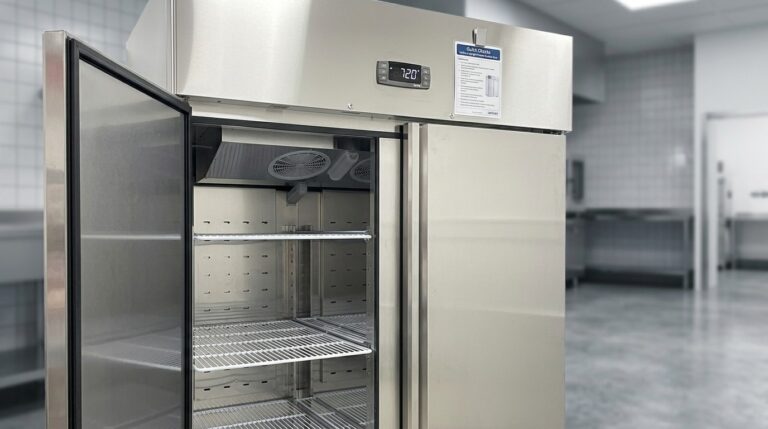
Unifrost Upright Freezer Temperature Controller: New Owner Quick Checks Guide
Essential quick checks for new Unifrost upright freezer owners in Ireland to ensure optimal temperature control.
Read guide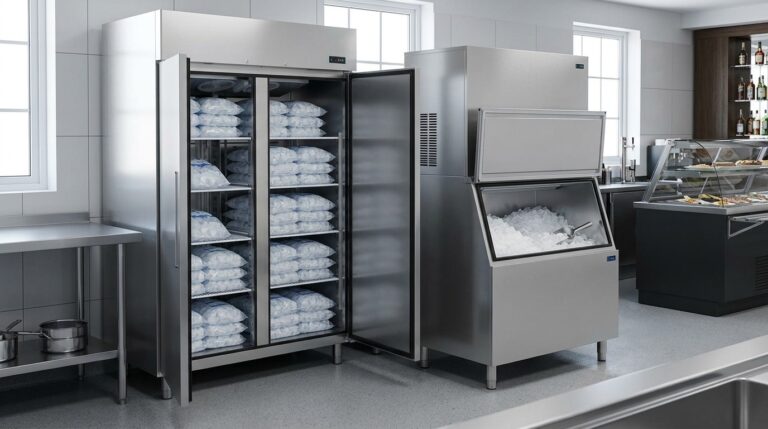
Unifrost Upright Freezer vs. Ice Storage Bin: Essential Guide for Irish Kitchens
Compare Unifrost upright freezers with ice storage bins for effective ice management in Irish commercial kitchens.
Read guideCompare Unifrost freezer options on Caterboss
For current product options, pricing and availability, continue to Caterboss.