
Unifrost Upright Freezer Maintenance Checklist
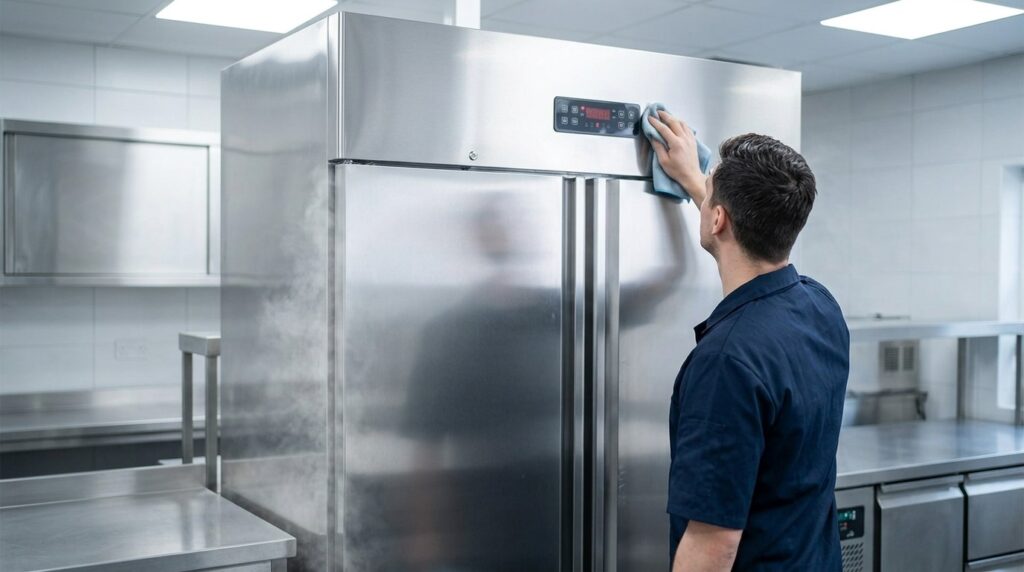
Essential maintenance tips for Unifrost upright freezers to ensure longevity and efficient operation in Irish commercial kitchens.
Unifrost Upright Freezer Maintenance Checklist for Commercial Kitchens
If you run a busy kitchen, a Unifrost upright freezer maintenance checklist helps you protect stock, control running costs, and avoid avoidable callouts and downtime. Routine checks also support HACCP and make it easier to show consistent control during EHO and food safety audits.
This guide keeps maintenance guidance model safe and practical across the Unifrost upright freezer range, including units such as F1000SV, F1300SV, F1310SV, F410SS and F620SV, plus OG variants. You will work through:
What to check weekly, monthly, and quarterly, including door seals, airflow, condenser and vent hygiene, drainage areas, and safe cleaning around controls
When to clean versus when to manually defrost, and how to avoid the common mistakes that drive ice build up, poor temperature control, and higher energy use
The tradeoffs between deep cleans during service downtime versus shorter scheduled tasks that fit real shift patterns
The warning signs that point to a service call rather than routine maintenance, so you do not risk food safety or equipment damage
How to document checks in a simple way that stands up in audits and supports internal maintenance planning
Why Upright Freezer Maintenance Matters
Upright freezers are workhorses in Irish kitchens. When they’re dirty, iced-up, or not sealing properly, they have to run longer to hold temperature. That shows up as higher electricity costs and a bigger risk of stock loss during a busy service.
Maintenance also supports your food safety system. Cleaning, equipment condition, and temperature control sit within the prerequisite programmes that underpin HACCP, as outlined in the Food Safety Authority of Ireland guidance on prerequisite programmes and cold chain maintenance/Prerequisite-Programmes).
Even with good upkeep, any upright can struggle if it’s overloaded, squeezed into a tight gap with poor ventilation, or opened constantly at peak times. Your checks need to reflect how the freezer is actually used, not an idealised routine.
How maintenance protects performance in real service conditions
In many commercial kitchens, an upright freezer does two jobs: longer-term storage and constant access for prep and service. That’s where small issues become big problems quickly.
A torn or dirty door gasket lets warm, damp air in, which drives ice build-up and slows recovery.
Ice around the door edge often points to sealing or usage issues, not just “needing a defrost”.
Over-packed shelves and blocked vents reduce airflow, so product temperatures recover more slowly after every door opening.
The practical aim is simple: keep heat out, keep airflow moving, and catch wear early, before it turns into a failure when you’re under pressure.
How poor maintenance hits running costs and lifespan
A freezer is moving heat from inside the cabinet to the room. If the condenser area is clogged with dust and grease, or warm air is leaking past worn seals, the compressor and fans run longer to do the same job.
In day-to-day terms, that typically means:
higher energy spend,
more heat dumped into the kitchen,
more run-hours on components that are costly to replace.
Most commercial freezers don’t fail because they reach a certain age. They fail because they’ve been made to work harder than necessary for months on end. A basic routine focused on seals, cleanliness, airflow and clearances reduces that slow, expensive wear.
Why maintenance also makes audits and handovers easier
Maintenance is as much a management task as an engineering one. If you can show consistent cleaning and check records, it’s easier to demonstrate control during an inspection and easier to hand a site over between managers or chefs without nasty surprises.
A written routine also stops “it looks fine” decisions. On a busy shift, a freezer can look OK from the front while the gasket is leaking or the base is collecting debris. A simple, time-based checklist that staff can complete and sign off is what makes the difference, which leads directly into the weekly, monthly, and quarterly checks.
The Core Maintenance Checklist
A good maintenance routine for Unifrost upright freezers is simple: protect stock, keep the cabinet hygienic, and catch small failures before they show up as temperature drift or a breakdown mid-service. Use weekly cleaning to prevent smells, spills and ice becoming “normal”. Use monthly checks to keep doors sealing and drainage areas clean. Use quarterly checks to protect airflow and running costs. Then log it in a way that stands up to a HACCP review and helps you spot repeat issues early.
1. Plan the clean so you protect stock and work safely
Pick a quieter window and have one person own the job end-to-end. In a busy kitchen, a half-finished clean usually means moisture refreezing, torn packaging and doors left open longer than planned.
If it is more than a quick wipe, treat it like a short maintenance stop:
Move food into another freezer (or insulated boxes), keep it labelled, and keep it off the floor.
Keep door-open time tight while unloading and reloading.
If you need to switch off for defrosting or a deeper clean, empty the cabinet and let ice melt naturally. Do not use sharp tools to chip ice, as you can damage the liner and refrigerant circuit.
If you need access behind or underneath the unit, plan the move properly. Larger uprights are awkward and heavy, and “just giving it a shove” is how floors, feet and backs get damaged. The HSE guidance on hazardous manual handling is a useful reference point for workplace risk here: https://healthservice.hse.ie/staff/health-and-safety/manual-handling-in-healthcare/.
2. Weekly: hygiene clean to prevent odours, ice build-up and cross-contamination
Weekly work removes what service creates: crumbs, packaging fragments, drips and the thin film that holds odours.
Use a food-safe, non-abrasive detergent.
Clean top-down: door frame, interior walls, shelves or racking, then the cabinet floor.
Keep water away from controls and electrics. Do not spray directly at panels.
Dry thoroughly before loading again. Any moisture left behind turns to ice and makes doors, drawers and baskets harder to use during service.
If a spill has run into the edge of the door seal, avoid peeling the gasket back unless you are trained and know how it is fixed. Use a damp cloth and a soft brush on the exposed edge, then dry well and keep an eye on that spot for returning odour.
For strong-smelling items, focus on containment rather than “masking” smells. Seal, bag and box them, and avoid loose open packaging in the airflow path. If odours keep returning after a proper clean, assume there is a hidden spill, damaged packaging, or a recurring freeze-thaw moisture issue.
3. Monthly: check what quietly drives performance (door seals, closing and drainage areas)
Monthly checks are about the slow failures that only become obvious when you are flat out: doors not closing, ice around the frame, and sluggish temperature recovery.
Inspect the door gasket all the way around for splits, hardening, and sections pulling away.
Clean seals with warm water and mild detergent, then dry. Grease and debris stop a seal seating properly and can make the door feel “sticky”.
If the door is suddenly harder to open after cleaning or defrosting, check for residual moisture refreezing around the frame.
Avoid overloading in a way that twists shelves or interferes with the door closing cleanly.
If there is a drainage sump or collection area (depending on the design), keep it clean and treat debris as a contamination risk. Remove solids carefully, clean with detergent, rinse with minimal water, and dry. If it keeps filling with fragments, you usually have a handling issue: packaging breaking, stock being forced in, or poor rotation.
4. Quarterly: airflow, condenser cleanliness and positioning (to keep running costs predictable)
Quarterly checks protect the freezer’s ability to reject heat. When airflow is restricted, the system runs longer, temperatures are less stable under load, and energy use and breakdown risk rise.
Quarterly routine:
Confirm the unit is level and the door self-closes properly. Fix any wobble at the feet or address uneven floor contact.
Make sure ventilation gaps are not blocked by boxes, walls or shelving. Also check that nobody is storing dry goods against the intake or exhaust areas.
Vacuum or brush external air intakes and any accessible condenser areas to remove dust and grease. Take care not to bend fins or disturb wiring.
Listen for unusual fan noise, vibrating panels, or repeat ice patterns. These often point to airflow or loading issues rather than “it just needs another clean”.
On stainless exterior variants, keep it presentable but workable: non-abrasive cloths, no scouring pads, and be mindful that harsh chemicals can mark finishes over time.
5. Record it for HACCP and know when to stop cleaning and call for service
A checklist only earns its keep if it is done consistently and recorded simply. The FSAI is clear on having a cleaning schedule and cleaning records to show what was cleaned and when: https://www.fsai.ie/Business-Advice/Running-a-Food-Business/Butchers/Safe-Food-Handling.
Keep one page per unit with:
Date
Task (weekly, monthly, quarterly)
Initials
Issues found
Corrective action (even if it is “moved stock to stop blocking airflow”)
Stop and book a service call rather than repeating deeper cleans if you see persistent temperature alarms, slow pull-down after loading, unusually fast ice build-up, doors that will not stay aligned, or recurring water or odour problems from the same area. At that point you are no longer maintaining the unit, you are working around a fault, and that is when downtime gets expensive.
Common Maintenance Mistakes
Treating an upright freezer as “set and forget” usually shows up the same way: heavier icing, seals that stop closing cleanly, and slower pull-down after the door’s been opened. You often only notice the cost later, in higher running hours and stock losses when temperatures drift.
Food safety guidance in Ireland is clear that freezers should be held at -18°C or colder, and that units need routine cleaning and defrosting. If upkeep slips, it becomes a HACCP risk as well as an operating cost (Food Safety Authority of Ireland).
Skipping condenser and ventilation checks (the “it still feels cold” trap)
If the condenser intake chokes up with flour dust, cardboard fibres, fryer grease mist, or general kitchen lint, airflow drops. The freezer then runs longer to hold temperature, pushing up energy use and wear on components.
This is one of the easiest problems to prevent. Build “check the air path and keep space around the unit clear” into routine cleaning, especially if the freezer sits beside cooking equipment, in a tight store, or hard up against a wall.
Using the wrong cleaning chemicals inside the cabinet
Strong-smelling sprays can taint unwrapped foods and porous packaging. FSAI advice is to use mild cleaning agents for cold storage areas and avoid heavily perfumed products, because tainting is a real risk in practice (see the FSAI guidance).
Another common cause of avoidable call-outs is spraying liquid directly onto control panels, displays, probes, or fan housings. Moisture ends up where it shouldn’t, leading to nuisance alarms, unstable readings, or a “no fault found” visit that still costs you time.
Damaging door gaskets during cleaning (or leaving them dirty)
Seals get damaged by aggressive scrubbing, abrasive pads, or catching the gasket lip while removing shelves. Even a small leak pulls warm, moist air into the cabinet, which drives icing around the door and makes the unit work harder.
If staff report the door is “sticking” after a clean or defrost, it’s often a gasket that isn’t seated properly, or the door being shut before surfaces are fully dry and back to temperature.
Letting spills and debris build up in hidden areas
Spills that creep under sealing strips, or scraps that collect in rear channels and low points, tend to become a smell problem first and a hygiene problem second. Cold slows microbial growth, but it doesn’t remove contamination risk, and odours can migrate into open cartons and packaging.
If a freezer “smells” even though shelves look clean, this is usually why. A proper clean needs attention to edges and hidden corners, not just the visible cabinet.
Overloading, blocking internal air paths, or loading warm product during a rush
Packing product tight against internal vents, stacking to the ceiling, or loading warm stock after delivery restricts airflow and slows temperature recovery after door openings. In cafés, takeaways, pubs, and other high-traffic service, the freezer can spend hours chasing set temperature. That increases energy use and raises the risk you drift outside your own HACCP limits between checks.
It’s also worth reinforcing the basics with staff: Ireland’s guidance is -18°C or colder, so “mostly frozen” isn’t an acceptable standard (as stated in the FSAI freezer temperature guidance).
Not documenting routine checks (until an EHO asks)
If you only react when something fails, you lose the paper trail that shows you were monitoring temperature control and acting on issues. That can turn a straightforward query into a wider conversation about verification, corrective actions, and whether checks are actually meaningful.
A simple written routine also helps you spot trends early, like icing getting worse week on week, or doors being left ajar on a late shift. That’s what you want to catch before you pay for a service call.
These mistakes are common because they’re easy to miss in a busy week. A basic schedule that matches real service pressure does more for reliability than good intentions.
Implementing Maintenance in Daily Operations
Integrate upright freezer maintenance by making it part of the shift routine, not an extra job. Assign clear ownership, tie short checks to opening and close-down, and plan deeper cleans for quiet trading windows. Keep the approach consistent across your Unifrost upright freezer fleet by using one log sheet, the same cleaning products, and clear escalation rules.
Record what was done and what you found so you can show control at audit and spot repeat issues early, in line with the documentation approach expected under FSAI guidance on HACCP-based food safety management procedures. The key rule is straightforward: if the freezer is struggling to hold temperature or the door is not sealing properly, it is no longer “cleaning”. It is an operating risk and needs attention.
1. Assign a single owner and make the standard easy to follow
Choose one role per shift to own the checks, for example the opener in a café, the kitchen porter in a hotel kitchen, or the closing supervisor in a busy takeaway. They do not have to complete every task themselves, but they are responsible for making sure it happens and is logged.
Make the standard visible where the work happens: a laminated one-pager near the unit, plus a log sheet stored with your temperature records. If you have multiple uprights, label each unit clearly so staff can record the correct unit without guesswork.
2. Attach micro-checks to opening and closing
Maintenance only sticks when it is built into routines you already protect, like temperature checks, date rotation, and close-down. Keep checks short enough to survive real service patterns.
Opening: check for ice at door edges, confirm the door closes cleanly, make sure vents are not blocked, and note any unusual noise or alarm.
During service: wipe spills before they freeze, keep strong-smelling items sealed, and avoid holding the door open while portioning.
Closing: wipe interior touch points, check the gasket line for debris, confirm stock is not blocking airflow, and log anything the next shift needs to know.
This keeps hygiene and performance under control without relying on the mythical “big clean” that never happens.
3. Plan deeper cleans into low-risk windows and protect stock
Schedule deeper cleaning when you can control product temperature properly, typically after a delivery day when stock is lower, or in a quieter midweek window for pubs and restaurants. In high-volume sites, plan where stock will go before you start, whether that is another freezer or insulated boxes for short periods. Standing with the door open while deciding is where temperature drift begins.
If you need to switch off for cleaning or defrosting, treat it like a controlled task: pre-chill the alternative storage, move product quickly, and keep doors shut. Repeated warm-ups lead to more moisture, more ice, and more problems later.
4. Standardise the awkward bits: seals, under-door spills, and rear hygiene
Door gaskets fail faster when they are scrubbed aggressively or left with dried-on residue. Train staff to clean them gently and regularly rather than doing a heavy scrub once a month.
If spillage has run under a sealing strip, deal with it the same shift. Lift only what you can without forcing it, wipe with a damp cloth and mild detergent solution, then dry fully so moisture is not left to freeze and distort the seal.
If food debris collects around a rear drainage area, treat it as both hygiene and performance. Do not work near fans or electrics with wet tools. Remove loose debris carefully, use minimal water, and dry. If access requires panel removal, log it and schedule service rather than turning routine cleaning into damage.
5. Keep a record that works in an audit and triggers service early
Keep records simple: date, unit ID, task, initials, and a short note on what was found and what action was taken. The point is not paperwork. It is proving control and spotting patterns, like recurring ice in the same corner (often a seal or usage issue) or slow temperature recovery after peak service (often loading, airflow, or ventilation).
Set clear “stop and call” triggers so staff do not waste time repeatedly cleaning around a fault:
ice returning quickly after defrosting
visible gasket splits or distortion
door not closing cleanly
unusual vibration or fan noise
any ongoing temperature concern
Once those triggers are agreed, the daily routine becomes more reliable, and maintenance stops competing with service.
Connecting Maintenance to the Unifrost Support Ecosystem
Upright freezer maintenance should sit inside your HACCP routine, not as an occasional “give it a clean”. You need simple records and clear corrective actions to show control when temperatures, alarms or performance go out of spec. The FSAI is clear that HACCP involves keeping documentation and records, and it uses refrigeration faults as a practical example where corrective action and repair should follow the manufacturer’s instructions (FSAI Principles of HACCP/Principles-of-HACCP)).
The takeaway: your checklist should do more than list cleaning tasks. It should help staff identify the exact unit, follow the right instructions, and know when to stop and escalate.
Keep your checklist tied to the right model and support information
In a busy Irish kitchen, most freezer issues start with routine jobs done slightly wrong under time pressure. The fix is boring but effective: make it easy for staff to match the cabinet in front of them to the correct model and asset record, especially if you have several Unifrost uprights on site.
Build this into the top of every check sheet (paper or digital):
Model and serial number
Location (kitchen, prep, back store, bar, etc.)
Date and name/signature of the person completing the check
When you need to confirm a procedure (what can be removed, what should not be forced, what needs clearance for airflow), using the correct documentation avoids the “close enough” approach that ends in damaged door gaskets, shelves refitted incorrectly, or airflow blocked by liners and packaging.
What to escalate to support instead of repeating routine cleaning
Cleaning protects hygiene and airflow. It does not solve a repeating performance problem.
If the same symptom comes back after you have done the basics, treat it as a support issue rather than spending more labour and risking stock. Escalate when you see recurring issues such as:
Slow pull-down or poor recovery after normal door openings
Ice build-up that interferes with door closing or storage space
Doors that become hard to open, don’t reseal cleanly, or show obvious gasket problems
Alarms, error codes or unusual noises appearing after cleaning or defrosting
Water, debris or odours collecting where they should not
Your goal is a documented fault report, not “we cleaned it again”. Dates, symptoms and what you observed help speed up diagnosis and reduce downtime.
Documenting maintenance for EHO and internal food safety audits
For audits, you are trying to show control, not win prizes for paperwork. Keep the log consistent and usable across shifts:
What was checked (temperature, door seal condition, airflow clearances, alarms)
What was cleaned (and what products were used)
What was found (even if it’s “no issues”)
What corrective action was taken if something was off
If a fault could affect food safety, record what happened to the food as well, for example stock moved to another unit, stock checked, or disposed of in line with your HACCP plan.
When your records reference the specific unit and the steps you followed, you can show that corrective action was based on the proper procedure, not improvisation.
Consumables and finishes, especially on stainless OG variants
Stainless is practical on the floor, but it shows shortcuts quickly. For stainless OG variants in particular, avoid abrasive pads and harsh, lingering chemicals that can leave residues around seals, handles and door edges.
If you want consistency across shifts, standardise what “approved” means on your site:
One degreaser
One food-safe sanitiser
A non-scratch cloth system
Clear do’s and don’ts for cleaning around controls and electrics
With that agreed and written into the checklist, you can focus on the weekly, monthly and quarterly checks that keep upright freezers reliable under real service pressure.
Unifrost Upright Freezer Maintenance FAQs
How often should I clean and defrost an upright freezer?
For busy commercial kitchens, wipe spills and check seals daily, do a full internal clean weekly, and do a deeper clean of hard-to-reach areas monthly.
Defrosting depends on the type of unit:
Frost-free units: you generally will not need manual defrosting, but you should still clean and inspect regularly.
Manual-defrost units: plan a defrost whenever ice build-up starts to interfere with door closing, airflow, or storage space. As a rule of thumb, don’t let ice build up to more than a few millimetres.
Always follow the specific instructions in your model’s manual if you have it.
What is the correct way to clean the inside of an upright freezer safely?
Move food to backup frozen storage (or insulated boxes) and keep doors closed to protect stock.
Switch off at the plug or isolator before cleaning.
Remove shelves/baskets (if removable) and wash separately with warm water and a mild detergent. Rinse and dry.
Clean the interior with a soft cloth or non-scratch pad and a food-safe, non-perfumed cleaner. Avoid soaking the cabinet.
Rinse with clean water and dry thoroughly to reduce ice formation.
Power back on, allow it to pull down to temperature, then reload with good airflow gaps.
Avoid sharp tools and don’t chip ice out, as this can damage internal surfaces and refrigeration components.
How do I clean door seals and gaskets without damaging them?
Use warm water with a small amount of mild detergent and a soft cloth.
Clean in the folds of the gasket where debris and grease collect.
Rinse with a clean damp cloth, then dry fully.
If the gasket is sticking, apply a very light wipe of food-safe silicone lubricant (sparingly) or a tiny amount of petroleum-free conditioner, then wipe off any excess.
Avoid bleach, abrasive pads, and strong solvents. These can dry out or crack the gasket and lead to air leaks, icing, and higher running costs.
What should I do if food waste has collected in the drainage sump at the back of the unit?
Switch off and isolate power.
Pull the unit out carefully (get help for large uprights) and protect the floor.
If you can access the sump safely, remove loose debris with disposable towels.
Flush with warm water and a mild detergent, then wipe clean and dry.
Check the surrounding area for blockages and clean any accessible drain channels.
If the sump is not easily accessible, you notice persistent odours, repeated water/ice issues, or you suspect a blockage inside the unit, book a service visit rather than forcing access and risking damage.
How can I prevent strong-smelling foods from transferring odours to other items in the freezer?
Seal properly: use airtight containers or heavy-duty freezer bags, and double-bag strong items (fish, stock, spices, garlic).
Label and date: older, open, or poorly wrapped food is the most common odour source.
Segregate zones: keep strong-smelling items on a designated shelf or in lidded gastronorms.
Keep it dry and clean: wipe spills immediately and remove cardboard packaging that can absorb smells.
For persistent odours, clean the cabinet and leave an open tray of bicarbonate of soda inside during downtime (remove before reloading food).
Avoid perfumed sprays, as they can taint food.
What cleaning products are safe to use around controls and electrical parts?
Use low-foam, food-safe detergents and non-caustic cleaners, applied to a cloth rather than sprayed directly.
Good practice around controls and electrics:
Do not hose, jet-wash, or flood around the control panel, probes, fans, or cable entry points.
Avoid solvents (thinners, acetone), strong alkaline degreasers, and abrasive powders.
If sanitising is required, use a food-safe sanitiser at the correct dilution and keep moisture away from electrical areas.
When in doubt, default to mild detergent and minimal moisture, and follow any model-specific guidance in the unit’s manual.
What should I do if the freezer door becomes difficult to open after cleaning or defrosting?
This is usually normal right after closing the door, especially after a defrost or warm clean, because the cabinet pressure needs time to equalise.
Try this:
Wait 30 to 90 seconds and try again rather than forcing the handle.
Check the gasket is seated correctly and not twisted after cleaning.
Make sure shelves/baskets or packaging are not obstructing the door.
If the gasket is sticking, ensure it is clean and dry, then apply a very light food-safe silicone wipe and remove excess.
If the door remains hard to open for long periods, won’t seal, or you see tearing or distortion in the gasket, it’s a sign the unit may need adjustment or replacement parts.
Need help choosing the right Unifrost upright freezer?
If you are comparing models like the Unifrost F1000SV, F1300SV, F1310SV or compact options such as the F410SS and F620SV, we can help you match capacity, layout, and day-to-day cleaning needs to how your kitchen actually operates.
Browse Caterboss’s Frozen Storage category to see current options, then come back to this maintenance checklist when you are planning your cleaning routine and compliance checks.
Related Unifrost guides
Compare models, maintenance advice and support information related to this topic.
Unifrost Upright Freezer Door Vacuum: Summer Reopening Delays Troubleshooting
Troubleshoot vacuum issues in Unifrost upright freezers during Irish summers. Practical tips for smooth door reopening.
Read guideCompare Unifrost freezer options on Caterboss
For current product options, pricing and availability, continue to Caterboss.