
Unifrost F410SS vs BC14U: Blast Chiller and Freezer Comparison
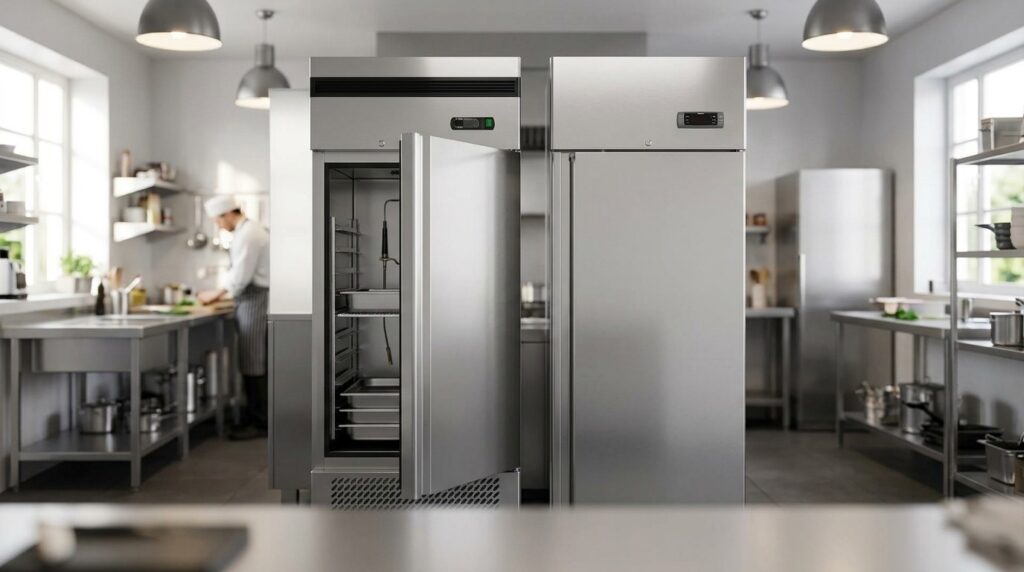
Compare Unifrost F410SS freezer and BC14U blast chiller for Irish kitchens. Evaluate HACCP compliance, costs, and workflow fit.
Unifrost F410SS vs BC14U: Upright Freezer vs Blast Chiller for Irish HACCP Kitchens
You are not choosing between two “freezers”. The Unifrost F410SS is built for long term frozen storage, while the Unifrost BC14U is a blast chiller and shock freezer designed to pull food down quickly in controlled cycles to support HACCP cooling and freezing targets.
This comparison helps you decide what to buy based on how your kitchen actually runs. You will assess whether you need safe, fast cooldown from around +70°C to +3°C, whether you are trying to freeze product quickly to around -18°C, or whether your main requirement is simply reliable storage capacity.
You will also work through the practical tradeoffs that affect cost and operations, including:
When using an upright storage freezer for hot food creates temperature risk, quality loss, or bottlenecks
What checks matter for HACCP, including cycle control, probing, and record keeping expectations
What to allow for in space, ventilation, cleaning routines, and staff time
When it makes commercial sense to run both units, with the BC14U handling cooling and the F410SS handling holding and stock management
Core Difference Between F410SS and BC14U
The Unifrost F410SS is an upright freezer for holding product at frozen temperatures for service and stock rotation. It is not designed to pull heat out of freshly cooked food quickly. The Unifrost BC14U is a blast chiller and shock freezer, built to rapidly chill or freeze hot food in controlled cycles. That cooling step is one of the main risk points your HACCP checks are meant to control, as outlined in the FSAI guidance on cooling cooked food quickly and using a blast chiller for larger volumes.
In practical terms:
If you regularly cool cooked food, the BC14U helps you hit safe cooling targets and avoids dumping heat into your storage cabinets.
If your pressure is day-to-day frozen capacity and access during service, the F410SS is the right tool for the job.
Why they are not interchangeable in a working Irish kitchen
A storage freezer like the F410SS is built to maintain a stable frozen cabinet temperature with routine door openings, shelves, and long holding times. A blast chiller like the BC14U is built to remove a lot of heat fast, with strong airflow over trays and programmed cycles you can work into your HACCP routine.
Use a storage freezer for blast chilling and you usually create two problems at once:
You can miss safe cooling time targets.
You can warm the cabinet enough to affect the quality and shelf life of the frozen stock already inside.
Can you chill hot food in an F410SS upright freezer?
In real kitchens, small portions can be cooled safely by splitting into shallow containers, using an ice bath, and getting food into chilled storage within the time limits set out in your HACCP plan. Putting hot trays straight into an upright freezer, though, often turns into the classic “seems grand” decision that causes hassle later. The freezer is not designed for that heat load, and you are raising the temperature of the surrounding frozen product at the same time.
If you are batch cooking, doing cook-chill, or portioning big pots of sauces, soups, curries, stews, pulled meats, rice, or pasta, a blast chiller is the safer, more repeatable option because it is purpose-built for controlled chilling and freezing.
A quick way to choose: storage problem or cooling problem?
Choose the F410SS if your main pressure is frozen storage volume, stock rotation, and keeping product consistently frozen through busy service.
Choose the BC14U if your main pressure is getting cooked food out of the danger zone quickly, especially if you are cooling multiple batches a day or need consistent HACCP records.
Plan on both if you do significant batch cooking, prep-ahead, or banqueting. Use the BC14U for the cooling step, then move product to the F410SS for long-term frozen storage once it is safely chilled or frozen.
What “HACCP compliance” looks like day to day for each unit
With the F410SS, your routine is mainly cabinet temperature checks, door discipline, stock rotation, and protecting frozen food during service. With the BC14U, the routine is cycle selection, correct loading, using a probe where applicable, and recording the cooling or freezing result for the batches that matter.
That day-to-day workflow difference is what decides suitability in a working Irish kitchen, not the badge on the door.
Performance and Suitability by Model
Comparing the Unifrost F410SS and the Unifrost BC14U is really a choice between storage and process in an Irish HACCP kitchen.
F410SS: an upright freezer for holding already-frozen food at a stable temperature during day-to-day service.
BC14U: a blast chiller/shock freezer for removing heat quickly from cooked or warm food in controlled chilling or freezing cycles.
Both support a compliant cold chain, but they do different jobs. A storage freezer is not designed to take repeated hot loads without temperature knock-on effects across the cabinet.
How do F410SS and BC14U compare overall?
A practical way to separate them is: where does the heat go?
With the BC14U, you are deliberately pulling heat out of product quickly as part of your cook-to-chill (or cook-to-freeze) workflow.
With the F410SS, you are keeping heat out over hours and days once food is already frozen.
From a HACCP point of view, the BC14U aligns with the real-world requirement to cool cooked food quickly. The FSAI’s temperature control guidance for caterers sets out the expectation that food should be cooled rapidly and transferred to refrigeration promptly, and notes blast chilling as an appropriate control where you need to cool larger quantities within tight timeframes (see the FSAI guidance here: https://www.fsai.ie/business-advice/running-a-food-business/caterers/temperature-control).
Operationally, the pressure points differ:
F410SS: access, organisation, stock rotation, door discipline, and keeping the unit from warming up during service.
BC14U: batch size, tray depth, airflow around product, and recording accurate core temperatures.
Unifrost F410SS (upright storage freezer)
Choose the F410SS when the job is steady frozen holding and quick access to frozen ingredients during service: pre-portioned proteins, chips, desserts, and backup stock. In most Irish kitchens, an upright freezer earns its keep by smoothing deliveries and protecting availability, not by speeding up cooling.
The common mistake is using a storage freezer to cool hot food because “freezing is colder so it must be faster”. In practice, you can drive up cabinet temperature, warm the door area, and compromise the rest of the stock. You also lose the controlled, documentable cooling step that HACCP relies on.
For suitability, think workflow: if you are mostly cook-to-order and not producing regular hot batches that need rapid chilling, an upright freezer is typically the right tool for frozen storage, with the usual expectation that frozen food is held at -18°C or colder (as referenced in the FSAI temperature control guidance: https://www.fsai.ie/business-advice/running-a-food-business/caterers/temperature-control).
Unifrost BC14U (blast chiller / shock freezer)
Choose the BC14U when repeatable, safe cooling is part of how you run the kitchen: carvery prep, banqueting, high-volume sauces and soups, stews, rice, cooked meats, bakery fillings, and any operation where production creates hot food that must be brought down fast.
It is also the cleaner HACCP story. A blast chiller is built for controlled cycles and measurement, which matters when you need to show food is not sitting in the danger zone during busy periods. The FSAI guidance specifically points to blast chilling as a control option when you need to cool larger amounts of food quickly (https://www.fsai.ie/business-advice/running-a-food-business/caterers/temperature-control).
In tight Irish kitchens, it can also prevent “fridge abuse”. Instead of loading warm trays into general refrigeration (and lifting cabinet temperatures for everything else), you cool safely first, then transfer into normal chilled or frozen storage.
Which is best for you?
Pick the F410SS if your problem is frozen storage capacity, stock control, and reliable holding at freezer temperature during service, and you are not routinely cooling hot batches.
Pick the BC14U if your problem is cooling cooked food fast enough to protect food safety and quality, and you regularly need a documented chilling/freezing step.
Plan to use both if you batch cook and freeze for later service: chill or freeze safely in the BC14U, then move product into the F410SS for longer-term holding so the freezer stays stable and organised.
If space is tight, treat ventilation and access as part of performance. Poor clearance and awkward loading routines show up quickly as temperature drift and staff workarounds.
Once you know whether your bottleneck is storage space or safe cooling speed, you can build a food flow from cooking to chilling/freezing to holding that supports HACCP without making service harder.
Operational Considerations
Using an upright storage freezer like the F410SS to pull down hot food is a common mistake in busy kitchens. You drive up the cabinet temperature, soften neighbouring stock, and you can miss safe cooling time targets, which is difficult to stand over in HACCP records if you are ever queried.
A blast chiller like the BC14U is designed for that cooling step. Used properly, it gives you controlled chill or freeze cycles that are much easier to monitor and document, but only if staff use probes correctly and you stay on top of cleaning after service (spills, pan juices, condensate). Irish food safety practice expects rapid cooling and temperature monitoring as part of your HACCP system, not “leave it in the freezer and hope”. The FSAI HACCP guidance is the baseline most operators work from, and it is commonly referenced by EHOs: <https://www.fsai.ie/business-advice/haccp>.
The operational impact tends to show up slowly: more waste from softened or refrozen stock, more rework, and more time lost to extra checks and paperwork.
Maintenance and cleaning burden: storage freezer vs blast chiller
With a storage freezer like the F410SS, the day-to-day risks are mostly controllable with good habits:
Door discipline (don’t leave it standing open during prep).
Don’t overfill to the point you block internal airflow.
Watch for ice build-up.
Check door gaskets before they tear or go hard.
Those basics have a real knock-on effect on temperature stability and running costs, and they reduce avoidable call-outs.
With a blast chiller like the BC14U, cleaning is more process-critical. You are regularly putting warm, steamy food into the cabinet, so spills and condensate are not occasional. If cleaning slips, performance drops and you also increase hygiene risk around probes and trays.
A simple staff rule that works in practice: treat the blast chiller as food-contact-adjacent (because of uncovered trays and probe use), and treat the upright freezer as a stock room (packaging, frequent door openings, and the usual ice and airflow issues).
HACCP compliance and records: what changes between the two
A storage freezer supports HACCP by holding already-frozen food at a stable frozen temperature. Your records are usually straightforward: cabinet temperature checks, stock rotation, and traceability.
A blast chiller changes what you can credibly record because you are verifying a cooling step, not just storage. If you are using it as intended, you should be documenting controlled cooling as part of HACCP, in line with FSAI guidance: <https://www.fsai.ie/business-advice/haccp>.
Where operators get the best results is by standardising the routine:
Labelled trays and clear batch identification.
Consistent portion depth (so cooling times are repeatable).
Probe placement rules (what to probe, where, and when).
A written “from cooker to chill” time limit that still works on a busy shift.
If you cannot run that consistently, the BC14U will still cool food, but you lose much of the compliance and waste-reduction value you bought it for.
Staffing and service pressure: labour efficiency vs labour risk
The F410SS is relatively forgiving. It is mainly about loading, picking, and keeping the door closed, so it suits smaller venues where the same people are juggling prep, service and goods-in.
The BC14U is less forgiving because it introduces a timed production step that needs ownership. Someone has to portion correctly, select the right cycle, verify the core temperature, and move product to storage promptly. If that handover is unclear, you can create bottlenecks and “it’s done, I think” situations during peak prep.
Where a blast chiller tends to earn its keep is in prep-heavy operations (banqueting, schools, batch-cook kitchens) because it turns cooling into a planned task instead of an end-of-shift scramble. Where it can cause friction is in small kitchens without clear section ownership, because “who’s minding the blast chiller?” becomes a real question when the pressure is on.
Installation realities that affect day-to-day performance
In plenty of Irish kitchens, performance issues come from placement rather than the unit itself. If ventilation is restricted, the unit is jammed beside heat sources, or door swing and access are awkward, staff will work around it in ways that hurt temperature control.
A blast chiller like the BC14U is typically less tolerant of poor airflow and high ambient heat because it is built to remove a lot of heat quickly. Give it proper ventilation clearance and keep it away from hot passes or cooking line heat where you can.
When you are comparing the two, decide which operational risk you are trying to remove:
“We can’t cool safely under pressure.” That is a blast chilling problem.
“We can’t store and pick frozen stock cleanly and consistently.” That is a storage freezer problem.
That one decision usually clarifies the trade-offs in day-to-day suitability.
Use Cases for Irish Kitchens
Decide based on where the bottleneck is in your food flow.
Choose an upright freezer (Unifrost F410SS) when you need reliable frozen holding and organised access during service.
Choose a blast chiller (Unifrost BC14U) when you need controlled rapid chilling or shock freezing of cooked food as a planned production step.
Before you commit, sanity-check the basics: floor space, door swing, ventilation clearance, and power supply. A rushed install is one of the quickest ways to end up with poor recovery, nuisance alarms, and staff losing confidence in the unit.
1. Define the job: frozen storage vs rapid chilling/shock freezing
The F410SS is for holding product that is already frozen (or properly chilled and then frozen). It is built to maintain temperature through door openings and day-to-day drawdown, not to pull down hot loads quickly.
The BC14U is for cooling cooked food quickly in a controlled way, and being able to show that control in your records. The Food Safety Authority of Ireland (FSAI) sets out practical guidance on cooling hot food safely and avoiding practices that push other fridges and freezers out of temperature during cooling periods:
<https://www.fsai.ie/business-advice/running-a-food-business/caterers/temperature-control>
2. Match the unit to menu volume and service pressure
If you run a small café, pub kitchen, or takeaway with limited batch cooking, you can often stay compliant through process control: portion down, increase surface area, stir where suitable, and get food into refrigeration promptly. The FSAI lists these as practical cooling controls:
<https://www.fsai.ie/business-advice/running-a-food-business/caterers/temperature-control>
In that scenario, the F410SS decision is mainly about stock holding and consistency: keeping frozen lines stable, reducing emergency runs, and protecting product quality once food is already frozen.
If you are pushing volume, running busy peak services, or doing banqueting and multi-service prep, the BC14U becomes a production tool. It takes the “best intentions” out of cooling and replaces them with a repeatable step that is easier to manage when staff rotate and the kitchen is under pressure.
3. Don’t use an upright freezer as a cooling method for hot food
Putting hot trays into a storage freezer causes two problems:
You may miss your cooling targets, because the cabinet is designed to hold temperature, not rapidly remove large amounts of heat.
You risk warming the cabinet, which can compromise other stock already stored inside.
The operator reality is time and load. The FSAI advises cooling cooked food as quickly as possible, getting it into the fridge within two hours, and avoiding overloading refrigeration with warm food because it raises cabinet temperature:
<https://www.fsai.ie/business-advice/running-a-food-business/caterers/temperature-control>
If you cannot reliably hit those targets with your current workload and staffing, that is the point where a blast chiller (BC14U) is usually the safer, more defensible option than trying to “make do” with a storage freezer.
4. Choose by workflow, not “bigger is better”
Choose the Unifrost F410SS if your main issue is frozen stock holding: pubs with tight prep time, cafés holding frozen pastry and desserts, smaller restaurants buying in frozen product, or any site that needs a dedicated freezer to reduce delivery frequency.
Choose the Unifrost BC14U if you routinely cook ahead and need to cool safely under pressure: hotels, catering kitchens, gastro pubs doing batch sauces and proteins, and sites where trays come off the line and must be cooled in a controlled way.
Plan for both (BC14U to chill or shock freeze, then F410SS for storage) if you batch-produce across shifts or services. It is also the cleaner food flow: cook → chill/freeze cycle → label → transfer to storage, instead of tying up your storage freezer with warm loads.
5. Set up HACCP checks that match the unit
With either unit, you need routine cabinet temperature checks. The difference is that a blast chiller adds a clear, recordable process step: start temperature, end temperature, time, and what you did if the cycle was interrupted.
For storage freezers, your day-to-day control is mainly about cabinet temperature and protecting stock. The FSAI guidance notes the practical target used in food businesses: freezers maintained at -18°C or colder:
<https://www.fsai.ie/business-advice/running-a-food-business/caterers/temperature-control>
Whichever way you go, keep probe discipline tight. The FSAI expects the use of a calibrated probe thermometer and ongoing accuracy checks (including ice-point and boiling-point checks) as part of verification:
<https://www.fsai.ie/business-advice/running-a-food-business/caterers/temperature-control>
6. Reality-check space, heat and access before you order
An upright freezer like the F410SS is often easier to slot in, but it still needs proper airflow, door swing clearance, and cleaning access. If you cannot access the condenser area for routine cleaning, performance drops and breakdown risk goes up.
A blast chiller like the BC14U is less forgiving of poor placement because it is designed to move heat fast. Keep it away from obvious heat sources where possible, allow the ventilation space the manufacturer specifies, and make sure staff can load it without blocking walkways. If loading is awkward, staff stop using it and the kitchen slips back into unsafe shortcuts.
Integrating into the Unifrost Ecosystem
The F410SS upright freezer and the BC14U blast chiller do different jobs, but they solve the same operational problem: getting food safely from cooking to storage without relying on “we’ll get to it in a minute”.
Irish HACCP routines tend to succeed or fail at the handover points, especially cooling. The FSAI is clear that time and temperature control matters when cooling cooked food, and notes blast chilling as a suitable option where you’re cooling larger volumes (FSAI temperature control guidance). The key point is practical rather than promotional: buying both units does not automatically make you “more compliant”. Whether you need dedicated rapid chilling depends on batch size, menu mix, labour, and how realistic your current cooling method is on a busy shift.
Where each unit sits in your food flow (not just on the floor)
In a well-run kitchen, the BC14U sits closest to the heat and the clock. It’s there to pull cooked food down through the high-risk temperature range quickly and repeatably, which is exactly what gets hardest during service pressure, bulk prep, and banqueting.
The F410SS sits further downstream as your stable, long-term frozen storage point. Use it to hold product at a consistent setpoint, keep door openings to what you actually need, and protect stock quality. Where operators get caught is using a storage freezer as a cool-down tool. You can end up with slow cooling in the food and a cabinet temperature rise that affects everything already stored. The FSAI makes the same practical point for fridges: avoid loading warm food because it drives up cabinet temperature and increases risk (FSAI temperature control guidance). The logic carries across to freezers in day-to-day stock management.
How the pairing helps in real service terms
The main “ecosystem” benefit is consistency in process. If you standardise how you chill, label, and store across Unifrost blast chillers (BC5UN, BC10UN, BC14U) and upright freezers (F410SS, F620SV, F1000SV, F1300SVN), you make training easier, make audits less stressful, and reduce the reliance on one experienced chef remembering the right steps on a hectic Tuesday.
A simple way to think about the pairing is one repeatable workflow:
Cook in batch, portion quickly, run a controlled chill or freeze cycle in the BC14U using a probe routine, label and date on exit, then transfer into the F410SS (or a larger upright freezer if you’re high-volume) for longer-term holding with minimal door opening.
This is not about matching brands for the sake of it. It’s about keeping each cabinet doing the job it was built for, so your workflow and temperature records stand up in the real world.
What changes in your HACCP records when you add a blast chiller
With an F410SS-only setup, your records are mainly storage-focused: cabinet temperature checks, delivery checks, and cleaning and defrost routines.
Add a BC14U and you can document the highest-risk step properly: cooling. In practice, that means recording process controls, not just storage controls, such as:
start and finish times for chill or freeze cycles
core temperatures (with a calibrated probe)
corrective actions when a batch misses target, for example re-portioning and re-chilling rather than leaving it to “come down” on a bench
The FSAI also highlights probe thermometer use, sanitation, and calibration as part of proper monitoring (FSAI guidance on checking and calibrating probe thermometers).
When you genuinely need both units working together
You’ll feel the value of both units when you’re producing more cooked food than you can serve straight away, and you cannot reliably cool within your limits using portioning, shallow trays, or ice baths without tying up sinks, bench space, and labour.
Typical Irish use cases include hotels with banqueting and breakfast production, prep-heavy restaurants making stocks, sauces and braises, and central catering where batch sizes are large and the cost of one cooling failure is waste plus risk.
In those setups, the BC14U handles controlled rapid cooling or shock freezing, and the F410SS does what an upright freezer should do: hold frozen product steadily for days and weeks without being constantly disturbed by warm loads. Once that flow is clear, the real decision becomes capacity, footprint, and whether your room conditions and service pattern suit a dedicated blast chilling step or a simpler cooling method you can execute consistently.
FAQs: choosing between the Unifrost F410SS and BC14U in an Irish HACCP kitchen
When should an Irish HACCP kitchen choose a Unifrost F410SS upright freezer over a BC14U blast chiller?
Choose the Unifrost F410SS upright freezer when your main need is reliable long term frozen storage of product that is already chilled or frozen, for example receiving frozen deliveries, holding pre frozen ingredients, or storing batch cooked food after it has been chilled safely.
Choose the Unifrost BC14U blast chiller/shock freezer when you need to cool cooked food quickly and predictably as part of your HACCP plan, for example cook chill production, large batch cooking, sauces, meats, rice, or anything where leaving food to cool naturally would keep it in the danger zone for too long. In practical terms, the BC14U is for process and safety control, while the F410SS is for storage.
Are there energy cost differences between using the F410SS and BC14U?
Yes, but the difference is usually about how you use them, not just the label on the front.
F410SS (upright freezer): typically runs as a steady holding appliance. Energy use is driven by ambient temperature, door openings, how often it has to pull temperature back after loading, and how well airflow is maintained.
BC14U (blast chiller): uses short, high intensity cycles to pull heat out of hot food fast. That can mean higher peak electricity demand during cycles, but it can also reduce waste and labour by removing guesswork and shortening cooling time.
A common hidden cost is using a storage freezer to cool hot food. It forces long recovery times, warms other stored food, and can increase compressor run time. If you are regularly cooling hot product, a blast chiller often costs less overall once you factor in food safety risk, spoilage, and staff time.
How do I comply with HACCP using a blast chiller like the BC14U?
Use the BC14U as a controlled cooling step in your HACCP flow, then back it up with simple records.
Define your cooling critical limits in your HACCP plan (time and temperature targets for cooling from cooking temperature down to chilled, or down to frozen, depending on the product).
Load for airflow: portion food into shallow trays, avoid stacking that blocks air movement, and do not overload. The goal is rapid heat removal from the core of the food.
Use a cleaned, calibrated probe to confirm core temperature, not just air temperature. Record start temperature, end temperature, time, product name, and operator.
Move to the right holding equipment immediately: once chilled, transfer to a refrigerator for storage; once frozen, transfer to a storage freezer like the F410SS. Label with date, batch, and use by.
Keep routine checks: daily cabinet temperature checks, cleaning schedules, and probe calibration checks form part of your verification.
If you are currently cooling hot food in standard refrigeration, updating the process to blast chill can be one of the quickest ways to strengthen HACCP compliance and reduce cooling related incidents.
Next step: match the right Unifrost refrigeration to your workflow
If you are deciding whether you need storage capacity (upright freezers like the F410SS), rapid chilling/freezing control (blast chillers like the BC14U), or a combination of both, the fastest way to narrow it down is to map your food flow from cooking to cooling to holding.
When you are ready to compare buying options for frozen storage, browse Caterboss’s Frozen Storage category to see what is available for your kitchen layout and volume.
Related Unifrost guides
Compare models, maintenance advice and support information related to this topic.
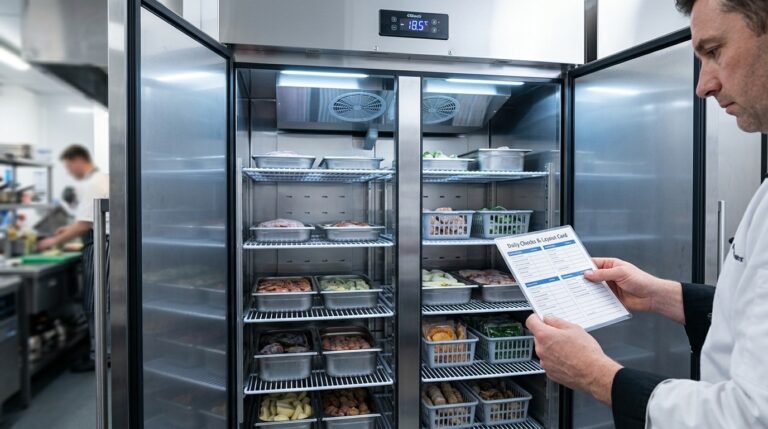
Unifrost F410SS Upright Freezer: Quick Start Guide for Hotels
Get started with the Unifrost F410SS in your Irish hotel. Temperature setup, layout guidance, and quick checks for optimal freezer use.
Read guide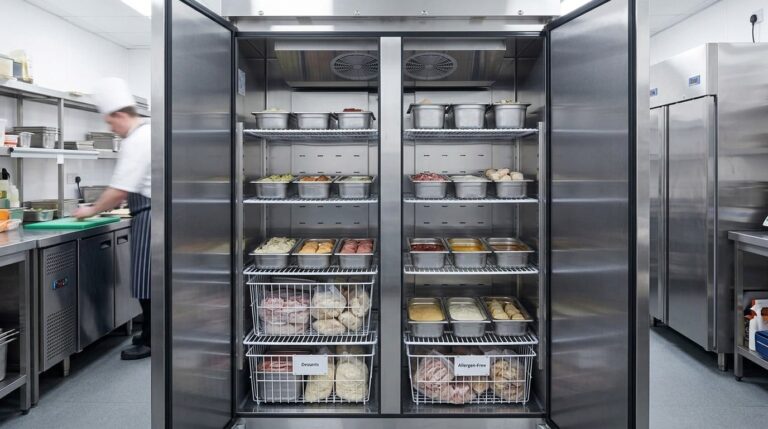
Unifrost F410SS Upright Freezer Planning Guide for Irish Hotel Banqueting Kitchens
Plan your F410SS freezer layout for efficient high-volume banqueting in Irish hotels. Optimize GN pans and workflow.
Read guide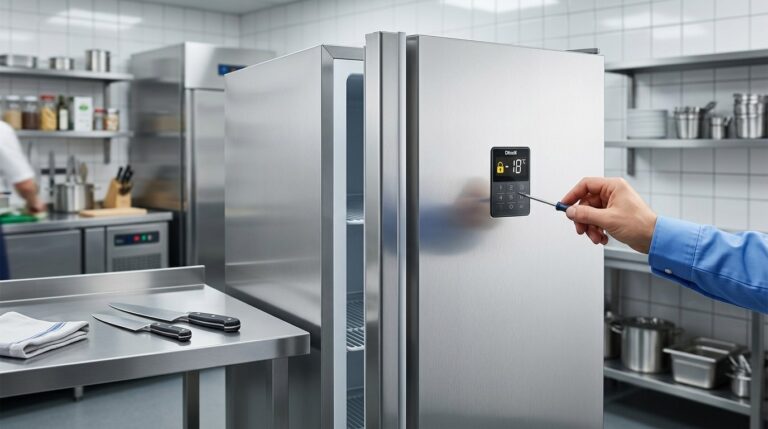
Unifrost F410SS Upright Freezer: Door Controller Locking Troubleshooting Guide
Find solutions for Unifrost F410SS freezer door controller lock issues in busy Irish kitchens. Unlock guidance, common safety checks, and service tips.
Read guideView Unifrost blast chillers at Caterboss
For current product options, pricing and availability, continue to Caterboss.