
Unifrost F410SS Upright Freezer Shelf and GN Pan Setup Guide for New Owners
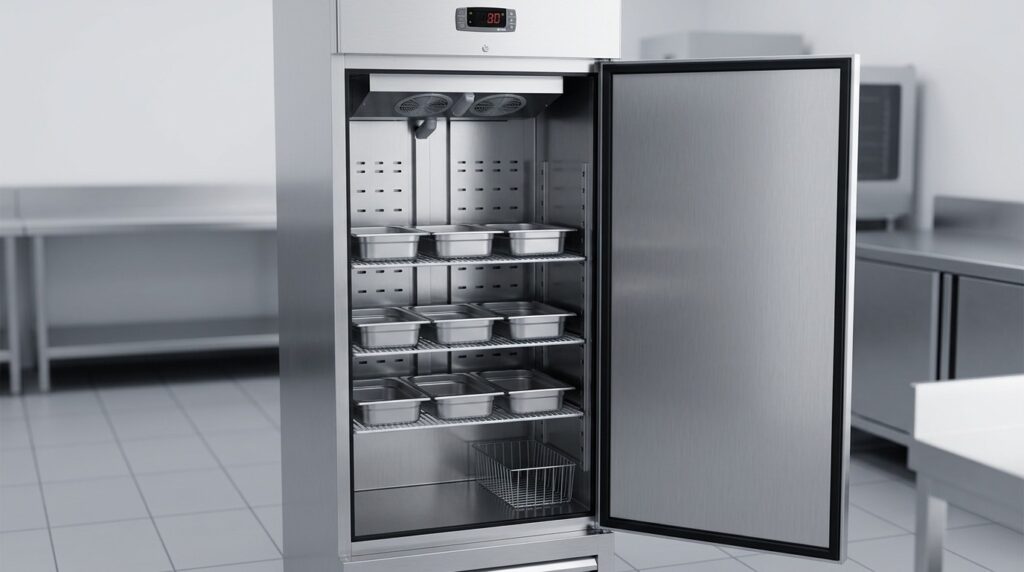
Guide Irish kitchens in setting up and using shelves, GN pans, and baskets in the Unifrost F410SS upright freezer efficiently.
Unifrost F410SS Upright Freezer: Shelves, GN Pans and Basket Setup for New Owners
If you have just taken delivery of a Unifrost F410SS upright freezer, the way you fit and space the shelves, GN pan rails and any baskets decides how quickly you can pick stock in service, how well you can rotate product, and how reliably you maintain airflow for consistent freezing.
This guide walks you through a practical day-one setup: how to position shelves and GN rails, which layout suits fast-pick service storage vs bulk storage, and what to check so you do not block airflow, overload a shelf, or create hard-to-clean spill points. You will also see common setup mistakes, how to zone the cabinet for HACCP and allergen control, and when the F410SS layout makes more sense than a chest freezer like the CF500HS if speed of access is your priority.
Why Efficient Setup Matters in Commercial Kitchens
Poor shelving and GN pan layout slows picking and encourages overloading. That leads to blocked airflow, less stable cabinet temperatures, and a freezer that has to work harder for the same outcome. The FSAI is clear that freezers should be kept at -18°C or colder and not overcrowded, so air can circulate. Organisation is not just “tidy”, it is part of staying in control day to day in an Irish kitchen (FSAI takeaway storage guidance).
There is no single “best” layout. A fast-pick service freezer (chips, desserts, pre-portioned items) needs visibility and speed. A bulk-storage freezer can tolerate slower access, but it needs clearer zoning and date control.
Service speed: seconds matter when you are in the weeds
In an upright freezer, the internal setup decides whether it supports service or adds friction. Set shelves and GN rails so the most-used items sit at hand height and are easy to lift out without moving other stock. You reduce door-open time, cut down on rummaging, and avoid staff stacking product in ways that crush packaging, hide labels, or spill into the cabinet base.
That matters in takeaways and cafés, where the same person might be pulling frozen stock while watching fryers, coffee, and dockets.
Food safety and HACCP: organise for control, not just neatness
A tidy freezer is not automatically a controlled freezer. A controlled freezer has:
Clear separation (raw vs ready-to-eat, allergen-containing vs allergen-free)
Labels you can read quickly, without pulling half a shelf out
A layout that makes FIFO the easy option, not a job for “when we get a minute”
That is the difference between confidently answering an Environmental Health Officer’s questions and trying to justify why the newest delivery ended up in front because there was nowhere else to put it.
Running costs and reliability: layout affects recovery time and wear
Every extra minute with the door open pulls warm, moist air into the cabinet. That increases ice build-up and makes the freezer work harder to pull back down to temperature. In compact Irish kitchens, where the door often opens into a warm cookline, the effect is more noticeable and usually shows up as extra defrosting and cleaning.
A sensible shelf and pan layout reduces “search time”, helps you shut the door faster, and avoids blocking internal airflow paths that can create warm spots and uneven freezing.
This is why it is worth thinking through shelf spacing, GN pan use, and whether baskets actually suit your day-to-day routine before you load a new upright freezer for the first week of trading.
Key Configuration Considerations for Shelves and GN Pans
Set the shelf supports first, then choose a layout based on how you will actually use the freezer: a fast-pick service setup (more small zones, pans and baskets) or bulk storage (more open shelves for boxed stock). Fit GN rails only where pans will be used every day. Keep the rest as open wire shelving for airflow and awkward packaging. Use baskets for loose items that get lost behind boxes, then label and zone the interior so FIFO and allergen separation are easy to follow on a busy shift. Before loading, double-check you have not blocked the air paths at the back and that shelves can still be removed for cleaning.
1. Day-one checks before you fit anything
Do the basics that prevent most early headaches:
Make sure the unit is stable and level.
Confirm the door opens fully in your layout without clipping a wall, counter, or another appliance.
Leave enough room to slide shelves out for cleaning without having to unload the whole freezer mid-service.
If there’s an obvious internal air outlet or return, note where it is. Your shelving and pan layout should not create a “wall” of stock that stops air circulating.
2. Choose your operating mode: service picking or bulk storage
Upright freezers live or die on organisation.
Service picking (takeaway, café, near the pass): prioritise access and speed. Smaller, clearly labelled pans or baskets work well, and you want to avoid tall stacks you have to unbuild with the door open.
Bulk storage (deliveries, back-up stock): prioritise open shelves and stable stacking. In most kitchens, you will get better flow by keeping one or two “quick pick” shelves and leaving the rest for boxed or lidded containers, rather than trying to GN-pan everything.
3. Fit shelves first, then set spacing around your biggest items
Install shelf supports and shelves starting from the bottom and working up. Use your real stock as the measuring tool: chips, breaded products, desserts, ice cream tubs, stock blocks, catering packs. Adjust shelf heights so items fit without being forced sideways or pressed against the back.
Avoid packing hard against the rear internal wall. Even if everything fits, blocking airflow is a common cause of uneven temperature and slower recovery after door openings.
4. Fit GN pan rails only where they genuinely save time
If GN rails are supplied, treat them as a targeted service tool. They make sense for high-touch items you pick constantly, especially where quick visual checks matter, for example portioned chips, prepped items, desserts, or allergen-controlled lines you want isolated.
Choose pan depth based on turnover, not maximum capacity. Shallow pans usually suit fast rotation because they are quicker to pull, check, re-cover, and return. Whatever GN size you use, leave a bit of clearance so pans do not bind in the rails if light ice builds up.
5. Use baskets for small, loose and easy-to-misplace items
Baskets work best for lines that don’t behave on a shelf:
small packets and opened bags
individual desserts
clearly separated allergen stock
“bits and pieces” that tend to get shoved behind boxes when service is flat out
Avoid turning baskets into heavy bulk drawers. Overloading makes them awkward to remove safely and encourages longer door-open time while staff rummage, which is where uprights lose temperature quickest.
6. Zone the interior for HACCP and allergens, then label for FIFO
Make the layout predictable so any staff member can find stock quickly. The FSAI highlights the basics that matter in day-to-day storage: labelling, stock rotation (FIFO), allergen separation, and avoiding overcrowding so air can circulate. See the FSAI guidance on common compliance controls for storage and stock rotation: https://www.fsai.ie/business-advice/starting-a-food-business/starting-and-running-a-takeaway/common-compliance-issues-and-controls
A simple zoning approach:
Top zone: light, fast-pick items. Keep allergen-controlled stock in lidded pans or dedicated baskets.
Middle zone: core service lines. Use a consistent FIFO rule (for example, oldest front-left, newest back-right) and stick to it.
Bottom zone: heavy, awkward, or leaky items. Keep anything higher-risk separated from ready-to-eat lines to reduce handling cross-contamination.
7. Do a “door open” test and adjust for speed and running costs
Stock it the way you actually trade, then test it at a quiet time: open the door, pick three common items, close the door. If you are shifting boxes or lifting stacked tubs and it takes longer than 20 to 30 seconds, the layout is costing you labour and temperature recovery.
Usually the fix is straightforward:
move the top 10 fastest-moving lines to one or two easy-reach shelves
push slow movers to higher or lower shelves
keep one basket as a clearly labelled “miscellaneous” zone so odd items don’t spread across every shelf
Get that flow right and an upright format earns its keep in an Irish service kitchen where the door will be opened a lot.
Common Mistakes to Avoid When Setting Up Your Freezer
An upright service freezer only works as well as the way you load it. If you set one up without thinking about airflow, separation and pick speed, you tend to see the same pattern: warmer product near the front, longer door-open time, and a cabinet that seems to be “always running”. It rarely bites on day one, but within a few weeks it shows up as frost build-up, crushed packaging, slower stock checks, and more time lost during a rush.
Food safety is part of this too. Freezing slows bacterial growth, but it does not prevent cross-contamination from split packs, leaking cartons or uncovered food. The FSAI Safe Catering Pack is clear that raw and ready-to-eat foods should be covered and kept separate in the freezer to reduce cross-contamination risk (FSAI Safe Catering Pack, Section 3 PDF).
Airflow mistakes: “It fits” is not the same as “it freezes evenly”
The most common problem in uprights is blocking air circulation by packing stock hard against the back and sides, or creating a solid “wall” of boxes, GN pans or baskets from front to back.
What you’ll notice in practice:
Uneven temperature across shelves (front is often the first to drift during service).
Slower recovery after a delivery.
More frost around the cold-air paths because the system is working harder than it should.
In a busy café, takeaway or hotel pantry, this quickly becomes a workflow issue. Staff spend longer with the door open hunting for stock, which drives bigger temperature swings and higher running costs.
Zoning mistakes: mixing raw, ready-to-eat, and allergens because “it’s frozen anyway”
Frozen storage still needs rules. If raw product sits above ready-to-eat food, if open packs are left uncovered, or if allergens are mixed into the same “grab zone”, you increase the risk of mix-ups and contamination. That is exactly the sort of thing that gets flagged during an EHO visit, especially when service pressure leads to shortcuts.
A workable setup is simple:
Keep raw items segregated from ready-to-eat.
Keep allergens clearly grouped and labelled.
Use lidded, intact containers and replace damaged packaging immediately.
Shelf and rail mistakes: setting everything “evenly spaced” instead of setting it up for your menu
Neatly spaced shelves look organised, but they often don’t match how you actually work. If the layout doesn’t suit your stock, you end up stacking packs on packs, blocking airflow and burying older stock at the back. FIFO becomes guesswork, and stock counts take longer than they should.
Set the interior around your pick pattern:
Fast-access zone: high-velocity lines you grab constantly (chips, portions, desserts).
Backup zone: boxed stock and slower-moving items.
That is where uprights earn their keep day to day. If your team is in and out of the freezer all service, “easy to grab and get the door shut” matters as much as litres and shelf count.
Day-one handling mistakes that turn into long-term hassle
Loading warm deliveries and then turning the setpoint colder: it increases run time and encourages icing, without solving the root problem. Plan deliveries and loading so the cabinet can pull down normally, and keep monitoring as part of your HACCP routine (FSAI temperature control guidance).
Leaving stock unlabelled because “we’ll know what it is”: it slows checks, increases waste, and makes it harder to demonstrate stock rotation during an inspection.
Overfilling deep GN pans or baskets: lids don’t seal properly, packs snag, and the door stays open longer. That is one of the quickest ways to make an upright feel underpowered during service.
No plan for cleaning access: spills freeze onto shelf wires and runners. After that, shelves become harder to remove and sanitise, and more likely to get bent when someone forces them during a busy shift.
These are the practical trade-offs to decide early: where baskets help speed up service, where they block airflow, and how you space shelves so the freezer works for your menu rather than against it.
Optimising Freezer Setup for Different Kitchen Types
A good upright freezer setup is less about looking tidy and more about helping staff pick stock quickly without warming the cabinet or losing track of dates. The key choice is simple:
Service-focused setup: faster picking, more door openings, stock kept “front to hand”.
Storage-focused setup: fewer door openings, larger packs, clearer category separation.
The best layout is the one your team will stick to during a real service. Consistency is what protects your HACCP records and your food margin.
How does a takeaway setup differ from a full-service restaurant setup?
In a takeaway or café, the freezer often behaves like part of the line. It gets opened constantly, sometimes one-handed, and it can quickly become a “grab box” where labels peel, baskets turn into mixed stock, and the door stays open while someone decides. A practical setup keeps the most-picked items at hand height, pre-portioned, and physically contained so it’s harder to overfill or block airflow.
In a full-service restaurant or hotel kitchen, you’re usually protecting higher-value prep, batch items, and menu components that need calmer access and clearer separation. That pushes you towards fewer zones, bigger pack storage, and stronger “one shelf, one category” rules. It also makes stock checks and handovers quicker, especially across split shifts, because there are fewer loose items drifting between pans, shelves, and boxes.
Takeaway, café, deli, and food truck: fast pick, high door openings
If your upright freezer sits beside a fryer, hot pass, or coffee station, treat it like a service freezer, not a storeroom.
Keep fastest movers in fixed positions (same shelf, same side, every day).
Avoid tall stacks that force rummaging. More time with the door open means more warm air and moisture in the cabinet.
Use smaller containers where it genuinely speeds service, but don’t let them become unlabelled “mixed tubs”.
For HACCP routines, the win isn’t a fancy system. It’s one people can follow under pressure. The FSAI is clear that HACCP procedures need to be practical and maintained in day-to-day operation. See the FSAI HACCP guidance for food businesses.
A useful approach in busy Irish takeaways is a service par: keep only the shift’s working quantity in the upright and hold reserve stock elsewhere. That keeps the upright organised and helps it recover temperature faster after repeated openings.
Full-service restaurant, hotel, and catering: fewer zones, clearer separation
In restaurants and hotels, ad-hoc systems fall apart quickly due to staff changes, menu changes, and multiple prep sections. Aim for a layout that’s easy to audit and easy to explain:
Treat shelves as zones with rules: desserts together, veg portions together, fish together.
Keep container formats consistent (too many pan types creates clutter and “temporary” storage that becomes permanent).
Only decant into GN pans or baskets where it genuinely improves service speed or portion control.
Allergen control is where upright freezers can either help or hurt. Open baskets make it easier for loose packs to drift and mix. Clearly labelled shelf zones and dedicated containers make it easier to keep “contains” categories apart, in line with the FSAI allergen information for food businesses.
If you’re in a hotel with multiple outlets (bar food, banqueting, room service), avoid stock “floating” between shelves daily. Allocate zones by outlet or by prep section so stock counts are faster and disagreements disappear. Upright format generally helps visibility during checks, but only if you avoid overloading shelves and blocking air movement around product.
Which setup is best for your kitchen?
Decide what job you need the upright freezer to do, based on labour and service speed first, then space.
Go service-style if you have frequent door openings, tight staffing, or a short menu with repeat items.
Go storage-style if access is calmer, packs are larger, and you need clearer separation for prep and handover.
If you’re routinely stacking deliveries into the upright, that’s usually a sign you need separate bulk storage so service stock stays stable and predictable.
Once you’re clear on the job, shelf positions and container choices become straightforward, and more importantly, your team is far more likely to keep it working through a busy Friday night.
Maintaining Efficiency with Your Unifrost F410SS
Keep the F410SS easy to run by treating the inside like part of your kitchen workflow, not just storage. Set fixed zones (service pick, bulk back-up, allergens), label everything, and keep stock rotation obvious even on a busy Friday night. Revisit shelf and rail positions whenever your stock mix changes, and leave clear air gaps so the cabinet can recover temperature properly after door openings. A simple daily and weekly routine for temperature checks, door discipline, and quick cleaning will catch issues early, before you get ice build-up or soft stock.
1. Set zones that match service flow (not wishful thinking)
If the F410SS is acting as a service freezer, prioritise picking speed and clean FIFO over maximum density. Uprights can be quicker than a chest freezer because you can see what you have, but only if you keep the layout disciplined.
A practical three-zone setup most Irish kitchens can stick to:
Top: fast-pick items you grab repeatedly (chips, wedges, portioned proteins, desserts).
Middle: core ingredients and prepped items in clearly labelled containers.
Bottom: heavy, awkward, or bulk back-up stock where you are less likely to knock things over.
Keep allergens in one clearly marked area, rather than spread across shelves. The aim is not perfection. It is making the right thing easy when a new starter is under pressure.
2. Adjust shelves and rails when the stock mix changes, and protect airflow
Any time you switch between bulk delivery storage and fast-pick service storage, change the shelf spacing to suit what you are actually storing. A setup that works for boxed deliveries often falls apart with open containers because you end up stacking tightly and restricting circulation.
When you adjust, protect the basics:
Leave space at the back wall so air can circulate properly.
Avoid overhanging packs and sagging liners that block air paths.
Keep the “grab shelf” near the door tidy, not crammed, as it takes the most warm air every time the door opens.
If you start seeing uneven freezing, soft corners on product, or frost building faster in one area, check layout and loading first before assuming the freezer is at fault.
3. Run a tight daily and weekly routine (it reduces waste and call-outs)
The goal is fewer long door openings, fewer half-open packs, and earlier warning if temperatures drift. Your HACCP checks should reflect what you can realistically monitor and correct. The FSAI is clear that monitoring and corrective actions are core HACCP principles, so build your routine around checks you will actually do and record:
https://www.fsai.ie/business-advice/running-a-food-business/food-safety-management-system-(haccp)/principles-of-haccp
Daily: quick temperature check, scan for open packs, confirm the door is closing cleanly.
Weekly: wipe spills before they turn to ice, check door gaskets for splits and debris, remove anything with no label or date.
After a busy service: reset the fast-pick shelf so the next shift is not searching with the door open.
This routine is where a well-organised upright pays for itself. Faster picking usually means less door-open time and steadier temperatures.
4. Keep it cleanable, then re-tune it seasonally
You will get better day-to-day results when containers can be lifted out quickly for cleaning and stock checks. Avoid loose liners, torn cardboard, and unsealed product that sheds crumbs and ice. That is how you end up with frozen-in containers, stuck runners, and time-wasting chip-outs.
Build in one seasonal review (for many Irish sites, quarterly is enough):
what is selling now versus three months ago
what needs to be “grab and go”
what can move to back-up storage
That prevents the common drift where the F410SS turns into a mixed dump of half-open bags and unlabelled tubs. With a steady rhythm in place, it is easier to make sensible decisions about shelf spacing, container types, and what genuinely improves picking speed for your menu.
Connecting with the Unifrost Support Ecosystem
Support for a new F410SS setup is not just about the unit. It is also about how you load it, how you run checks, and how you document your routine. Kitchens with solid HACCP habits usually get fewer “mystery” temperature issues because shelf layout, labelling, and checks are consistent, which aligns with the Food Safety Authority of Ireland’s HACCP approach. Your best setup will also depend on service pressure: a café with constant door openings needs a different layout to a hotel kitchen using the freezer mainly for bulk holding.
Use Unifrost resources to set up the freezer once, then keep it consistent
The quickest win with an upright freezer is agreeing your interior layout early, then keeping it steady through staff changes and busy weekends. Unifrost.ie guides are most useful when they become your house standard, not something you read once and forget.
Keep three things together (in your HACCP folder, a shared drive, or a laminated sheet near the unit):
Your shelf and GN rail positions
Your zoning rules (what lives top, middle, bottom, and what must stay separated)
Your labelling and FIFO routine
This avoids the classic shift-to-shift debate about where things “should” go, and it helps you run an upright freezer in a predictable way compared with bulk storage in a chest freezer.
Support works best when you log the “why” behind shelf and GN decisions
A lot of “support” questions are not faults. They are workflow changes that show up as performance complaints. If you can explain what changed, you can usually correct it without downtime.
Example: you switch from bulk frozen deliveries to fast-pick service storage, and staff start holding the door open while digging through mixed boxes. The fix is often operational rather than mechanical:
Re-space shelves to reduce search time
Use baskets or GN pans for visibility and faster picking
Tighten FIFO labels so staff are not opening packs just to identify stock
For HACCP records, the point is to keep controls practical and actually used day-to-day, not just written down. The FSAI is clear on this in its guidance on HACCP-based food safety management systems in Ireland: FSAI guidance on HACCP and food safety management systems.
When to troubleshoot yourself vs when to ask for help
If something feels off after set-up, it is usually faster to run a structured check before assuming the freezer is at fault. Upright freezers are particularly sensitive to loading and airflow problems.
Work through this in order:
Day-to-day causes: overfilling, product pushed hard against the back, air paths blocked by bags/liners, long door openings during service.
Set-up consistency: shelf runners seated properly, GN rails level, baskets not bowing into air channels, nothing snagging the door gasket.
What changed: new menu items, bigger deliveries, different packaging, or staff storing open items without lids.
Escalate for support if symptoms persist after correcting loading/layout, or if you see physical issues (damaged gaskets, unusual icing, door not closing cleanly).
If you are comparing an upright with a chest option (for example, “fast pick” versus “bulk hold”), treat it as a storage strategy decision, not a thermostat decision. Use the upright for service access and zoning, and keep bulk stock where it makes sense operationally.
Spare parts, add-ons, and matching correctly without guesswork
It is common to want extra shelves, GN supports, or baskets after the first busy month, once your real storage pattern shows itself. The safe approach is to match accessories to the upright freezer family and the runner system already in the cabinet, rather than forcing a generic shelf that will not sit square or will sag under load.
If you are planning to position the F410SS beside other kit in a tight back-of-house, involve support early. Clearances, door swing, and service access matter. Restricted access makes cleaning and maintenance slower, and poor ventilation around refrigeration is a frequent cause of performance complaints. SEAI guidance for small businesses supports the general principle of reducing avoidable energy waste through better equipment and layout choices: SEAI business energy advice.
The takeaway: use Unifrost.ie guides as your operating playbook for layout, stock rules, and checks. Adjust shelves and GN positions with a clear service goal in mind, rather than changing things week to week.
FAQs for new F410SS owners
How do I set up the shelves and GN pans on day one in the Unifrost F410SS?
Unpack and check parts: confirm you have the shelf supports/runners, wire shelves, and any GN pan rails or basket frames supplied with your unit.
Position the supports first: fit the supports into the same height positions on both sides so each shelf/rail sits level.
Start with a “service zone” in the middle: set one shelf around mid height for your highest-pick items so you are not bending or reaching during service.
Add GN pans where speed matters: use GN pans for portioned or open-and-close items (for example chips portions, dessert portions, prepped sides). Keep like-with-like per pan and label the front edge.
Leave clearance for airflow: avoid pushing GN pans tight against the back wall and avoid overhanging liners that block air movement around the pan.
Do a dry run before loading: open the door, simulate a busy pick, and adjust shelf spacing so your most-used pans are reachable without moving other stock.
If your kitchen uses both bulk and service stock, keep the top/bottom for slower-moving bulk items and the middle for fast-pick pans and baskets.
Can I add extra shelves or baskets to the F410SS later?
Yes, in most cases you can retrofit additional shelves and compatible baskets, but you should match them to the existing runner/support system inside the cabinet.
Practical tips before you buy add-ons:
Check how your current shelves mount (support clips, shelf runners, or rail frames) and order the same style so they sit correctly and don’t rock.
Measure usable width and depth between runners rather than the door opening.
If you are adding baskets, choose ones that don’t create a solid “wall” of product, because densely packed baskets can reduce airflow and slow recovery after door openings.
If you are unsure what’s compatible with your specific build, send Unifrost a photo of the interior runners and your current shelf layout and they can guide you to the right accessories.
What’s the best way to organize the freezer for a busy café?
Use a simple zoning system that reduces door-open time and makes FIFO easy:
Middle shelves = fast pick: keep your highest-frequency items here in GN pans or baskets (chips portions, desserts, gluten-free bread, plant-based items).
Top shelf = light, infrequent items: small boxes, backup desserts, ice packs, items you only grab once or twice a day.
Bottom shelf = heavy, bulky items: sealed bags/boxes that are awkward to lift (bulk chips, large packs). This reduces the risk of dropping items and keeps heavier loads low.
Allergen and dietary separation: dedicate one clearly labelled shelf or basket to allergen-controlled items (for example gluten-free) to help with HACCP checks.
One-touch labelling: label the shelf edge (not just the box) and date-label the pan/basket. Keep “use first” stock at the front and new deliveries behind.
If you regularly switch between delivery days (bulk) and service days (fast-pick), keep one shelf position “spare” so you can temporarily park a delivery box while you decant into pans or baskets.
Next step: compare layouts across the Unifrost freezer range
If you are still deciding on the best frozen storage layout for your kitchen, browse the full upright freezer range to compare internal configurations and access styles.
For personalized advice on shelf spacing, GN pan workflow, allergen zoning, and how to adapt the setup as your menu changes, contact Unifrost support with a quick photo of your current shelf layout and your typical stock list.
Related Unifrost guides
Compare models, maintenance advice and support information related to this topic.
Unifrost F410SS Upright Freezer Upgrade or Replacement Guide
Explore when to replace or upgrade your Unifrost F410SS upright freezer for optimal performance in Irish kitchens.
Read guide
Unifrost Upright Freezer Temperature Controller Deep Dive Owner Hub
Explore Unifrost upright freezer controllers for optimal settings and food safety in Irish kitchens.
Read guideCompare Unifrost freezer options on Caterboss
For current product options, pricing and availability, continue to Caterboss.