
Unifrost F410SS Upright Freezer Guide for Irish Hotels
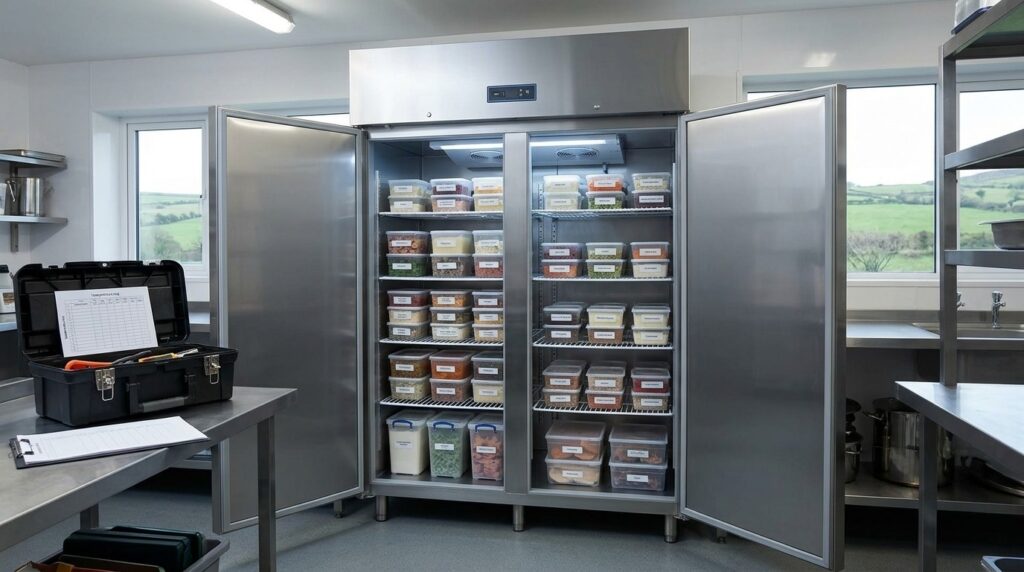
A practical Unifrost F410SS guide for Irish hotels, covering installation, daily use, maintenance and troubleshooting.
Unifrost F410SS Upright Freezer Guide for Irish Hotels
You use the Unifrost F410SS (F410SS / F410SSOG) upright freezer to protect stock, service banqueting peaks, and stay audit ready. This guide explains what to check at each stage so you can reduce call-outs, manage food-safety risk and plan maintenance before the unit becomes urgent.
You will work through the real operator decisions, including:
Pre purchase checks that prevent a bad fit, such as power supply, door and access clearances, ambient conditions, and where the freezer sits in your workflow.
Day 1 to 30 to 90 actions for chefs and maintenance, including temperature controller verification, loading discipline, and early warning signs.
Maintenance and cleaning cadence you can schedule around service and peak season, plus what to log for HACCP.
Common fault triage you do before escalating, and a clear path from internal checks to Caterboss support, service, and warranty versus paid repair.
End of life planning so you can time replacement, recycling, and continuity of records without disrupting operations.
What this support page helps you find
This page is a practical owner-operator map for the Unifrost F410SS upright freezer (also listed as F410SS / F410SSOG). It shows what to check, log and troubleshoot in an Irish hotel kitchen, without guesswork.
It’s grounded in Irish food safety expectations, including the FSAI position that food can remain frozen if it’s still below -18°C, as noted in their guidance: “Any food that is still frozen can continue to be frozen as long as the temperature is still below -18º C”. The important point is that the controller setpoint is only part of the picture. In a busy kitchen, product temperature is driven by loading, airflow and door-opening during service.
What you’ll get out of this page
A clear route through the tasks that prevent most upright freezer problems in hotels:
Positioning and ventilation so the unit can run properly
First-week controller checks and “sanity checks” after power-on
How to verify temperatures in a way that stands up to HACCP routines
What normal ice build-up looks like, and when it points to a fault
What to note before you contact support, so the call is quicker and more accurate
It’s written with the F410SS in mind, but the routines also apply to most Unifrost upright freezers used in Irish hospitality.
What hotel operators should plan for
This support map follows the stages you actually go through with an upright freezer, so you can avoid firefighting before busy weekends and banqueting:
Research and decision: choosing an upright freezer versus other formats, and defining its role in your kitchen flow
Pre-install and delivery day: access, clearance, positioning, power, ventilation, and first power-on checks
Day 1 to 30: controller checks, temperature verification habits, loading patterns, and basic team training
Day 30 to 90: bedding-in issues, early seal wear signs, early icing patterns, and callout prevention
In-service troubleshooting: alarms, warm cabinet complaints, icing, and what to check on site before escalating
Service and warranty route: how to approach Caterboss support with the right information
End-of-life planning: when it’s time to stop spending labour on an unreliable cabinet and plan replacement
Who this is for (and who it isn’t)
If you’re a hotel owner, GM, head chef, kitchen manager or maintenance lead trying to keep frozen storage stable across breakfast, bar food and banqueting peaks, this is for you.
If you need model-specific technical specifications, parts diagrams or warranty wording, use the official F410SS documentation and service process. Those details must match the exact variant shown on the rating plate.
Where support sits in the Unifrost and Caterboss ecosystem
Good operating practice reduces avoidable call-outs by helping you get the basics right: controller checks, placement and ventilation, and day-to-day loading habits that reduce door-open time.
If a fault does occur, the goal is to move from “it’s not cold” to a clear, evidence-based description of what the freezer is doing, what’s already been checked on site, and what’s safe to do in a food environment.
How to use this page in a real hotel kitchen
Treat this as an operating checklist you can delegate:
Chefs: loading discipline, stock rotation, keeping vents clear, and hygiene
Maintenance: positioning, clearance and routine cleaning around the condenser area
Management: HACCP logging that’s realistic for the team, and follow-through on recurring issues
That split matters. In hotels, many “freezer problems” are really workflow and maintenance problems that show up as temperature swings.
A good place to start is the pre-purchase and pre-install side. Most long-running upright freezer headaches come from access, clearance, ambient heat and service flow decisions that were locked in before the unit arrived.
Pre-purchase considerations for the F410SS
Checking power, access, and room conditions before you order will save you most of the “freezer issues” that turn out to be site issues. Do a quick survey from goods-in to final position, then confirm the freezer will have the electrical supply and ventilation it needs to hold frozen food safely. For temperature control standards in Ireland, keep your own HACCP limits aligned with frozen storage at -18°C or colder, as referenced in the FSAI temperature control guidance.
1. Confirm the electrical supply and a reachable isolator
Before purchase, have your maintenance lead or electrician confirm:
the freezer is on a suitable commercial supply
there’s a local isolator that’s safe and easy to reach
the circuit protection is appropriate, especially if the unit is not on a dedicated circuit
In a hotel kitchen, the real test is whether the freezer stays stable when everything else is running, such as breakfast prep, banqueting equipment and dishwashing. If the freezer shares a circuit with high-draw equipment, nuisance trips or voltage dips can show up later as slow pull-down, temperature alarms, or inconsistent holding.
If you cannot confirm the supply and protection clearly, treat it as a pre-purchase site survey item, not something to “chance” on delivery day.
2. Measure access, door clearances, and working space at the final location
Walk the full delivery route with a tape measure. Check:
door widths and tight turns
ramps, thresholds and lift sizes
the final doorway into the kitchen or store room
At the install point, measure for:
door swing and whether it can open fully during service
enough space for staff to access shelves without blocking a pass, pot wash route, or fire exit route
clearance to clean properly around and behind the unit
Also plan for servicing. You need practical access for routine condenser cleaning and the ability to move the unit for deep cleans when inspections, audits, or pest control visits are due.
3. Check ambient conditions and ventilation where the freezer will sit
Upright freezers will struggle in hot corners or dead-air spaces. Check whether the proposed spot is:
beside combi ovens, hot holding, or dishwash extraction
exposed to direct sunlight (including from a back door left open)
in a tight recess with poor airflow
Ventilation is operational, not optional. Poor heat rejection usually means longer run times, higher energy use, more noise, and more call-outs. If the location is marginal, moving the freezer is often the cheapest fix you’ll ever make.
4. Match the freezer to your actual frozen storage and GN workflow
Before you buy, be clear what the F410SS is meant to hold in your hotel operation. Common use cases include banqueting portions, ice cream, pastry, prepped proteins, allergen-controlled stock, and overflow storage.
Avoid letting it become a mixed, overfilled “everything cupboard”. That’s when you get:
long door-open times while staff search
slower stock rotation
labels getting lost under frost and packaging, making HACCP checks harder
If you’re running a GN-led kitchen, decide your zoning in advance (by menu section, function, or service period). For weekend banqueting, plan an “event loading” approach so staff can grab what they need quickly without holding the door open.
5. Plan delivery, commissioning checks and ongoing support
Hotels do not have time for avoidable delays. Before you pay, confirm:
the delivery window and who is receiving the unit
where it will be staged if the kitchen is busy
who can refuse delivery if access is impossible or the unit arrives damaged
On commissioning, agree who will:
set the controller
verify temperature with a separate thermometer or probe
monitor performance in week one (busy periods included)
For support, keep it simple: start with internal checks (loading, door seals, airflow, cleaning), then follow your purchase and documentation route, and escalate to service if the issue persists. Doing this planning upfront makes the first month of temperature verification and preventative cleaning routine, not a scramble during a function.
Installation and positioning best practices
Confirm the final location, access route, and power point before delivery. Position the freezer level on a stable floor with good airflow around it. After moving, let the cabinet stand if it has been transported on its side, connect it to the correct electrical supply as shown on the rating plate, and pull down to temperature before loading food. Then check door swing, seals and any alarm behaviour during normal service, because most early issues come from placement, heat load and day-to-day habits rather than the freezer itself.
1. Choose a location that suits hotel workflow (not just spare space)
In hotels, a single-door upright freezer typically ends up in the main kitchen, a banqueting production area, or a corridor near goods-in. Choose the spot based on who needs access during busy periods.
If banqueting staff will be in and out during plating, keep it close to the pass or plating run, but away from ovens, dishwash exits, or any “hot corridor” where heat builds up. You are trying to reduce door-open time and give the cabinet a fair chance to recover.
Avoid positioning it where the door will be blocked by cages, bins or a trolley park. If staff have to hold the door while manoeuvring, you will see more frost build-up and wider temperature swings.
2. Give it air and keep it out of heat
An upright freezer rejects heat into the room. If you trap that heat, the cabinet runs longer and recovers slower after door openings. Without getting into model-specific clearances, the practical rule is simple: don’t box it in, and don’t park it beside hot equipment.
Use this quick placement check:
The condenser air path isn’t facing into a wall void, shelving back, or stacked cartons.
There’s no direct radiant heat from ovens, grills, bain-maries, or a sun-facing window.
It’s not in a constantly wet area (mop splash, rinse hoses, dishwasher steam), which speeds up corrosion and makes cleaning harder.
Staff can fully open the door without twisting hinges or scraping adjacent equipment.
If space is tight, it’s usually better to move a prep table than to tuck a freezer into a hot corner that drives up running costs and callouts.
3. Keep electrics and start-up routine straightforward
Before connection, confirm the site supply matches the rating plate and any supplied documentation. Use a competent person for hardwiring or dedicated circuit work. Older back-of-house areas can have shared circuits and nuisance trips that look like refrigeration faults, but are really power issues.
Once positioned, switch on and let the freezer pull down to operating temperature before loading product, especially before a function. For food safety and HACCP checks, treat -18°C as the key control point for frozen storage, in line with FSAI guidance that frozen food should be kept at -18°C or below.
Source: https://www.fsai.ie/business-advice/running-a-food-business/caterers/flooding-of-a-food-business
4. Level it properly so the door seals every time
Levelling isn’t cosmetic. If the cabinet is twisted on an uneven floor or leaning forward, the door can sit slightly open. That leads to ice, alarms and wasted energy.
Use a spirit level, adjust the feet until stable, and do a simple close test: open the door part-way and make sure it closes and seals cleanly without a shove.
Also check real collision points in a hotel kitchen: wall guards, sinks, corner posts and nearby fire doors. Fixing door swing problems after the unit is loaded is when hinges get forced and seals get damaged.
5. Commission it for service conditions, not a quiet hour
A freezer can look fine mid-afternoon and struggle at 7pm when the kitchen is hot and the door is opening constantly. Over the first few days, watch it under normal pressure: frequent openings, warm ambient, and rushed loading.
If you see alarms, drifting temperatures or rapid ice build-up, treat it as a placement or usage signal first, not an automatic “unit fault”.
Practical loading habits help more than people expect:
Keep high-turn items at mid-height to reduce door-open time.
Don’t pack it so tight that air can’t circulate around product.
Those small choices usually cost less than a service visit, and they make the freezer easier to live with day-to-day.
F410SS daily use and energy efficiency tips
Getting an upright freezer to run efficiently in a hotel kitchen is mostly about limiting heat and moisture getting into the cabinet. Every warm, humid door opening means more compressor run time and more ice build-up.
From a food safety point of view, you are also protecting stock quality. The Food Safety Authority of Ireland notes that food can continue to be kept frozen as long as the temperature is still below -18°C. Where operators get caught is during peak service and banqueting, when frequent access, warm product and rushed loading push temperatures around and quietly increase running costs.
Door-opening discipline in real hotel service
In a busy pass, the freezer door can become a bottleneck. The aim is fewer openings and shorter openings, with clearer ownership of access.
If you change one thing, make it this: during banqueting prep, assign one person to do freezer picks and pull everything on a batch list in one go (veg, proteins, desserts) instead of repeated “quick grabs”. That reduces warm air exchange, slows frost build-up, and stops the freezer being used like a pantry.
Loading rules that protect temperature and reduce ice
Upright freezers work best when air can circulate and moisture is kept under control. Overloading, blocking internal airflow with bulky boxes, or putting in warm product forces longer run times and can lead to soft product near the front of the cabinet.
A simple, hotel-friendly routine:
Put fast movers at waist height, banquet bulk low down, and rarely used items up high so nobody is hunting with the door open.
Keep packaging tidy and squared off. Torn cartons and loose bags lead to rummaging, which is door-open time you pay for.
Cool hot or steamy items properly before freezing. A freezer is for holding frozen stock, not pulling down large volumes from hot.
Don’t push product hard against the back wall or internal air outlets. Choked airflow means uneven temperatures and harder work for the system.
Treat the door as part of your cold chain. If it is being opened constantly during service, stage what you need in advance.
Temperature setting and how to verify it without guesswork
The setpoint matters, but day to day it is verification that protects you. In practice you are managing two things: the cabinet temperature you can see on the controller and the product temperature you rely on for HACCP confidence.
Use a consistent method: check the controller display daily, and do regular probe checks on a representative item stored in the middle of the load (not in the door area). If the display and the probe trend don’t line up, look first at loading patterns, door sealing, icing, and sensor placement before assuming the freezer has failed.
Defrost and cleaning habits that cut callouts
Most freezer issues in hotels start as small housekeeping problems that build up: ice around the door, blocked drainage, or dust restricting airflow around the condenser area.
Keep it practical:
Wipe the door gasket area as part of close-down so the seal stays clean and effective.
Deal with ice build-up early, before staff start forcing the door.
Plan a proper clean for quieter occupancy periods instead of waiting for a failure during a wedding weekend.
Using the F410SS as part of GN and banqueting rhythm
In hotels, a freezer is rarely “just storage”. It supports prep peaks, late changes to covers, and portion control when labour is tight.
If you run GN baskets or a GN-based prep flow, set the cabinet up to match your banqueting plan. Dedicate zones to specific functions (breakfast, function desserts, staff meals), label them clearly, and keep a small buffer space for last-minute additions so overflow stock doesn’t crush airflow. Once your day-to-day rhythm is stable, you can sanity-check whether your current footprint, access and power supply are still the right match before you commit to an additional unit.
Maintenance and cleaning schedule
Run preventative maintenance like you run service: simple, repeatable, and assigned to named roles. For an upright freezer like the Unifrost F410SS, the routine should cover four things that cause most headaches in Irish hotel kitchens: cleanliness, airflow, door sealing, and temperature verification. Build the checks into your HACCP records, and record corrective actions when something drifts. If you cannot show what you did when control was lost, you have not really controlled it.
1. Assign ownership and tie it to HACCP records
Make it clear who owns which tasks:
Kitchen porters: internal cleaning, spills, basic visual checks.
Chefs / kitchen management: loading discipline, stock rotation, keeping air paths clear.
Maintenance: ventilation area kept clear, checks on components you should not be dismantling during service.
Your log should be easy to complete under pressure. Avoid vague lines like “freezer OK”. Record:
Displayed cabinet temperature
Verification check (your own probe method, or a dedicated test pack used consistently)
Door seal status (clean, closing properly, no ice preventing closure)
The FSAI sets out that monitoring and corrective actions are core parts of a HACCP-based food safety management system, and that corrective action should be taken and recorded when monitoring shows loss of control: FSAI principles of HACCP/principles-of-haccp).
2. Weekly routine (prevents most call-outs)
Pick a quiet window and treat this as the weekly “reset”. In hotels, the avoidable problems are usually behaviour-related: overfilling, blocked internal airflow, and long door-open times during banqueting prep.
Weekly checks:
Clean high-touch and spill areas inside the cabinet, especially around the door opening.
Look for early ice build-up around the doorway and internal surfaces. If it keeps coming back, treat it as a symptom (door left ajar, gasket not sealing, poor loading pattern), not a cleaning issue.
Check airflow discipline: cartons should not be packed tight to internal air outlets or stacked in a way that traps cold air.
Door integrity: check the gasket contact all the way around, and that hinges/handle feel solid.
Alarms: confirm alarms are active and not routinely muted.
Temperature verification: if the controller and your verification check disagree, log it and escalate. “Close enough” is how you end up with product decisions made on guesswork.
3. Monthly deeper clean and airflow checks (plan a bit of downtime)
Monthly tasks protect the refrigeration system, not just the cabinet. Plan this when you can temporarily relocate stock so cleaning is thorough and food is not left sitting out.
Monthly tasks:
Deep internal clean: remove shelves/baskets (where applicable) and clean corners where packaging debris collects.
Heat rejection and ventilation: make sure the area around the freezer is clear and that nothing has been stored against it “for a day”. In busy hotel kitchens, that habit becomes permanent and is a common cause of poor performance and nuisance alarms.
Inspect wear items: gaskets, hinges, and handles. Small issues here are cheap to fix early and expensive to ignore.
If anything needs access beyond normal operator cleaning, hand it to maintenance or your service provider rather than improvising.
4. Peak-season readiness check (repeat mid-season)
Peak periods hit freezers hardest: higher kitchen ambient temperatures, heavier loading, and constant door openings. The aim is to remove avoidable stress and agree one operating rule the whole team follows: load in batches, shut the door, let the cabinet recover, and do not block internal air movement.
Do this 2 to 3 weeks before a busy run:
Confirm the freezer has clear ventilation space and is not boxed in by dry stores, linen cages, or packaging.
Inspect door seals for full contact; replace if torn, flattened, or pulling away at corners.
Verify controller and alarms are working, then confirm with your normal HACCP verification method.
Check for persistent ice build-up and fix the cause (door discipline, seal integrity, loading pattern) instead of repeatedly defrosting.
Brief the team on banqueting workflow: keep high-turnover items accessible, reduce “browse time”, and do not leave the door ajar during plating.
Repeat a shorter version mid-peak. Waiting for a fault usually means finding it when you least have time for it.
5. “Stop and act” triggers (so small issues do not become product loss)
Agree triggers that require action and escalation, for example:
Repeated temperature alarms
Ice returning quickly after cleaning
Door not closing cleanly
Ongoing mismatch between controller temperature and your verification check
Before you call service, do quick operator checks that often resolve the issue:
Confirm power is on and you have not got a tripped circuit
Clear ventilation space around the unit
Check the door is sealing properly
Make sure the cabinet is not overfilled or blocking internal airflow
If the issue continues, document what you found and what you did. That record supports food safety decisions and makes service and repair conversations faster and more accurate.
These routines are also a useful sense-check when you are choosing a freezer in the first place: where it will sit, how it will be loaded, and whether your team can realistically keep airflow and access clear during a busy hotel week.
Troubleshooting common issues
Ignoring ice build-up or repeated temperature alarms in a busy hotel kitchen usually means the freezer is losing its ability to move heat out quickly. Over time that shows up as slower pull-down, poor recovery after door openings, and drifting product temperatures. From a HACCP point of view, you also need to show you spotted the issue, checked product temperature, and took corrective action. “We’ll deal with it when it’s quiet” is exactly the kind of gap that causes problems in service and in an inspection.
In hotels, these faults often snowball because frequent openings, warm deliveries and tight kitchen layouts add load every day.
Ice build-up: what it usually means in hotel use, and what to do first
In most Irish hotel kitchens, heavy ice build-up is more often a door and seal problem than a “bad freezer” problem. If the door is being held open during tray pick, if the gasket is split, or if trays or baskets stop the door closing cleanly, warm humid air gets pulled in. That moisture freezes on the cold surfaces, then starts blocking airflow and slowing recovery.
Start with checks you can do without tools:
Make sure nothing is stopping the door closing fully (overhanging trays, packaging, liners).
Wipe and inspect the door gasket for splits, hardening, or gaps.
Check for ice on the frame that’s preventing the gasket from seating properly.
If the unit is not frost-free, plan a controlled defrost that protects stock and service. Treat it as a scheduled housekeeping task, not a once-a-month emergency.
Temperature alarms: checks to do before you log a call-out
A temperature alarm is often the freezer telling you it cannot recover quickly enough after disruption. It does not automatically mean it has failed. For frozen storage you are generally trying to keep food at or below -18°C, as reflected in FSAI guidance on temperature control, so focus on what changed, what the product temperature is, and what you are recording as corrective action.
Source: FSAI temperature control guidance
Work through these checks in order:
Confirm the door is fully closing and the gasket is clean, intact, and making contact all the way around.
Look for ice build-up that could be blocking airflow or preventing proper door seating.
Check loading: don’t pack product tight to internal air inlets, and avoid loading large volumes of unfrozen product at once during peak humidity or after deliveries.
Verify temperature the way your HACCP system expects: use a calibrated probe on a pack (or between packs), record the reading, and record the corrective action if it’s out of tolerance.
Source: FSAI HACCP guidance
If the controller shows an alarm but product temperatures are fine, log it and monitor. Frequent door openings during banqueting pick can trigger nuisance alarms even when stock is holding.
“It’s running but not cold enough”: airflow, ventilation, and heat load
If the freezer has power and sounds normal but won’t pull down, check airflow and heat rejection before assuming a component fault. In hotel kitchens the common culprits are:
The cabinet pushed tight to a wall after a busy delivery or deep clean.
Ventilation openings blocked by boxes, dust, or kitchen debris.
Condenser areas coated with grease and flour dust, causing poor heat rejection and long run times.
Condenser cleaning needs to be a scheduled maintenance job, not a once-off fix. If issues peak in summer or during heavy banqueting weeks, also consider whether the freezer is operating in a hotter ambient than the space allows. That becomes a layout and equipment-spec issue as much as a service issue.
When to stop troubleshooting and escalate
Escalate when any of these apply:
The door seal won’t hold contact or the door won’t close reliably.
Alarms return immediately after you’ve confirmed door closure, loading and basic checks.
The freezer cannot maintain safe product temperatures even after reducing openings and allowing time to stabilise.
At that point, protect product first, keep your HACCP records clear, and then move to service support with useful notes: what you observed, what you checked, what temperatures you recorded, and what changed in the kitchen that week.
These patterns also help with procurement. If you’re repeatedly fighting ice, recovery and door discipline, it’s worth reassessing whether this upright format suits the space, the door-clearance you have, and how much warm product you expect to load after deliveries.
Integration into HACCP protocols
To integrate the Unifrost F410SS into your HACCP, treat it as a controlled storage step. That means you set limits, monitor them, record what you found, and record what you did when something went off. In an inspection, you are showing control and consistency, not just a tidy sheet of numbers.
One important point: the controller display is useful for day-to-day monitoring, but it is not the same as a verified product temperature. Your HACCP should state how you will periodically verify the display reading, how often, and what you do if the figures don’t line up.
What your hotel should log for the F410SS (so it stands up in an inspection)
Your records should show monitoring, corrective actions, verification and documentation. That’s the core of HACCP-based control in the FSAI guidance, not optional admin work (FSAI principles of HACCP/principles-of-haccp)). If you use the Safe Catering Pack, it includes routine fridge and freezer temperature records designed for real kitchens (Safe Catering Pack record books).
Log the basics in a way your team will actually keep up:
Each check: date/time, unit ID (label the F410SS on the door and in the log), controller temperature, initials/signature, and any obvious risks (door left ajar, heavy ice, vents blocked, warm product loaded).
Verification checks (less frequent): method (calibrated probe or your agreed alternative), measurement location (use the same “warm spot” each time), and the result.
Corrective actions: what happened, what food was affected, what you did immediately (isolate, move stock, discard if needed), and what you did to prevent a repeat (cleaning, door seal action, retraining, service call).
Maintenance notes: cleaning dates (including door seals and areas staff can safely access), any defrost actions you carry out, and alarm events with outcomes.
Setting limits that make sense for frozen storage (and banqueting reality)
Hotels stress freezers in predictable ways: bulk prep for functions, repeated door openings during service, and last-minute stock being parked wherever there’s space. Your critical limits should reflect frozen storage requirements and how your kitchen actually runs.
Many Irish operations use limits aligned to keeping frozen food safely held below -18°C, which the FSAI references when advising businesses dealing with freezer temperatures after disruption (FSAI flooding guidance). The practical test is whether you can demonstrate product stayed properly frozen and that your response is consistent when temperatures drift, not whether one reading was perfect at one moment.
Verifying the F410SS controller reading without creating paperwork nobody will do
If you only ever record the controller display, you are relying on one sensor position and one component. A more robust approach is:
Frequent monitoring: quick controller checks as part of daily routine.
Scheduled verification: a weekly check at a quiet time using a sanitised, calibrated probe on a consistent test item or agreed method.
Extra verification after “events”: large deliveries, loading warm product, deep cleans, reported door left open, or power issues.
Record the result. If the controller and verification reading differ beyond your internal tolerance, treat it as a verification failure. Investigate the cause rather than “averaging it out”.
Corrective actions: what to do when the log shows a problem
Inspections tend to go smoother when your paperwork shows you can spot loss of control and respond. Perfect temperatures every day with no exceptions rarely reflects real operation.
If the reading is out of limit or there’s a temperature alarm:
Protect food first: keep doors shut, move stock to another freezer if you have capacity, separate any suspect items.
Find the cause: door not fully closed, damaged seal, over-stacking blocking airflow, ice build-up, loading practices.
Decide the fix: what you can correct in-house versus what needs a service call.
Record what you did: including any stock decisions.
A simple training rule that saves product and callouts: if someone finds the door not fully closed, they log it and tell a supervisor even if the temperature “looks fine” at that moment. That is the difference between a freezer log as a clipboard exercise and a freezer log that actually protects food and margins.
End-of-life indicators and replacement planning
How long an upright freezer lasts depends on workload, kitchen heat, and day-to-day habits like overloading and door discipline. The practical “red line” is whether you can consistently hold frozen stock at safe temperatures. The FSAI notes food can remain frozen if it is still below -18°C. Most end-of-life situations are not one big failure. It is a gradual mix of poorer temperature control, more call-outs, and cabinet wear.
Operational signs the F410SS is nearing end-of-life in a hotel kitchen
In hotels, single-door uprights tend to fail slowly, especially when they are opened constantly during banqueting and busy service. The early signs are the ones that quietly add labour and create HACCP risk.
Typical patterns include:
Temperature drift or wider swings, especially after door openings.
Longer pull-down and recovery times after restocking.
More ice build-up than normal, or frost that returns quickly after defrost.
Nuisance alarms, resets, or controller oddities that come and go.
Product cues such as soft packs, freezer burn, or inconsistent quality.
If the freezer is “running” but the team cannot trust it on a Saturday wedding service, it is already costing you in labour and stock risk.
What to check before you commit to replacement (avoid the wrong diagnosis)
Before you write the unit off, separate routine upkeep issues from genuine refrigeration faults. A surprising number of “it’s on the way out” cases are caused by basic site conditions.
Run one disciplined check over a normal service day:
Confirm the setpoint has not been changed and the display is behaving normally.
Check the door shuts cleanly and is not bouncing or being held open by packaging.
Look for airflow problems caused by overpacking or stock blocking vents.
Check the condenser area is clean and has usable ventilation.
If faults continue after housekeeping and a proper service visit, replacement usually becomes the sensible commercial call. At that point the real cost is not parts. It is downtime, repeated engineer visits, staff time, and the risk of losing frozen stock.
Replacement planning for hotels (protect service and HACCP records)
Treat replacement like any other critical station change. You need a short swap window, a safe temporary holding plan, and one person responsible for checks.
A practical hotel approach:
Schedule the changeover in a quieter window (often mid-morning between breakfast and lunch).
Move stock first into your most stable frozen storage (walk-in, then other uprights).
Reduce door time by staging crates nearby and transferring in batches.
Keep a clear note in your HACCP records: when stock moved, where it went, and what temperatures were verified.
During an inspection or internal audit, “we replaced a freezer” is not the same as demonstrating controlled storage during the changeover.
Recycling and disposal in Ireland (WEEE and refrigerant handling)
An upright freezer is WEEE. It is not a skip job. Refrigeration equipment can contain refrigerants and components that need proper handling, so disposal should go through a compliant WEEE collection and treatment route, as set out in Irish EPA guidance for retailers of EEE and batteries.
If your old unit is being collected as part of a replacement delivery, confirm in advance that take-back includes appropriate WEEE processing for refrigeration equipment, not just removal from site.
For hotels, the operational win is making end-of-life predictable. Track recurring faults, seal condition, ice build-up, and temperature exceptions. It lets you replace before a peak period forces the issue, and it makes the next purchasing decision far easier to justify.
Connect to wider Unifrost support ecosystem
How you handle support depends on the situation: setup and commissioning, day-to-day use, or a fault that could put stock at risk. In Irish hospitality, the quickest route to a sensible outcome is usually a mix of the unit’s manual and your HACCP routine. If something goes wrong, you need to show what you monitor and what corrective action you took, not just that “someone checked it”.
It’s also worth being clear on what “freezer not holding temp” can mean in practice. A lot of issues come down to loading warm product, blocked airflow, poor door discipline, or a controller setting after a power interruption.
Finding the right Unifrost help fast (manuals, controllers, planning guides)
If you’re working with the F410SS (sometimes referenced as F410SSOG within the same family), start with Unifrost.ie to orient yourself on the range and the right documentation. In day-to-day operations, the most useful resources tend to be:
The user manual for the exact model/variant (installation clearances, cleaning, alarms, basic checks).
Controller guidance (what the display and alarm codes actually mean).
Planning content on layout and positioning (so you don’t create airflow and access problems that look like “a fault”).
If you can’t see the exact file straight away, use the on-site search with both model references (“F410SS” and “F410SSOG”). It’s common to see one on the rating plate and the other on paperwork.
Once you’ve found the right manual, keep it somewhere the team will actually use it: a shared device in the office and a copy in the maintenance folder. Many avoidable callouts happen mid-shift when someone is trying to make a quick fix.
Troubleshooting and service escalation (before you log a callout)
When something looks off, your priorities are: protect food safety, reduce downtime, then avoid a wasted visit for a simple cause (blocked condenser, overloading, or a door not sealing).
A practical escalation path is:
Do immediate on-site checks: door closing and gasket contact, nothing blocking internal vents, product not packed hard against the back, and no recent heavy loading of warm stock.
Verify temperature properly: don’t rely on the cabinet display alone. Check with a separate probe in a suitable medium and allow time for recovery after loading or frequent door openings.
Record it in your HACCP/maintenance log: time, cabinet display reading, probe reading, what stock was moved, and what corrective action you took. This aligns with FSAI HACCP-based food safety management procedures, which focus on monitoring and corrective action records.
If it persists, contact support with the basics ready: model identifier (F410SS or F410SSOG), serial details from the rating plate, a clear description of what’s happening, and any alarm codes shown on the controller.
If you’re directed to service: use the authorised route you’re given and tie the job reference back to your internal log. Repeat issues often point to placement, airflow, or staff habits rather than a once-off component failure.
This keeps everyone aligned: the kitchen protects stock and service, maintenance looks for root cause, and procurement has a clean paper trail if warranty or repair costs come into play.
Making support resources work for banqueting workflow (not just “fixing faults”)
Hotels and banqueting kitchens get better reliability when staff follow clear operating standards instead of only responding to alarms. Your upright freezer sits inside a wider storage plan shaped by menus, function volumes, and delivery patterns.
Turn the guidance into simple house rules that hold up on a busy day:
Loading practice: avoid loading warm product, and plan recovery time after deliveries.
Airflow discipline: don’t over-pack shelves or block internal vents.
Shelf allocation: assign areas for functions, mise en place, and backup stock so the door isn’t open longer than it needs to be.
Door-open habits: agree what “good enough” looks like during service peaks and who’s responsible for closing and checking.
If you’re already using Unifrost.ie planning guidance, link it back to staff training and HACCP records so setup, usage, and monitoring all support each other. That’s what makes troubleshooting faster and helps you specify the right unit for how your site actually trades.
FAQs for hotel owners using the Unifrost F410SS
What are the pre-purchase checks for the F410SS?
Use this quick site-survey checklist before you commit:
Access and positioning: confirm the route from delivery point to final location, and check doorway widths, turns, lift access, and any steps. Measure the final footprint and make sure the door can open fully without blocking a main pass.
Ventilation space: plan for clear airflow around the cabinet and keep it away from heat sources (ovens, dishwashers, hot pass). Poor airflow is one of the most common causes of high running temperatures and callouts.
Power supply: verify you have a dedicated, correctly rated socket close to the installation point, with no reliance on trailing leads. If the kitchen uses night shut-down or energy management, confirm the freezer will not be unintentionally powered off.
Operating environment: confirm the freezer will live in a stable ambient area and not a plant room corridor, external loading bay, or next to frequently opened hot doors.
Workflow and GN planning: map what will live in the freezer (banquet prep, desserts, proteins) and decide your GN basket or shelf layout up front so the first week of use does not turn into “everything everywhere” searching.
Support readiness: identify who owns temperature logs and first-line checks (chef, duty manager, maintenance). Have a plan for where to find Unifrost support resources and the unit’s model/serial details after installation.
How can I integrate the F410SS into HACCP protocols?
Treat the F410SS as a controlled critical storage point and make the process easy to audit:
Set a documented target: define your freezer setpoint and acceptable operating range in your HACCP plan (use your site standard). Record the chosen setpoint in your equipment register.
Daily temperature verification: log the display temperature at set times (for hotels, a pre-service and end-of-day check is typical), and add a weekly cross-check using a calibrated probe between packs or in a designated test container.
Corrective actions that staff can follow: pre-write what happens if temperatures are out of tolerance, for example:
check door fully closed and seals clear,
reduce loading and improve airflow,
quarantine high-risk items,
move stock to backup frozen storage if needed,
escalate to maintenance or service.
Defrost and cleaning records: log defrost events, condenser-area cleaning (if accessible on your model), and gasket cleaning as part of verification evidence.
Traceability and stock rotation: use labelled, dated containers and a simple zone map (banqueting, pastry, proteins) so stock can be located quickly during inspections and waste is reduced.
If your hotel uses digital HACCP, mirror the same fields (setpoint, check time, actual temp, corrective action, initials) so you can export a clean audit trail.
What steps should be taken if an F410SS nears end-of-life?
Plan the changeover so you avoid a last-minute failure during peak occupancy:
Identify the early indicators: rising ice build-up, longer pull-down times after loading, repeated temperature alarms, door seal wear, or “more frequent callouts” are your prompts to start planning.
Stabilise risk short-term: tighten door discipline, reduce overload, and keep a backup frozen capacity plan (another freezer, off-site storage, or a temporary unit) for weekends and banqueting peaks.
Do a cost and downtime check: compare ongoing repair costs and disruption against replacement. If performance is inconsistent, the operational risk often outweighs another repair.
Capture critical info before replacement: note the model/serial, controller settings, and your preferred internal layout (GN baskets or shelf zones). Export or archive HACCP temperature records as required by your system.
Plan removal and compliance: organise safe decommissioning, including proper recycling/disposal through an approved route. Confirm access for removal is as straightforward as delivery.
Specify the replacement based on use, not just size: use your menu and banqueting volumes to decide whether you need another upright, additional frozen storage, or a different configuration in the same Unifrost upright freezer family.
Next step: compare options across the Unifrost upright freezer range
If you are planning capacity for banqueting seasons, mapping GN layouts, or specifying a like-for-like replacement, it helps to compare the wider range before you commit.
Browse the Upright Freezer Range to see the Unifrost upright freezer family in one place and align your choice with your kitchen workflow and HACCP needs.
Related Unifrost guides
Compare models, maintenance advice and support information related to this topic.
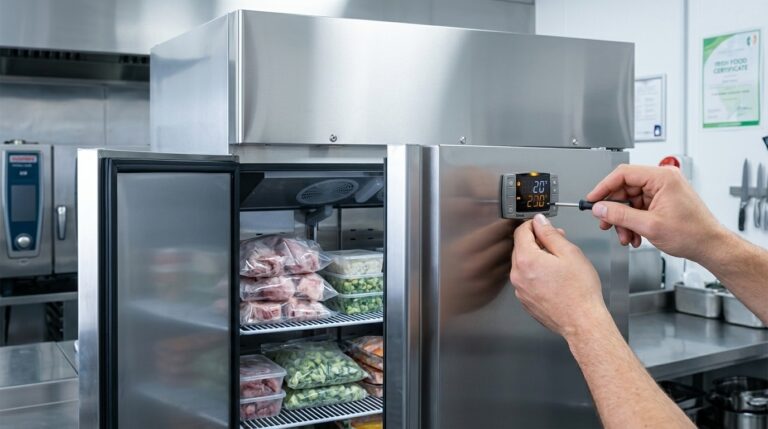
Understanding the Unifrost F410SS Upright Freezer: Temperature Alarm Basics for New Owners
Discover the essentials of managing temperature alarms on your Unifrost F410SS upright freezer for optimal performance in Irish kitchens.
Read guide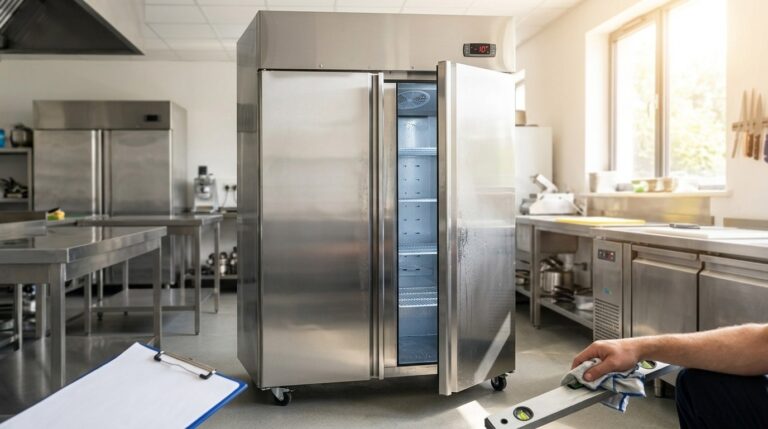
Unifrost Upright Freezer Door Not Closing or Popping Open in Summer: Troubleshooting Guide
Resolve Unifrost upright freezer door issues during Irish summers. Practical troubleshooting for commercial kitchens.
Read guide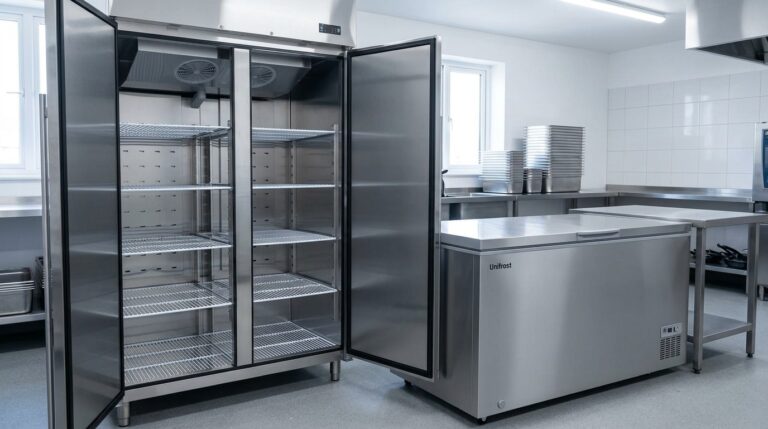
Unifrost Upright Freezer vs Chest Freezer: Model Comparison Guide for Irish Kitchens
Compare Unifrost upright and chest freezers for Irish kitchens. Find the best fit for your business needs efficiently.
Read guideCompare Unifrost freezer options on Caterboss
For current product options, pricing and availability, continue to Caterboss.