
Unifrost Upright Freezer Door Vacuum: Summer Reopening Delays Troubleshooting
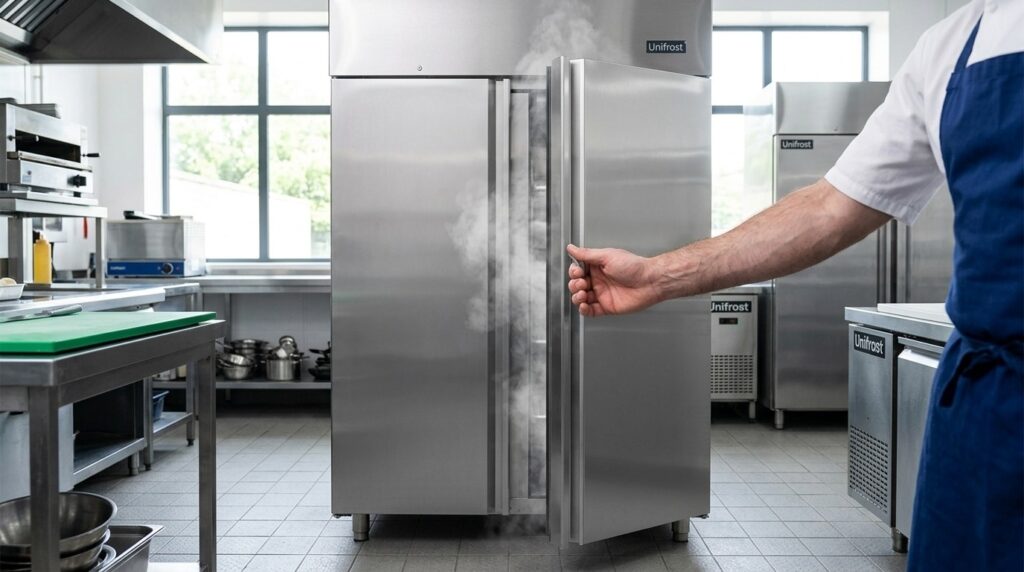
Troubleshoot vacuum issues in Unifrost upright freezers during Irish summers. Practical tips for smooth door reopening.
Unifrost Upright Freezer Door Vacuum in Summer: Fix Steam Bursts and Reopening Delays
If your Unifrost upright freezer door feels “stuck” for a few seconds after closing, or you see a steam cloud when you open it, you are dealing with pressure equalisation and warm, humid air getting into a very cold cabinet. In busy Irish kitchens this turns into real downtime, staff forcing the handle, and damaged gaskets or hinges.
This guide is written for Unifrost upright freezer models such as the F1000SV (and F1000SVOG), F1300SV (and F1300SVNOG), F1310SV, F410SS (and F410SSOG) and F620SV. You will learn what a normal short vacuum delay looks like versus signs of a fault, what to check first on seals, levelling and loading, and how to reduce summer steam ingress that drives suction and icing.
You will also see the practical tradeoffs operators make in warm weather: waiting a few seconds versus forcing the door, improving airflow and siting versus losing prep space, and when it is time to move from quick checks to Unifrost support resources or Caterboss service.
Understanding Summer Vacuum Issues
Unifrost upright freezer doors can feel hard to reopen straight after closing, particularly in warmer, humid conditions. The usual cause is a temporary pressure difference: warm kitchen air enters when you open the door, then cools quickly once the door is shut. As that air contracts, it creates brief suction that pulls the gasket tighter against the frame until pressure equalises. This is a known refrigeration behaviour, and is explained clearly in Beko Ireland’s guide to door suction after closing (domestic example, but the physics is the same): https://www.beko.ie/support/faqs/fridges/fridge-door-hard-to-open
The useful distinction is this: a short re-opening delay can be normal. A door that regularly won’t reopen after a reasonable pause, or needs force, usually points to alignment, sealing, loading, or workflow issues rather than “just the weather”.
Why it feels worse in summer (even in Ireland)
Irish kitchens don’t have to be tropical for this to show up. What matters is humidity and door traffic.
Moist air from pot-wash, kettles, combi ovens, and busy service areas gets pulled into the cabinet.
That air hits very cold internal surfaces, so moisture condenses. You might even see a quick “mist” effect at the door.
The more often the door opens, and the longer it stays open, the more warm air you swap in. That makes the pressure drop after closing more noticeable.
Operationally, summer can also mean more demand for ice, frozen chips, desserts, and prep pull-through, so the door is simply working harder.
What’s happening inside the cabinet after you close the door
When you close the door, you’ve sealed the cabinet with a pocket of air inside. If that air has just been replaced with warmer kitchen air, the refrigeration system drags the temperature back down quickly and the air volume contracts. Until the pressure equalises, the gasket is effectively held tighter than normal, so the handle can feel “stuck”.
You tend to notice it more:
after a long door-open event (stocking, picking during service)
after heavy loading (more warm product and air movement)
around defrost periods, when moisture and temperature swings can be higher
When suction is normal vs when it’s a problem
A brief delay is normal on upright freezers with strong door seals. It becomes a practical issue when staff start forcing it open. That’s when you see knock-on problems: hinges loosening, gaskets tearing, doors twisting slightly, and then poorer sealing. Poor sealing leads to more icing and higher running costs, so it’s worth addressing early.
Treat it as a fault or operational risk if:
the door still won’t reopen after a short pause
you need to “yank” the handle or pull the door sideways
the door pops back shut unless you pull perfectly straight
you notice uneven gasket contact, ice build-up around the door, or the unit struggling to hold temperature during busy periods
Also look at where the freezer is positioned. If it’s beside a dishwasher, combi oven, or a frequently opened back door, you’re feeding it warm, wet air all day. In that setup, vacuum and moisture ingress are more about environment and workflow than the freezer “not coping”, and fixing the placement or door routine usually makes a bigger difference than chasing parts.
Preventing Door Reopening Delays
To minimise door reopening delays on Unifrost upright freezers in summer, focus on three things: reduce warm, humid air getting into the cabinet, keep the door sealing and alignment correct, and avoid operating patterns that create a strong pressure drop straight after closing. If a door will not reopen without serious force, treat it as a fault condition. Do not have staff yanking the handle before you have checked the seal, hinges and cabinet level.
1. Break the “close then immediately reopen” habit
The vacuum effect is most noticeable when someone closes the door and tries to reopen it straight away to grab “one more thing”. Train staff to pause a moment after closing, particularly on tall uprights.
You can also reduce repeat openings during a rush. In a busy pub kitchen or hotel banqueting, a simple pick list helps staff pull what they need for the next few minutes in one go, instead of five quick opens. That cuts suction complaints and also reduces moisture ingress that later becomes frost and heavy “steam” when the door is opened.
2. Reduce humidity and draughts at the door
Irish summer humidity makes moisture ingress more obvious when a freezer door is opened, especially if the unit sits where it gets a direct hit of warm, damp air. Met Éireann’s overview of Ireland’s summer air masses is a useful reminder that humidity can be the real driver here, not the freezer itself.
Source: https://www.met.ie/climate/climate-of-ireland
Check what is near the door line. If the freezer is beside pot wash, a combi vent, a kettle station, or a back door, it is pulling in humid air every time it opens. If you cannot re-site the cabinet, reduce the impact by turning it so the door is not facing the steamiest area, and keep clear space around it so warm air is not pooling at the front of the unit.
3. Avoid hot loading and blocked airflow inside the cabinet
Warm product and overpacked shelves slow recovery and keep the cabinet pulling down hard after the door closes. That increases the pressure change and makes “sticking” more likely during service.
Operationally:
Split loading into smaller batches where possible.
Keep airflow paths clear between packs and shelves.
Do not load warm food into the freezer.
The Food Safety Authority of Ireland also warns against overloading refrigeration with warm food because it raises cabinet temperature and increases risk. Even when food safety is not the immediate issue, the same habit reduces strain and helps the door behave more normally.
Source: https://www.fsai.ie/business-advice/running-a-food-business/caterers/temperature-control
4. Make the door seal do the work, not the handle
A clean, flexible gasket seals quickly and evenly. A dirty, twisted, or hardened gasket can grip the frame, trap moisture and make the door feel stuck even after pressure has equalised.
As part of summer checks:
Clean the gasket and the mating surface on the frame.
Inspect for splits, flattening, or sections pulling out of the channel.
If staff are using shoulder force to reopen the door, assume the seal or alignment is off until proven otherwise. Forcing it is how gaskets tear and hinges bend, and once the seal is compromised you will chase ice build-up and temperature swings.
5. Level the cabinet and check hinge alignment
Upright freezer doors are heavy. A small twist in the cabinet or a hinge starting to sag changes how the gasket lands on the frame. In real kitchens, feet can settle over time, especially on tiled floors with vibration and wash-down routines.
Check:
Level left-to-right and front-to-back.
The door is not rubbing, catching, or “dropping” as it closes.
You want a smooth close with consistent gasket contact. Slamming the door increases the pressure change and makes immediate reopening harder.
6. Keep ventilation and the condenser area clean
When the refrigeration system is under heat stress, you often see knock-on issues that feel like “door problems”: longer run times, more moisture around defrost, and heavier fogging when opened. Summer maintenance matters.
Keep ventilation clear and keep the condenser area free of dust and grease. If you already do HACCP temperature checks, add a quick walk-by check for blocked grilles and visible build-up so you catch issues before the unit struggles in the middle of a Saturday service.
These steps usually solve reopening delays without touching controller settings. If the vacuum effect becomes suddenly extreme, or the door will not reopen normally, move from “usage fixes” to a fault check of the gasket, hinges and cabinet condition, and arrange service support if needed.
Feature Spotlight: Door Pressure Reduction
A brief bit of “door suction” just after you close an upright freezer is normal. The warm air pulled in during opening cools quickly, contracts, and creates a short-lived negative pressure that grips the gasket. Many freezer instructions flag this behaviour and advise waiting roughly a minute for the pressure to equalise if the door feels hard to reopen (ElectroCity freezer instruction manual PDF).
In a commercial kitchen, the issue is not whether suction exists. It’s whether it clears quickly enough that staff are not reefing on the handle during a busy service and stressing hinges and seals.
How “door pressure reduction” works in an upright freezer
The suction effect is strongest when you have:
a tight magnetic gasket seal, and
a fast pull-down in temperature after the door shuts.
Door pressure reduction is simply controlled pressure equalisation. Depending on the cabinet design, that can be a small vent, port, or valve that lets air pressure normalise after closing without turning the door into a permanent leak path. In practical terms, it helps the door become reopenable sooner, which matters on tall uprights where there’s more gasket contact area.
What Unifrost does (and what varies by model)
Across Unifrost upright freezer models, you should expect a strong magnetic gasket seal and commercial door hardware designed to stay aligned under load and frequent opening. That tight seal supports temperature stability, but it can make suction more noticeable in real kitchens, especially in warm, humid Irish conditions or when the freezer sits near hot equipment and the door is opened repeatedly.
Whether a specific pressure equalisation device is fitted, and how it’s implemented, can vary by model and production batch. If you need a definite answer for a specific Unifrost model number, confirm it against the official Unifrost documentation or via support rather than assuming it from general freezer behaviour.
How to tell if it’s working properly (or if something is getting in the way)
In normal use, suction should ease quickly and consistently. If it gets worse in summer, it’s often down to heat and moisture making the gasket tackier, plus longer door-open times letting more warm, wet air into the cabinet.
If suction becomes excessive, inconsistent, or the door feels “locked” for an extended period, look for restriction or alignment issues rather than blaming “normal vacuum”. Check, in this order:
Gasket condition and cleanliness: grease, crumbs, and sticky residue increase grip and stop the seal seating evenly.
Ice build-up around the frame: ice can physically block any equalisation path and also over-compress the gasket.
Cabinet levelling and hinge alignment: a slightly twisted cabinet can load one side of the seal and make suction feel worse.
Hot, wet air sources: dishwashers, combi ovens, or a busy back door nearby drive moisture into the cabinet and accelerate icing.
Most fixes come back to reducing how much warm, wet air you’re dragging into the freezer and keeping the door, seal, and frame working as designed.
Maintaining Your Freezer for Optimal Performance
In Irish summer conditions, “door suction”, a brief puff of mist, and a short delay before the door re-opens usually come down to three things: heat the cabinet cannot get rid of, moisture getting in, or a door that is not closing square. A simple weekly routine helps you catch it early.
Keep notes alongside your normal HACCP checks, not in someone’s head. The FSAI Safe Catering Pack includes a refrigeration record (SC2) you can use for temperature monitoring and trends: https://www.fsai.ie/publications/safe-catering-pack-record-books. If a door will not re-open after a sensible wait, stop forcing it. Treat it as a maintenance issue, not a staff-strength issue.
1. Clean the condenser area and protect airflow around the cabinet
When a freezer is struggling to reject heat, it runs longer. That makes pressure changes after closing more obvious, and can increase moisture build-up around the door.
Clear dust from the condenser area during a controlled downtime window (follow your site isolation routine).
Remove the grille or access panel only if your routine allows it, then brush or vacuum carefully.
Keep the ventilation path clear. Avoid boxing in the back/top with cardboard, trays, or dry stores.
2. Reduce hidden heat loads that show up in warm weather
A lot of “summer faults” are really placement problems that only become obvious when ambient temperature and humidity rise.
If the freezer sits beside a combi oven, dishwasher, hot pass, or near a busy external door, it will pull in warmer, wetter air and work harder to recover.
Move the unit if you can.
If you cannot, reduce heat and moisture hitting it: a basic heat shield, redirecting dishwasher steam, and keeping the door-opening side out of direct draughts all help.
Watch for faster icing around the frame in these spots. It is a strong sign the location is driving the issue.
3. Treat the door gasket as a service-critical part
In summer, a dirty or tired gasket does two things you do not want: it leaks in warm moist air (more icing), and it can stick to the frame so the door feels “vacuum locked”.
Clean the gasket and the mating surface with food-safe cleaner and warm water, then dry fully.
Check for splits, flattened corners, hardened sections, or areas pulling away from the door.
Take uneven pulling seriously. If staff always yank one corner, it often points to poor seating or a door that has dropped slightly.
4. Level the cabinet and check hinge alignment so the door closes square
If the door twists as it closes, the gasket contacts unevenly and can “grab” the frame. On tall uprights, this can creep in over time as feet settle, floors slope, or the unit gets nudged during cleaning.
Make sure the cabinet is stable with no rocking.
Adjust the feet so the unit sits square and the door self-closes smoothly without needing a shove.
Check hinge fixings for looseness and look for sag signs (rubbing marks, a door you need to lift to latch).
These checks apply across upright models. The principle is the same: a square cabinet plus a healthy gasket gives predictable door behaviour.
5. Manage defrost and loading habits to reduce icing and pressure swings
Over-icing, over-packing, and loading warm product all increase recovery time and moisture freezing around the door area. That can turn a normal short “wait a moment” into a regular complaint.
Avoid loading at the hottest point of service where possible.
Split large deliveries into smaller batches so the cabinet can recover.
Keep internal air paths clear. Do not pack boxes tight to the back wall.
Add a quick visual check for ice around the door frame and clear it before it becomes a ridge that interferes with sealing.
The aim is not perfection. It is keeping the door area clean enough that the seal can do its job without freezing itself to the frame.
6. Record what changes and know when it is no longer “normal vacuum”
Some suction after closing is normal on upright freezers, especially after a long door-open event, heavy loading, or during hot weather. What is not normal is a pattern of extended lock-in, repeated hard pulling, or seals visibly distorting.
Track for a week:
when the busiest door-opening periods happen
any visible icing around the door and frame
whether the temperature recovers in a reasonable time after service
If suction is getting worse week-on-week, the door will not re-open after a practical wait, or you can see gasket damage or misalignment, book a proper check. Once the basics are under control, it is much easier to fix the day-to-day habits that trigger re-opening delays in summer service.
Leveraging Unifrost Support Resources
Door “vacuum”, a puff of mist when you open the door, and a short delay before an upright freezer will re-open are often down to use and environment. The quickest way to tell normal behaviour from a developing fault is to use the right support resource in the right order.
In Irish kitchens, that matters because temperature control sits inside your day-to-day HACCP routine. The FSAI is clear that food businesses should monitor and record temperatures as part of their food safety management system, not just react when something goes wrong (see the FSAI temperature control guidance for caterers). The same symptom can have different causes depending on humidity, loading patterns, service pressure, and where the cabinet is positioned, so it’s worth getting a bit of evidence from the unit before you start changing settings or booking a call-out.
Start with the manual when the symptom is repeatable
If the door is consistently hard to reopen straight after closing, or you regularly see “mist” bursts in humid weather, start with the manual. It tells you what the controller is doing in normal operation, including things that get missed in a busy kitchen:
what you’ll see on the display during defrost
how alarms are acknowledged
any expected door-open behaviour on the controller fitted to your unit
This matters on tall uprights where “it’s stuck” can quickly turn into staff yanking the handle. A normal pressure equalisation delay can become a torn gasket or a hinge issue if the door gets forced.
For Unifrost uprights covered here, check the model ID plate and pull the correct manual for your unit (for example: F1000SV / F1000SVOG, F1300SV / F1300SVNOG, F1310SV, F410SS / F410SSOG, F620SV) before anyone changes parameters.
Use self-service checks when you need a quick operational fix (not a settings change)
Self-service checks suit issues that are intermittent, show up during busy periods, or clearly relate to warm, damp air getting into the cabinet. Start by ruling out “kitchen-cause” issues. They’re cheaper to fix, and they tend to return every summer if the root cause stays in place.
Do one quick, disciplined pass. Work in order and stop when you find something that explains the behaviour:
Confirm it isn’t straight after a long door-open event, heavy loading, or a defrost cycle. Wait briefly and re-try without forcing the handle.
Check gasket contact all the way around: splits, hardened sections, loose corners, or debris stopping a clean seal.
Check the cabinet is level and stable. A slight twist can make a tall door bind and exaggerate “suction” by creating an uneven seal.
Look for icing around the door frame and near the evaporator cover. Frequent openings plus humidity can cause local ice that drags on the seal.
Check ventilation and heat sources: is the unit tight to a wall, boxed in, or beside a combi oven, dishwasher, hot pass, or a back door that’s open in warm weather?
If staff report “steam”, verify what they’re seeing. A brief fog when warm kitchen air hits cold air is normal. Persistent vapour plus wet surfaces points to excessive warm-air ingress.
Keep notes simple: time of day, what was loaded (ambient or chilled), how long the door was open, and whether the unit had just come out of defrost. That’s what makes remote support useful instead of guesswork.
When to escalate to Caterboss or Unifrost service (and what to have ready)
Escalate if the door won’t reopen after a reasonable wait, if the handle has to be forced, if the door won’t self-close cleanly, or if you can see anything that risks damage (torn gasket, loose hinge, door drop, or heavy icing that returns quickly after clearing).
Also escalate if the cabinet struggles to pull temperature back after normal service openings. Door “vacuum” complaints can be an early sign of a unit running hot, short-cycling, or suffering from poor ventilation.
When you contact support, you’ll get a faster decision if you have:
the exact model reference (for example F410SS / F410SSOG versus the larger F1000SV family)
a photo of the controller display during the issue
a close-up photo of the gasket area where it’s sticking
a description of where the cabinet sits relative to heat, steam, and draughts
If settings have been adjusted to chase the symptom, say that upfront. It changes the troubleshooting route and avoids wasted time.
Use Unifrost’s hot-weather guidance when the kitchen is the cause
If the problem mainly shows up during warm spells, use Unifrost’s own hot-weather and upright troubleshooting guidance. It focuses on airflow, overheating, and door-controller behaviour, which are the usual drivers when a unit is technically “working” but behaving poorly because it’s pulling warm, damp air all day.
Once you’ve checked the manual, done the quick operational checks, and captured what’s repeatable, you’re in a strong position to reduce door re-opening delays without damaging seals or training staff into bad habits.
Positioning Tips for Unifrost Upright Freezers
If an upright freezer is positioned beside heat or steam sources in summer, you will usually notice two things: the door feels “grabby” after closing, and you may have to wait a moment before it will re-open. Put it beside a combi oven, grill, dishwasher outlet, hot pass, or a back door and you are feeding the cabinet warmer, wetter air every time the door opens. That air cools quickly, contracts, and you feel it as stronger suction at the gasket.
This is also why the problem tends to show up during busy service and after heavy loading. More openings means more warm air drawn in, and higher humidity means more moisture to freeze around the frame. In Irish kitchens, you will often see it alongside a puff of mist when you open the door and quicker ice build-up around the seal in warm weather.
HSE cold chain guidance reflects the same siting principle: keep refrigeration in a ventilated area, away from heat sources and direct sunlight. See the HSE question “Is the fridge situated in an appropriately ventilated room away from any heat source and away from direct sunlight?” in its cold chain guidance for vaccine fridges.
Why heat sources make the “vacuum” feel worse
The suction is not just an annoyance. When heat and humidity are blowing at the cabinet, each door opening drags in more warm air. As that air chills it shrinks, briefly dropping the pressure inside the cabinet. The gasket then seals tighter until the pressure equalises.
A spot that feels fine in January can become a real operational nuisance in July, especially if the freezer is also tight to a wall or boxed in overhead. Poor airflow makes the unit work harder and increases the chance of warm, humid air hanging around the door area.
Practical siting moves that reduce suction without changing the freezer
A small re-site often fixes more than staff “being careful” ever will. The most useful changes are straightforward:
Move the freezer out of the direct plume from a dishwasher condenser outlet or combi-oven vent.
Avoid positions where sun hits the door, even for part of the day.
Keep it out of the traffic lane between a hot kitchen and a frequently opened back door.
Leave sensible space for ventilation so hot air can clear the back and top of the unit.
Once the positioning is right, it is much easier to manage door re-opening delays and ice build-up during peak summer service. If you are planning a new layout or replacing a unit, it is worth checking your clearances and heat sources before you choose the final footprint.
FAQs: Unifrost upright freezer door vacuum, steam, and reopening delays
Why is my freezer door hard to open again right after I’ve closed it?
This is usually normal door vacuum. When you close an upright freezer, a small amount of warm air gets trapped inside. That air cools quickly, contracts, and the pressure inside drops slightly, so the door gasket gets pulled tighter against the cabinet.
It’s most noticeable after a longer door-open event, heavy loading, or in warm weather. If the door feels excessively stuck for minutes, or you can see obvious gasket damage or door misalignment, treat it as a maintenance issue rather than normal vacuum.
How long should I wait before reopening a freezer door after closing it?
In day-to-day use, wait 10 to 30 seconds and the pressure will usually equalise enough to reopen normally.
If you’ve just loaded warm product, held the door open for a while, or opened it repeatedly during service, it can take up to 1 to 2 minutes.
If it still will not reopen after a couple of minutes, avoid forcing it. Check that the door fully closed on the gasket (no packaging trapped), the cabinet is level, and the gasket is clean and making even contact all the way around.
How can Irish kitchens minimize steam bursts and door sticking in summer?
Irish summer kitchens often combine humid air plus bursts of steam from combi ovens, kettles, dishwashers, and pot-wash areas. That warm, wet air rushes into the cabinet on opening, then rapidly chills, creating mist/steam clouds, extra frost risk, and stronger temporary suction.
Practical ways to reduce it:
Site the freezer away from steam sources and back doors where warm, damp air hits the cabinet. If you cannot move it, add a simple heat/steam shield and keep a small air gap around the unit for ventilation.
Change habits during service: open, pull, close. Avoid “standing open” while portioning. Batch pickups instead of frequent single-item openings.
Let pressure equalise: train staff to wait a few seconds if the door rebounds or feels stuck. Forcing the handle can tear gaskets and worsen the problem.
Keep gaskets clean and supple: wipe seals daily in summer, remove grease film, and make sure the gasket is seated evenly with no twists.
Keep airflow clear inside: don’t stack product hard against internal air outlets or block shelves with oversized boxes, especially right after deliveries.
If you’re seeing repeated heavy misting, fast ice build-up, or persistent sticking, it’s a good prompt to review placement, loading routine, and door seal condition.
Need help choosing the right freezer for your kitchen?
If you are comparing options or replacing an older upright that struggles with summer service, Caterboss can help you choose a freezer that suits your layout, usage pattern, and delivery schedule.
Browse Caterboss’s Frozen Storage category and then contact the team with your preferred size and style for practical guidance.
Related Unifrost guides
Compare models, maintenance advice and support information related to this topic.
Unifrost Upright Freezer Maintenance Checklist
Essential maintenance tips for Unifrost upright freezers to ensure longevity and efficient operation in Irish commercial kitchens.
Read guideCompare Unifrost freezer options on Caterboss
For current product options, pricing and availability, continue to Caterboss.