
Unifrost BC-Series Bottle Cooler Energy Use and Running Cost Guide for Irish Bars
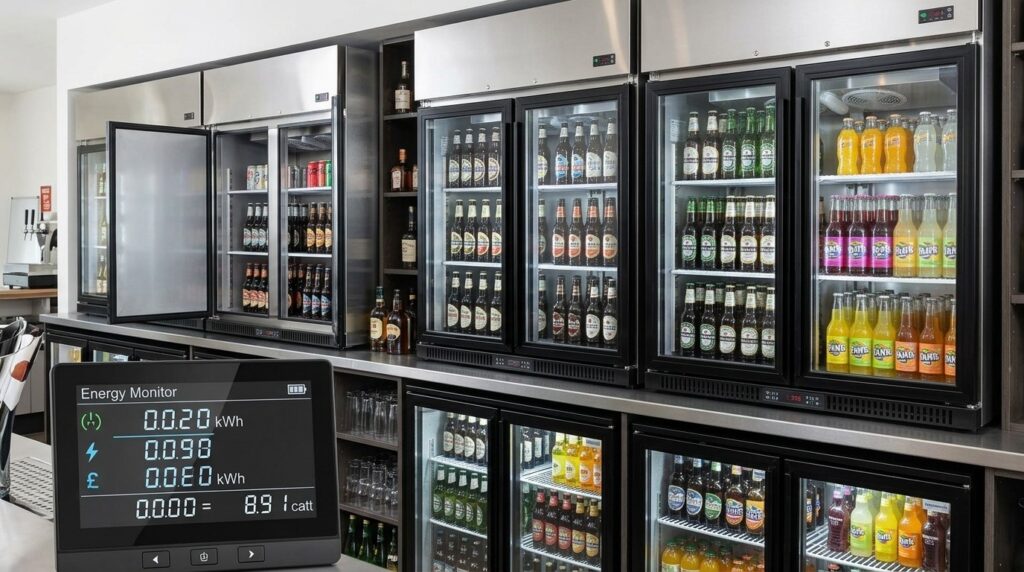
Explore energy use and cost of Unifrost BC bottle coolers for Irish bars. Learn strategies to optimize running costs and energy efficiency.
Unifrost BC-Series Bottle Cooler Energy Use and Running Cost Guide for Irish Bars
You run bottle coolers 7 days a week, so small differences in energy use turn into real money on your bar’s electricity bill. This guide focuses on Unifrost BC-series back-bar bottle coolers sold via Caterboss, including BC10HBE / BC10HBEOG, BC20HBE / BC20HBEOG, BC20HSE / BC20HSEOG, BC20 / BC20OG, BC20SBE, and BC30HBE, and shows you how to estimate running cost in an Irish pub using your tariff and how you actually operate the unit.
You will work through the decisions that change cost in the real world, not just the label figures:
How to compare models using energy class, kWh per 24 hours, and annual kWh, and where quoted numbers can diverge from your bar
Which factors push consumption up behind the bar, including ambient heat, door opening frequency, loading warm stock, and thermostat setpoint
The practical checks that protect efficiency, including door seals, condenser cleaning, airflow clearance, and defrost routines where relevant
When replacing an older back-bar cooler is likely to pay back, and how to sanity-check savings before you buy
Why Energy Use Matters for Irish Bars
Back-bar bottle coolers run 24/7, and most bars have more than one. That makes energy use a steady, predictable cost. Even a small difference in kWh per day adds up across a month, especially when the unit is working hardest during peak service.
Refrigeration can also be a bigger slice of your electricity spend than many operators expect. SEAI notes that refrigeration can represent up to 50% of electricity costs for some Irish SMEs (SEAI SME Guide to Energy Efficiency). The catch is that your real running cost depends less on the brochure figure and more on how the cooler is used and where it sits: bar temperature, door openings, how warm the stock goes in, and whether the condenser is kept clean.
Why bottle coolers become a “silent” cost behind the bar
Unlike an oven or glasswasher, a bottle cooler never really switches off. It’s easy to ignore because it just sits there doing its job.
In a busy pub, hotel bar, or late bar, it’s usually dealing with two common pressure points:
Frequent door openings during service
Poor airflow under-counter or in tight back-bar cabinetry, where warm air builds up
Both push the compressor to run longer. That’s where the energy goes, and it’s often where older or poorly sited units start to show up in the bill.
Why energy use affects service and drink quality
Energy use isn’t just a cost line. It’s often a sign of how hard the unit has to work to recover temperature during trading.
If a cooler struggles to pull down after a restock or a rush, you tend to see the knock-on effects quickly: warmer bottles and cans, more “are these cold?” comments from customers, and staff holding doors open longer while they search for stock. In practice, the best value unit is usually the one that holds temperature reliably in your bar conditions without constant checking.
Why proper comparisons save money (and avoid false expectations)
When you compare bottle coolers, look for like-for-like energy data and the test conditions behind it. An “energy-saving” headline on its own is not much use.
Two back-bar coolers can look similar but cost very differently to run once you factor in:
trading hours and peak periods
ambient heat behind the bar
how often you restock and how warm stock is when it goes in
how well the unit is ventilated and maintained
If you’re weighing up options in the Unifrost bottle cooler range, it’s worth checking the model specs on energy use and making sure they suit the way your bar actually operates, not an ideal setup on paper.
Understanding Unifrost BC-Series Coolers
Unifrost’s BC-series (BC10HBE/BC20HBE/BC30HBE and related variants) are commercial back-bar bottle coolers built to hold drinks at a consistent serving temperature through a busy shift. When you’re comparing units, the spec sheet is only half the story. What matters day to day is the door format and seal quality, cabinet insulation, the airflow method, and how well the cooler holds its setpoint when it’s being opened constantly.
Maintenance and setup play a bigger role than most operators expect. SEAI notes that poor refrigeration maintenance alone can increase energy use by up to 10% (SEAI SME Guide to Energy Efficiency). Your actual consumption will still depend on bar ambient temperature, door-opening frequency, ventilation around the unit, and whether you’re loading warm stock.
Doors, glass area, and sealing quality
On a back-bar bottle cooler, the doors are the main source of heat gain. More glass area and more openings generally means more warm air getting in, so the door format affects both temperature stability and running costs.
Hinged-door units (like the BC10HBE/BC20HBE/BC30HBE family) can work very efficiently behind a busy bar because staff tend to open, grab, and close. You usually get a clear “shut” and a consistent seal, provided the hinges are aligned and the gasket is kept in good condition.
Sliding-door variants (for example BC20SBE) suit tight back-bar spaces where you don’t have swing clearance. The trade-off is that you need to be stricter about seal condition and door tracking. A door that doesn’t pull fully closed, or a worn gasket, can quietly increase compressor run-time all week.
Airflow design and recovery during service
Energy use is not just about holding temperature with the doors shut. It’s also about recovery: how quickly the cabinet pulls back to set temperature after repeated openings during peak trading, or after you’ve loaded a few crates that weren’t properly pre-chilled.
Fan-assisted (forced-air) cooling generally gives faster pull-down and a more even cabinet temperature. That’s useful in pubs and hotel bars where the cooler is opened constantly and stock is moving quickly.
Static cooling can be economical in steady conditions, but it’s more sensitive to how you load the cabinet and whether airflow paths get blocked by tightly packed bottles or cases. If the unit is being worked hard, real-world performance can drift away from what you’d expect on paper.
Controls, thermostat habits, and “cold enough”
Most bars do not benefit from setting a bottle cooler colder than the product actually needs. Every unnecessary drop in set temperature increases compressor run-time and can increase the risk of icing, which then costs more energy and time to sort.
A practical approach is to set the cooler for a stable serving temperature and leave it alone for a normal trading week, checking it with your own thermometer. If you find yourself constantly turning the thermostat down to cope with a hot bar, it’s often a ventilation or condenser-cleaning issue rather than a sign the cooler “needs to be colder”.
Condenser cleanliness and ventilation space (the hidden running cost)
Back-bar bottle coolers live in a dusty, linty environment, often boxed in by joinery and surrounded by stock. If the condenser can’t reject heat properly, the compressor runs longer and hotter and your electricity spend climbs without you noticing.
When you’re looking at the Unifrost BC-series, “low running cost” only holds up if the unit can breathe and the condenser is kept clean as part of routine bar maintenance. In practice, that’s what turns a well-specified bottle cooler into one that stays efficient and reliable in an Irish bar setting.
Comparing Energy Efficiency and Running Costs
A bottle cooler’s energy use shows up every day on your electricity bill. The real comparison is not “new vs old”, it’s how hard the compressor has to work in your back-bar.
A newer back-bar cooler will usually hold temperature with less run-time when it has decent airflow and staff are closing doors properly. An older unit with tired seals, a dirty condenser, or poor ventilation is far more likely to short-cycle, struggle in warm ambients, and waste energy. That said, a well-maintained older cooler in a cool, low-traffic area can run perfectly acceptably, while a new unit wedged into a hot, unventilated counter can still be expensive to run.
In both cases, running cost comes down to heat load and habits:
Ambient temperature behind the bar
Door openings during peak service
How warm stock is when it goes in
Whether the condenser can breathe (and is kept clean)
How do Unifrost BC-series and older back-bar coolers compare overall?
Compare like with like: similar door type, similar footprint, similar stock, and similar bar conditions. Otherwise you are just comparing two different problems.
If you have access to a rated consumption figure on the data plate or in a manual (often shown as kWh/24h or annual kWh), use it as a starting point. Then sanity-check it with a plug-in energy meter over a normal trading period, with the same setpoint and similar loading and opening patterns.
If you cannot get a kWh figure, compare behaviour instead:
How often the compressor is running
How quickly the cabinet recovers after a busy spell
Whether it overshoots (freezing bottles at the back) or struggles to pull down at all
Unifrost BC-series (BC10HBE, BC20HBE, BC30HBE and related variants)
In day-to-day Irish bar use, the practical advantage of a newer BC-series cooler is usually predictable temperature holding without the compressor running flat-out, provided it has ventilation clearance and the condenser is kept clear of dust. Most back-bar units live in cramped, warm, dirty voids, so airflow and cleaning matter as much as the badge on the door.
For running costs, think in kWh multiplied by your tariff, not a single euro number that rarely matches your unit rate. If you run multiple bottle coolers, measure one representative unit for a week (include a weekend), then use that to estimate your annual spend across similar units.
Setpoint matters too. If you are storing anything perishable (for example dairy mixers), work within safe chilled storage temperatures. The FSAI advises fridges and chill storage cabinets should be between 0 °C and 5 °C. Avoid “turning it down for colder bottles” if it pushes you into unnecessary energy use or unstable control.
Older back-bar bottle coolers (common in Irish pubs)
Older coolers tend to cost more to run for predictable reasons: air leaks, heat soak, and restricted airflow. Common signs include:
Warm cabinet sides and constant compressor noise
Excessive icing around the evaporator area (where applicable)
Bottles freezing in one spot while the rest of the cabinet is only just cool
Running cost issues also show up in service flow. If the unit cannot recover after repeated door openings, staff often compensate by setting the thermostat colder, under-loading the cabinet, or leaving doors open while restocking. Each workaround typically drives energy use up again.
There’s also the commercial risk angle. A cooler that is already running long hours to stay cold is generally closer to a failure point than one that cycles normally. When you compare “cost”, include the real impacts: emergency call-outs, lost sales during service, and stock spoilage risk.
Which is best for you?
If you are weighing up replacement versus keeping an older unit going, base the decision on what you can measure in your own bar. If the existing cooler is noisy, slow to pull down, needs constant thermostat tweaking, or shows obvious air leaks and heat build-up behind the bar, you are often paying for inefficiency every hour you are open.
Door format and layout matter as much as age. Hinged-door units (like BC10HBE, BC20HBE, BC30HBE) can be very efficient when staff have space to open and close them cleanly. Sliding-door formats (like BC20SBE) can suit tighter back-bars where hinged doors get left ajar or take a knock during service. In practice, “operator-proof” often beats theoretical efficiency.
Once you have a measured baseline for what your current cooler uses, choosing within the Unifrost BC-series becomes more straightforward. You can weigh capacity and door format against real running cost in your own trading conditions, rather than relying on brochure assumptions.
Practical Ways to Reduce Energy Consumption
Reducing the running cost of a Unifrost BC-series back-bar bottle cooler is mostly about avoiding unnecessary pull-down, giving the unit proper ventilation, and keeping airflow and heat-exchange surfaces clean. If you do decide to switch it off overnight, only do it where food safety and recovery time are both properly controlled.
1. Set a realistic temperature target and avoid loading warm stock in one go
The quickest way to waste electricity is making the cabinet repeatedly pull down warm deliveries, especially in a busy Irish bar where the doors are already opening constantly.
If you can, pre-chill stock in a colder store and top up the back-bar little and often, rather than filling it in one go with warm bottles.
If you store any perishables in the bottle cooler (open dairy for coffee service, garnishes, prepared mixers), set the temperature for food safety, not “cold drinks”. Use your HACCP checks as the decision-maker and follow FSAI guidance on chilled food being kept at 5°C or below: https://www.fsai.ie/business-advice/food-safety-management/haccp
2. Give the cooler proper airflow behind the bar (and keep it out of hot spots)
Back-bar spaces are often tight, boxed-in and warmer than you think. When a unit can’t shed heat properly, the condenser runs hotter and the compressor runs longer, which pushes up energy use and wear.
A quick reality check during service:
If the cabinet sides or rear are very warm to the touch, or
If it feels like the fan and compressor never get a break,
…treat airflow as a layout problem, not a “bad cooler” problem. Even small fixes can help: pull the unit forward slightly if possible, clear dust traps, and keep heat sources like glasswashers, coffee machines and radiant heaters away from the air path.
3. Reduce door-open time by fixing the workflow that causes it
Test figures assume “normal use”. A Friday night behind the bar is not normal use. The biggest saving is usually the boring one: fewer seconds with the door open.
The habit that pays back:
Open once, take everything you need, close fully.
Also match the door style to how the bar is actually used:
Hinged doors work well when you have clearance and they can close quickly.
Sliding doors help where space is tight, but you still lose cold air every time they’re left open or not shut properly.
4. Clean the condenser and door seals so the cooler isn’t fighting itself
High running costs are often down to poor heat exchange (dirty condenser) or air leaks (failed gaskets). Both force longer run times.
A workable routine for a pub or hotel bar:
Weekly: wipe gaskets, check doors self-close properly, and keep internal vents clear of product.
Monthly: inspect and clean the condenser area (more often where there’s lint, flour dust, or heavy footfall pulling dirt in).
Quarterly: watch for persistent ice build-up, blocked drains, or doors that have dropped and no longer seal evenly.
When cleaning the condenser: isolate power safely, then use a soft brush or vacuum. Avoid blasting debris further into the coil. If you’re unsure where access is on your specific BC model, check the manual or Unifrost support documentation rather than guessing.
5. Don’t let frost and water issues turn into constant run time
Bottle coolers can still ice up in humid bar conditions, with frequent openings, or where warm stock is loaded regularly. Ice restricts airflow and pushes the system into longer cycles.
If frost or pooled water keeps coming back, treat it as something to fix:
confirm doors are closing cleanly and gaskets are intact
avoid overstocking that blocks airflow
keep the drain path clear
When removing ice, don’t use sharp tools that can damage liners or evaporator surfaces.
6. Be cautious with switching off overnight or on closed days
Turning a bottle cooler off can save electricity, but it is not automatically a net saving. If anything perishable is inside, you risk unsafe temperatures. Even for drinks-only use, a heavy pull-down before service can cancel out savings and leave you short on properly chilled stock at opening.
If you trial an off period:
remove anything perishable
keep doors shut
confirm recovery time with a probe and your logged checks before you rely on it
Where food is involved, keep the process aligned with HACCP expectations and FSAI chilled storage guidance (5°C or below): https://www.fsai.ie/business-advice/food-safety-management/haccp
These operational wins apply across the Unifrost BC range. The best approach still depends on your door configuration, how tight the back-bar cavity is, and the volume you’re trying to chill through in service.
How to Factor in Energy Use into Buying Decisions
To make energy and running cost a useful part of a buying decision for Unifrost BC-series bottle coolers, you need three things: your real € per kWh, a realistic operating pattern, and a like-for-like energy figure (kWh/24h or annual kWh) from the same test basis. From there, adjust for how your back-bar actually behaves, then do a simple payback check without ignoring service flow and maintenance access.
1. Get your real €/kWh and your operating pattern
Your calculation is only as good as your assumptions. Take a recent electricity bill for the premises and use the all-in unit rate you actually pay, including any day/night split you expect to apply.
Then be honest about how the cooler will run:
24/7 (common in busy pubs and hotel bars where stock is held ready), or
Reduced hours during closed days or seasonal downtime, but only if you are not repeatedly letting stock warm up and then forcing long pull-downs.
If you only do one thing, write down:
your assumed operating hours,
your all-in €/kWh,
the typical ambient temperature behind the bar on a busy night.
Those three inputs will explain most of the “why is this costing more than expected?” moments later.
2. Compare energy figures like-for-like (and check the basis)
When you compare BC-series bottle coolers with other back-bar units, use one comparable metric such as kWh per 24 hours or annual kWh and make sure it’s declared on the same test basis.
In the EU, professional refrigeration energy labelling and ecodesign rules are designed to standardise how energy consumption is measured and declared, so you can make a fair comparison across brands and model types (see Regulation (EU) 2019/2018). If the paperwork does not clearly show a kWh figure and the test basis, treat “low running cost” claims as background noise rather than decision data.
3. Adjust the quoted energy use for real Irish back-bar conditions
Declared kWh figures are a starting point. In real bars, the swing up or down is usually driven by day-to-day use:
Heat load behind the bar: glasswashers, coffee machines and tight joinery bays push run time up.
Door behaviour under pressure: frequent openings matter more than the door type on paper. Sliding doors can help in tight spaces, but only if staff actually close them fully every time.
Warm stock loading: loading recently delivered bottles or cans that haven’t cooled down elsewhere forces long compressor cycles.
Airflow and stocking discipline: overfilling and blocking internal air paths creates warm spots, then someone compensates by setting the thermostat colder than necessary.
Basic upkeep: dusty condensers and tired door gaskets quietly add hours to compressor run time.
If the cooler will sit in a tight back-bar surround beside hot equipment, prioritise ventilation and cleaning access as much as the brochure kWh figure. A unit that can’t breathe will rarely deliver its “lab” number in a working pub.
4. Convert kWh into euros and sense-check payback
Once you have a kWh figure for a candidate unit, turning it into cost is straightforward:
Annual running cost (€) = annual kWh × your all-in €/kWh
Annual saving (€) = (current unit annual kWh − new unit annual kWh) × your all-in €/kWh
Payback (years) = price difference ÷ annual saving
If you don’t have a reliable kWh figure for your existing cooler, use the new unit’s declared energy as the baseline and then sanity-check the old one for typical high-burn signs: constant running, poor recovery after service, damaged gaskets, excessive heat at the sides, or a condenser that’s never been cleaned. If those are present, your old unit is usually well off its best, and any payback estimate based on a “reasonable” old kWh figure can be overly optimistic.
5. Don’t trade away temperature performance, workflow, or maintainability
Energy efficiency only pays back if the cooler works properly in your bar.
Check these alongside the kWh figure:
Setpoint discipline: if staff regularly dial the thermostat colder to cope with slow recovery, your “efficient” unit becomes an expensive one.
Workflow fit: if loading is awkward, stock is hard to reach, or doors get propped open during service, energy use climbs regardless of the model.
Maintenance access: if you can’t easily clean the condenser area and keep door seals in good shape, running costs will drift up over time.
If you want help choosing within the Unifrost BC range, the decision normally comes down to matching door type, footprint, and service intensity to the right format, then confirming the declared energy figure and whether your installation allows the unit to ventilate and be cleaned properly. That context is what makes the differences between BC-series options meaningful in day-to-day trading.
Connecting the Dots with Wider Unifrost Buying Decisions
Most Irish operators find a bottle cooler is only genuinely “cheap to run” when it’s specified and installed for the job, not because the brochure says so. Setpoints are a good example. The Food Safety Authority of Ireland notes that fridges should keep food between 0°C and 5°C, typically achieved by setting the thermostat around 3°C to 4°C. If you’re also expecting the same cabinet to pull down warm stock quickly, energy use rises and recovery can suffer. In reality, your kWh is shaped by service pressure, door openings, bar layout, and how hot the compressor area gets on a Friday night. The “most efficient” unit on paper is not always the cheapest to run in your bar.
Treat BC-series energy efficiency as part of your whole cold chain, not a standalone win
A Unifrost BC-series bottle cooler sits in a wider system: cellar cooling, ice machines, glasswash heat, and your kitchen refrigeration all compete for airflow and electricity. If you install a new back-bar cooler into a dead-hot void beside a coffee machine, or under a tight counter with little ventilation, you’ve effectively chosen higher running cost.
A better buying question is: will it hold serving temperature through peak service without you having to overcool all day to recover? That’s where door style, airflow, and usable loading space matter as much as any quoted kWh figure.
Door style and workflow can change real running cost more than the label
Hinged-door and sliding-door back-bar coolers suit different Irish bar setups.
In a narrow service bay, sliding doors can reduce how long the cabinet is open to the room, because staff aren’t stepping back to clear a swinging door.
In busy service, hinged doors can be quicker for full access when you’re grabbing several items at once, but they can also encourage longer open times if they’re used like a cupboard.
Either way, the energy decision is often a workflow decision. Every second the door is open, warm room air is what the compressor has to remove.
Size for trading reality, not for the quiet hours
Bottle coolers that are undersized for Friday and Saturday throughput often cost more over the year because the workaround is always the same: loading warm stock, overfilling shelves and blocking airflow, or dropping the thermostat to “make it colder faster”. The FSAI warns against overloading refrigeration with warm product, as it raises cabinet temperature and increases risk, while also adding load to the unit (FSAI temperature control guidance).
When you’re comparing BC-series options, focus on:
how many facings you need cold at once, and
how often you restock during service.
A slightly larger cooler that runs steadily can work out better than a smaller unit that’s constantly recovering.
Running cost comparisons only work if you standardise the assumptions
Comparing a newer BC-series cooler against an older back-bar fridge only makes sense if you keep the basics consistent: trading hours, ambient temperature behind the bar, door openings per hour, and stock loading temperature. Without that, annual kWh numbers are useful for direction, but not decision-grade.
A practical approach is to use one electricity rate from your own bill and apply the same “busy week” pattern to each unit you’re considering. You won’t get a perfect forecast, but you will usually see whether you’re debating a few euro a month or a meaningful annual difference across multiple cabinets.
Maintenance and service access are buying criteria because they protect efficiency
Efficiency isn’t just the parts inside the cabinet. It’s also whether you can keep the condenser area clean, door seals intact, and airflow paths clear without taking half the back-bar apart mid-service.
When choosing between BC-series models, think day to day:
Can staff access the intake area for cleaning?
Can you spot worn gaskets quickly?
Can stock be loaded without touching rear panels or vented areas?
If the unit is easy to maintain, it’s more likely to stay close to its intended performance, rather than drifting into “why is this thing always running?” territory.
Replacement decisions: look for the operational signals, then do a simple payback check
Bottle coolers that are costing you money tend to show it: long compressor run times, uneven product temperature during busy spells, sweating on doors, or repeated staff complaints that “it never feels cold enough”. Before replacing anything, check the basics first: seals, airflow, condenser cleanliness, and a sensible setpoint. Then decide if it’s still fit for service.
If you’re replacing multiple older coolers, payback usually comes from reduced waste and fewer call-outs, as well as electricity savings. Keep it grounded by using your own measured consumption where you can, even if it’s a plug-in energy meter on one representative unit for a week.
Factor in Irish grants and tax supports, but don’t assume refrigeration is automatically covered
Some operators can offset part of an energy-efficiency upgrade through supports, depending on eligibility and business type. Citizens Information summarises options such as the Local Enterprise Office Energy Efficiency Grant and SEAI-related schemes (supports for businesses going green).
Treat any support as a bonus, not the justification. Choose the BC-series format that suits your service first, then check whether grant or tax routes improve the numbers.
To make the energy conversation useful, sanity-check four things together: door type and service flow, heat and ventilation behind the bar, stock temperature and restocking habits, and how easy the unit will be to clean and maintain in your layout.
That buying logic is easier to apply once you understand the differences within the Unifrost BC-series range itself.
FAQs on Unifrost bottle cooler energy use and running cost
How much electricity does a commercial bottle cooler use per day?
The most reliable way to answer this is to look for the unit’s energy figure in kWh/24h (or annual kWh) on the spec sheet or energy label, then use that as your baseline.
In real bars, the actual daily use can move up or down based on ambient temperature behind the bar, how often doors are opened, how quickly you reload warm stock, and condenser cleanliness and door seals. If you want a quick on-site check, plug the cooler into a plug-in energy meter for 7 days and divide the total kWh by 7 for a realistic “your bar” daily number.
What is the running cost of a bottle cooler at current electricity prices?
Running cost is a simple calculation:
Daily cost = kWh/24h × your €/kWh rate
Annual cost = daily cost × 365
Example (for illustration): if a cooler averages 2.0 kWh/24h and your blended rate is €0.30 per kWh, then:
Daily cost = 2.0 × 0.30 = €0.60 per day
Annual cost = 0.60 × 365 = €219 per year
To get a meaningful comparison between models, always use the same tariff and compare like-for-like figures (kWh/24h or annual kWh).
Are newer Unifrost models more energy efficient than older fridges?
Often, yes, but the only fair comparison is to check the kWh/24h (or annual kWh) on the newer unit versus what your older cooler is actually using.
In practice, newer back-bar bottle coolers can reduce running costs because they typically benefit from improvements such as better insulation, more efficient compressors and fans, tighter door seals, and LED lighting. The biggest savings tend to appear when the older cooler has any of these issues:
Door gaskets are split or the doors don’t self-close cleanly
The condenser is dusty or airflow is restricted in a tight back-bar void
The thermostat is set colder than needed for service
The unit is struggling in a warm, unventilated bar area
If you’re unsure whether an upgrade will pay back, measure the old unit with an energy meter for a week, then compare that kWh/day against the newer model’s published kWh/24h.
Next step: shortlist the right BC-series cooler for your bar
If you’re trying to cut running cost, start by choosing the smallest BC-series bottle cooler that fits your service volume, then sanity-check the published kWh/24h against how and where it will be installed (heat, ventilation, door opening rate).
Browse our Unifrost range here to narrow down the right format and size before you price and purchase: View our full range of Unifrost fridges.
Related Unifrost guides
Compare models, maintenance advice and support information related to this topic.
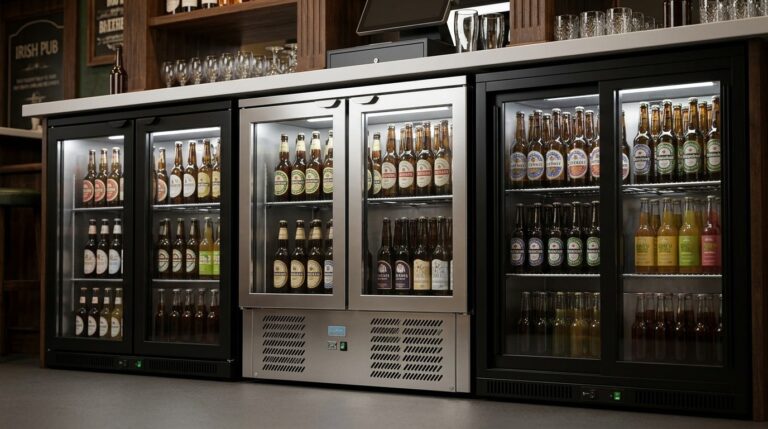
Unifrost BC20HSE vs BC20HBE vs BC20SBE Bottle Cooler Comparison
Discover the ideal Unifrost BC20HSE, BC20HBE, or BC20SBE bottle cooler for Irish bars. Compare models for your venue's needs.
Read guideView Unifrost bottle coolers at Caterboss
For current product options, pricing and availability, continue to Caterboss.