
Unifrost BC20HSE vs BC20HBE vs BC20SBE Bottle Cooler Comparison
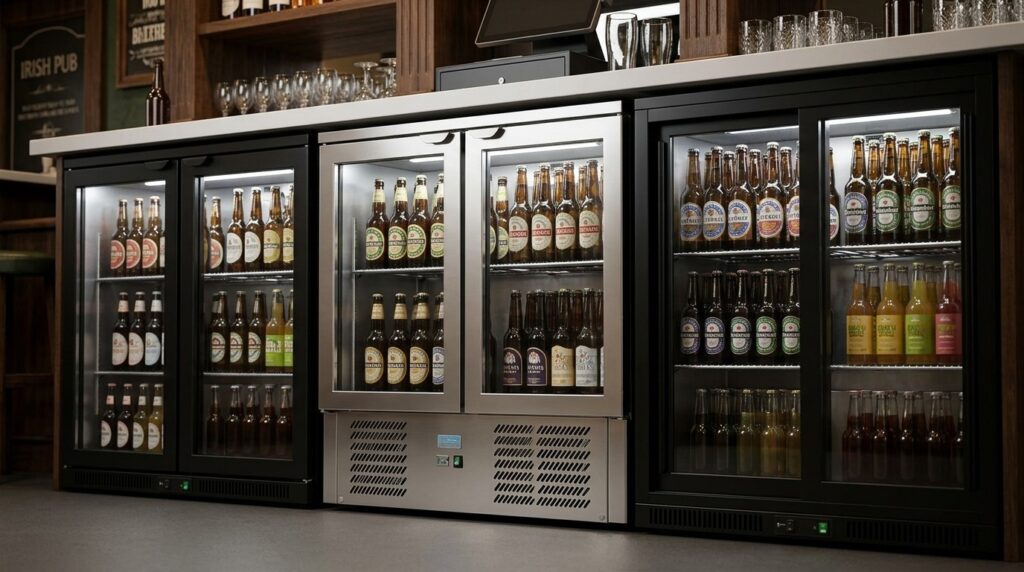
Discover the ideal Unifrost BC20HSE, BC20HBE, or BC20SBE bottle cooler for Irish bars. Compare models for your venue's needs.
Unifrost BC20HSE vs BC20HBE vs BC20SBE: Which BC20 Bottle Cooler Fits Your Bar?
If you are buying a 2-door Unifrost BC20 back-bar bottle cooler for an Irish pub, hotel bar, or restaurant, the choice usually comes down to two things that affect service every day: door style (hinged vs sliding) and finish (black vs stainless steel). The BC20HBE is the popular black hinged option, the BC20SBE gives you black sliding doors for tighter clearances, and the BC20HSE brings a stainless hinged look where presentation and durability matter.
This comparison walks you through the practical checks that decide which model earns its space behind the bar: how each door type works in different bar layouts, what you trade off in access speed and clearance, what the different finishes mean for cleaning and visible wear, and what to confirm before you order so you avoid installation headaches. You also get guidance on which venues each BC20 suits best and how Unifrost support and accessories fit into the decision.
Core Differences Between BC20 Models
The Unifrost BC20HSE, BC20HBE, and BC20SBE are all 2-door back-bar bottle coolers commonly specified for Irish bars. In practice, you are choosing for workflow and finish rather than “better cooling”.
BC20HBE / BC20HSE: hinged doors (black vs stainless exterior)
BC20SBE: black sliding doors
If you have the clearance, a hinged model is usually quicker for loading, cleaning and stock rotation. If the back-bar run is tight, sliding doors can make service smoother by avoiding door swing into staff.
Door type: hinged (BC20HBE/BC20HSE) vs sliding (BC20SBE)
Hinged doors are the simpler option when you need full access to a section at once. That matters for:
restocking between bursts of trade
cleaning shelves properly
doing a quick stock count without working around a partly-open door
They also suit bars where staff are repeatedly pulling multiple bottles, because you get a wider opening and fewer “shuffle the door, grab, shuffle again” movements.
Sliding doors suit tight installs where a door swing becomes a daily annoyance, for example:
narrow bar runs where staff are passing behind each other
island bars with constant cross-traffic
spots where a hinged door would regularly clip knees, tills, or glasswash areas
The trade-off is access. With sliding doors you are always working through a narrower opening, which can slow restocking and make awkward bottle shapes or bulky mixers more fiddly to load.
Exterior finish: black (BC20HBE/BC20SBE) vs stainless (BC20HSE)
Finish is mostly about how the unit wears in your bar, and how it looks beside other equipment.
Black exteriors tend to disappear into a traditional back-bar and keep the focus on the illuminated product inside. They also hide minor day-to-day scuffs better than brushed metal, which helps in high-contact service areas.
Stainless usually suits more open or design-led bars, hotel lounges, and food-led venues where the back-bar is part of the overall fit-out. It can also be the practical choice when you are lining up with other stainless undercounter equipment and want a consistent look.
Cleaning is different rather than better or worse:
black can show fingerprints and sticky splash marks under bright lighting
stainless can show directional scratching if staff go at it with the wrong pad
A simple wipe-down routine and the right cloths save a lot of “why does it always look marked?” frustration.
What these differences mean in real service
Door style is a layout decision. Sliding doors reduce collisions in tight spaces. Hinged doors often feel faster when you are grabbing and reloading at speed.
Finish is a wear-and-appearance decision. Stainless can look sharper in a modern fit-out; black is often more forgiving in a busy wet-led bar.
Either way, day-to-day performance still comes down to basics that get missed under pressure: don’t block airflow with overstocking, keep door seals clean, and don’t expect any back-bar cooler to pull warm deliveries down instantly during a busy summer service.
Quick decision guide for Irish bars
Choose BC20SBE (sliding, black) if swing space is tight or staff traffic behind the bar is constant.
Choose BC20HBE (hinged, black) if you have clearance and want straightforward access for restocking, rotation and quick grabs.
Choose BC20HSE (hinged, stainless) if the unit is customer-facing or you want it to match other stainless equipment, while keeping the practical benefits of hinged doors.
Performance in Different Bar Layouts
The right BC20 model depends less on headline cooling and more on how your back-bar actually runs: how tight the working space is, how often the doors are opened during a rush, and how much wear the unit takes from knocks, spillages and cleaning chemicals.
From a food safety point of view, the aim is simple: stable chilling you can check and record as part of your routine. The FSAI’s HACCP guidance is clear that temperature control and monitoring sit at the centre of safe food operations. In day-to-day bar service, the “best” choice is usually the one that suits door clearance, staff flow, and stays presentable after a year or two of busy trade.
Hinged (BC20HBE, BC20HSE) vs sliding (BC20SBE) in tight back-bars
If your staff channel is narrow, start with door clearance, not shelf layout.
Hinged doors (BC20HBE and BC20HSE) are straightforward for loading and stock rotation because you can open the full door and work the whole bay quickly. The trade-off is the swing space. In a tight run behind the bar, hinged doors can catch a knee, clash with a colleague passing, or meet a trolley at the wrong moment.
Sliding doors (BC20SBE) suit bars where a door swing would block the walkway, foul a till station, or interrupt the “grab, pour, back to service” rhythm at busy times. The compromise is access. You are always working through a smaller opening, which can slow down facing up and make deep cleaning a bit more awkward.
Island bars, corners, and two staff sharing the same well
In island and corner layouts where two people regularly work shoulder-to-shoulder, hinged doors tend to create small but frequent pinch points because the person opening the door temporarily takes over the space in front of it. Sliding doors reduce that stop-start effect and usually feel calmer in high-traffic wells, especially when one person is on draught while the other is building drinks.
If your bar is a straight line with a clear service corridor, hinged doors can still be the more efficient option. You can open once, restock a full section, and move on. That matters on match days, weddings and function work where you are refilling between surges.
Finish choice: black (BC20HBE, BC20SBE) vs stainless (BC20HSE) under bar wear and cleaning
Black units are popular behind the bar because they blend in under mirrors, optics and screens. In practice, black can show dust, drip marks and scuffs depending on lighting. It also tends to suffer if staff use the wrong cloths or strong chemicals.
Stainless (BC20HSE) often makes sense where the back-bar is in the customer’s sightline, such as hotel bars, food-led pubs, or open counter designs. It matches other commercial equipment, but it will show fingerprints and fine scratching if cleaning is rushed. If you already run colour-coded cloths and non-abrasive cleaners, stainless is easy to keep tidy. If cleaning is “when we get a minute”, black is usually more forgiving.
Picking the right BC20 for common Irish setups
Tight back-bar with a narrow staff walkway: BC20SBE is often the safer call because you avoid swinging doors into people.
Busy pub main bar where quick restocking matters: BC20HBE is often the simplest day-to-day, with full access for loading and facing up.
Hotel bar, function bar, or anywhere the back-bar is on show: BC20HSE can suit visually, as long as the stainless cleaning routine is realistic.
High-footfall or higher-risk areas (late bars, lobby bars): choose the model that suits your after-hours stock control, and position it so customers cannot easily lean in behind the counter.
Workflow details that matter more than you expect
Door style affects more than access. It changes how long doors stay open during service, how quickly you can do a refill, and whether bottles stay organised by brand, size and date rotation, or end up as “dump and hunt” in the middle of a rush.
Whatever model you choose, treat it as working refrigeration, not furniture. Allow sensible ventilation space, do not box it in under a counter without planning airflow, and load with air gaps so the unit can recover after repeated openings on a busy Friday night. Get the layout right first, then you can make a clearer call on the ownership basics: cleaning effort, day-to-day reliability, and whether service access will be practical in your bar.
Day-to-Day Operational Considerations
Day-to-day performance on the BC20HSE, BC20HBE and BC20SBE is less about headline specs and more about how the unit is used in service, cleaned, and allowed to ventilate. In Irish bars, the basics line up with HACCP expectations: keep equipment clean, maintained and monitored, as set out in the FSAI’s HACCP guidance. What counts as “best” depends on your workflow. Sliding doors help where space is tight. Hinged doors can be quicker for restocking. Finish choice affects how much time staff spend keeping it presentable.
Hinged vs sliding doors: speed, access and wear
In a busy pub, door choice is mainly a layout and staff-effort decision.
With the hinged BC20HBE (black) and BC20HSE (stainless), you get wider access for loading crates, rotating stock, and picking mixed products quickly. The trade-off is door-swing clearance. If the cooler is tight behind a till point, beside a glasswasher pass, or near a busy service lane, staff often end up “half-opening” the door. That increases warm air ingress and tends to shorten the life of hinges and gaskets.
With the sliding BC20SBE (black), you reduce collisions with staff, stools and bar returns, and it suits tighter back-bar runs. The trade-off is behaviour and upkeep. Sliding doors rely on the tracks being kept clean and the doors being fully closed every time. They can also feel slower at peak when you are reaching past one panel to access stock on the far side.
Cleaning and cosmetics: black vs stainless in real bar conditions
Finish affects labour as much as looks.
Black (BC20HBE and BC20SBE) usually hides everyday fingerprints better in low light, but it can show scratches and chalky residue if staff use strong chemicals or abrasive pads. Stainless (BC20HSE) shows fingerprints and smears faster under back-bar lighting, but it generally comes up well with frequent wipe-downs and non-abrasive cleaning.
If you have high staff turnover, the easiest win is to standardise what gets used on doors and handles, and keep heavier chemicals for floors and drains. It also supports food safety control: overspray around handles and seals is a common cause of hardened gaskets and sticky doors. The FSAI’s food business guidance is clear on having cleaning routines that are controlled and repeatable.
Energy efficiency: what changes your bill more than the finish or door style
If you are comparing BC20 variants with broadly similar core performance, running cost is usually driven more by placement and habits than by whether it is hinged black, hinged stainless, or sliding black.
Ambient heat and airflow matter behind bars, especially beside glasswashers, coffee machines, and under-counter hot water. Treat ventilation and heat management as part of energy control. SEAI consistently points to heating, cooling and controls as key levers for reducing electricity use in SMEs, including in its energy advice for small businesses.
The practical takeaway: a BC20 with breathing room will generally cost less to run than the same unit squeezed into a dead-air pocket.
Keep the condenser area free of dust and packaging.
Do not block grilles with bar mats or stock.
Leave sensible ventilation space.
Avoid propping doors open during restocking.
Set a realistic operating temperature for bottled drinks, not “as cold as possible”.
Reliability and maintenance signals staff should not ignore
Most back-bar cooler call-outs start as small issues that get ignored during service until the unit struggles to recover.
Train staff to flag changes early: new compressor noise, doors not closing cleanly, warm spots on shelves, more condensation than normal, or ice building up where it did not before. Before you assume the unit is failing, check the basics that typically cause those symptoms in a bar: airflow, loading gaps, door seals, and whether the condenser area is clogged.
Also watch for habits that quietly drive running hours: packing product hard against the back, blocking internal fan paths with multipacks, and leaving cardboard outers inside the cabinet. Those reduce airflow and make temperature control harder during warmer Irish spells.
These day-to-day choices matter even more once you map the cooler to your bar layout. The same BC20 can behave very differently in a tight back-bar run compared with an open, well-ventilated bar.
Suitable Venue Types for Each Model
Match the Unifrost BC20HSE, BC20HBE, and BC20SBE to your venue by starting with where the unit will sit and how it will be used during peak service. Then choose the door style (hinged or sliding) based on clearance and staff flow. Finally, pick the finish (black or stainless) based on visibility, cleaning reality, and how tough the bar environment is on equipment.
1. Decide where the cooler will sit and what job it’s doing
A BC20 under a busy back-bar in a pub lives a harder life than one in a hotel function room that only opens for events. Before you pick a model, be clear on the main purpose:
Fast service: staff grabbing bottles all night, frequent opening.
Customer-facing display: presentation matters, labels visible, lighting and fingerprints matter too.
Overflow or backup storage: fewer openings, steadier temperatures, more about capacity and access.
Common Irish venue patterns:
Main bar in a pub or sports bar: high open-close frequency, constant restocking, more bumps and knocks.
Hotel bar and lounge: customer-facing finish matters, noise and tidy install matter, cleaning standards are usually tighter.
Function room bar: long quiet spells, then short bursts of heavy service.
Restaurant bar or café drinks point: tight footprint, limited clearance, low tolerance for doors clashing with staff or equipment.
Once you know the duty pattern, the decision typically comes down to door type (hinged vs sliding) and finish (black vs stainless). Treat the BC20 variants as broadly comparable back-bar formats, and pick the option that fits how your team actually works.
2. Choose the finish based on cleaning, wear, and customer visibility
Choose BC20HSE (stainless, hinged) when the cooler is in a higher-visibility spot such as a hotel lounge, restaurant bar, or open counter where stainless matches surrounding equipment and generally ages predictably in commercial settings. The practical downside is that stainless can show fingerprints and smears if it is not wiped properly, especially under bar lighting.
Choose BC20HBE (black, hinged) or BC20SBE (black, sliding) when you want the unit to sit quietly into a dark back-bar or you are prioritising day-to-day scuffs over matching a stainless run. Black can look tidy, but in real service conditions you should assume splash marks, dust and handprints will show. The best finish is the one your team will keep presentable at 10pm on a Saturday.
3. Match door type to clearance, staff flow, and restocking
For many pubs with decent space behind the counter, hinged door models (BC20HBE or BC20HSE) tend to suit faster service. They give clear access and make shelf loading simpler during a busy restock. The key constraint is swing clearance. Hinged doors become a nuisance where:
the back-bar is tight,
staff traffic is constant (especially on island bars),
the door will clash with a till point, glass washer area, or prep space.
Where space behind the bar is tight, BC20SBE (sliding door) is often the safer operational choice because nothing swings into the staff lane. The trade-off is day-to-day discipline. Sliding doors can lead to “half-open browsing”, so good shelf organisation and a habit of closing doors properly matters more during peak.
On security: don’t assume any particular lock or after-hours setup is standard across all variants. If stock security is a concern, treat it as a separate checkpoint and confirm what is supplied, then build it into your closing routine.
4. Sanity-check the real-world pattern: peaks, warm stock, and summer conditions
Function rooms and event bars often run into the same problem: warm bottles get loaded shortly before service and the unit is expected to pull everything down quickly. If that is your reality, you will usually get better results by tightening the process than changing between BC20 variants:
Pre-chill stock where possible (even a few hours helps).
Avoid packing tight against the back and sides.
Leave air gaps so cold air can circulate and the unit can recover between openings.
In older pubs with tight counters and limited ventilation, the practical win is choosing the model that physically fits and then installing it so it can breathe. Any bottle cooler will struggle if it is boxed in, loaded warm, and opened constantly by multiple staff on the same section.
Once the venue fit is clear, the choice becomes straightforward: pick the door style that avoids operational headaches in your bar layout, then choose the finish that suits how the unit will be seen and cleaned during trading.
Unifrost Support and Accessories
Choosing the right BC20 variant is not just about finish or door style. It changes what you will clean, adjust, and replace over the life of the bottle cooler. Irish operators are expected to have practical controls for safe food and beverage storage, including temperature monitoring and corrective action records, as set out in FSAI guidance on HACCP-based food safety management procedures. In day-to-day terms, the support question is less “does it cool?” and more “how quickly can I keep it trading when a seal tears, a hinge drops, or a sliding track starts sticking”.
Model choice affects the parts you will actually need
BC20HBE (black, hinged) and BC20HSE (stainless, hinged) typically share the same real-world wear points: hinges taking repeated hits during service, door gaskets getting damaged by stock and cleaning, and handles working loose over time.
BC20SBE (black, sliding) saves on door swing clearance, but it relies on sliding gear staying clean and properly aligned. That matters in busy bars, where spillages and sticky residue are routine and small issues quickly turn into doors dragging or not closing fully.
If you are planning spares, think in terms of the door system, not just the model code:
Hinged doors: alignment, closing pressure, and gasket seal are the usual culprits when temperatures start drifting.
Sliding doors: smooth travel and consistent closing matter most, because small gaps left overnight can quietly raise cabinet temperature.
Useful accessories in real Irish bar use (and why they matter)
Most bars do not need extras for the sake of it. The useful bits are the ones that prevent waste, keep the cooler looking right in customer view, and reduce call-outs.
Extra shelves or alternative shelf layouts: useful when your stock mix changes between 330 ml, 500 ml, mixers, and wine splits. Good shelf setup also helps avoid staff “making it fit” by blocking airflow.
Replacement door gaskets: often the quickest way to improve sealing again, reduce compressor run time, and get better pull-down after loading.
Locks and keys: worth confirming at order stage if theft risk is a concern, or if a function room bar sits closed for days at a time.
Internal lighting components: not glamorous, but poor lighting makes stock harder to spot, slows service, and makes a cabinet look half-empty even when it is not.
Sliding door track or guide components (BC20SBE): the difference between a door that closes cleanly and one that drags, slams, or sits slightly open.
If you are buying for a hotel bar or multi-site operation, it is often simpler to standardise on one door system across locations. You will hold fewer spares and staff learn one cleaning routine, which matters when teams move between outlets.
Support habits that prevent breakdowns (and reduce “it’s not cold” complaints)
With any BC20, the fastest wins are procedural:
Build a basic temperature check into opening or cellar routines. Act on drift early rather than waiting for a full failure.
Do not overload or block airflow. Pull-down relies on air movement around stock, not just “more cooling”.
Be realistic about warm deliveries. Ramming warm bottles into a packed cabinet and expecting instant serving temperature is a reliable way to create service frustration and compressor strain.
Cleaning is also finish-dependent. Stainless (BC20HSE) is practical for hygiene, but it shows fingerprints and swirl marks if the wrong cloths or chemicals are used. Black (BC20HBE/BC20SBE) hides fingerprints better, but scratches can stand out under bar lighting. Agree one cleaning method with staff and keep it consistent.
Where Unifrost support fits into the wider setup
A BC20 is often a hard-working piece of the bar, not the whole plan. If you keep fighting space, stock mix, or service speed, the better fix can be stepping up within the Unifrost bottle cooler range, or splitting the job between a customer-facing bottle cooler and a back-of-house storage fridge. That way the bar unit stays focused on display and fast access, rather than being used as bulk storage.
This becomes clearer once you map how the cooler will live in your layout, especially in tight back-bar runs, island bars, and function rooms where door clearance and footfall change the daily reality.
Frequently asked questions about Unifrost BC20 bottle coolers
What is the capacity of the BC20 models?
Capacity is typically quoted as a bottle count, and it varies depending on what you stock and how you merchandise it (330ml longnecks vs 500ml craft bottles vs mixers), plus shelf spacing and whether you display front-facing.
For an accurate number for your venue, match the spec sheet capacity to your main bottle format, then allow a real-world buffer for airflow and fast service. As a rule, you will get higher usable capacity when you avoid overpacking and keep a small gap at the back and above stock for circulation.
How energy efficient are the BC20 bottle coolers?
Across the BC20HSE, BC20HBE and BC20SBE, third-party listings consistently position them as energy-efficient “eco” style back-bar coolers, with broadly similar core performance between variants.
In practice, your running cost is usually driven less by the finish or door style and more by how you operate it:
Keep the condenser area clean (dust build-up forces the compressor to run longer).
Don’t load warm deliveries straight into a packed cabinet. Stagger loading or pre-chill where possible.
Minimise door-open time at peak. If the door is opened constantly, set shelves for quick access so staff are not hunting for stock.
Avoid heat sources beside or behind the unit (glasswashers, hot lines, tight voids).
If you need a model-to-model energy comparison for compliance or budgeting, use the specific energy label or kWh figure on the model listing/spec sheet for the exact variant you are buying.
Can BC20 coolers fit under a bar counter?
Usually, yes. The BC20 range is designed around a back-bar / undercounter footprint, but you should verify fit before ordering because the details that cause problems are rarely the “headline” width:
Measure the opening height and depth and confirm the unit’s external dimensions for the exact variant.
Allow ventilation space so it can breathe. A tight, sealed cavity can cause poor pull-down and higher energy use.
Plan for access: can you get it through doors, around corners, and behind the bar?
Choose the right door style for your bar:
Sliding (BC20SBE) is best where aisle space is tight and you cannot tolerate door swing.
Hinged (BC20HBE/BC20HSE) can be quicker to load and can give wider access per door, but you need clearance for the swing.
If you are building the unit into joinery, treat it as freestanding with ventilation unless the manufacturer’s installation guidance explicitly permits built-in installation.
Next step: choose the right BC20 layout for your bar
If you are at the shortlisting stage, decide first on door type (sliding for tight service gaps, hinged for fastest access and easier loading) and finish (black for a darker back-bar look, stainless for brighter, more hard-wearing presentation).
To check current availability and compare equivalent two-door options side by side, browse Caterboss’s double door beer fridges category.
Related Unifrost guides
Compare models, maintenance advice and support information related to this topic.
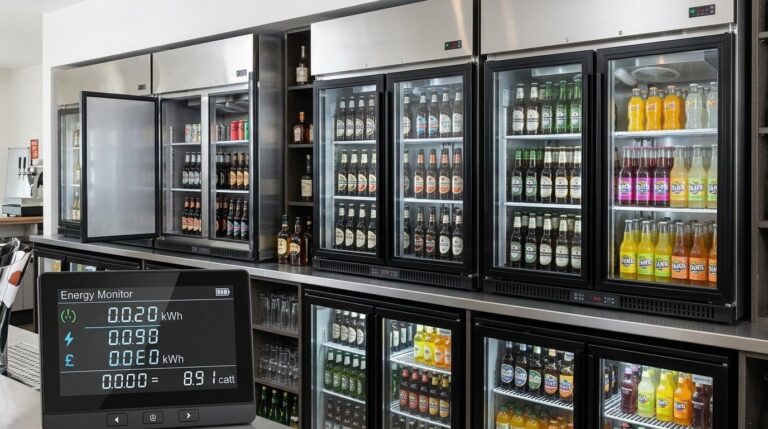
Unifrost BC-Series Bottle Cooler Energy Use and Running Cost Guide for Irish Bars
Explore energy use and cost of Unifrost BC bottle coolers for Irish bars. Learn strategies to optimize running costs and energy efficiency.
Read guideView Unifrost bottle coolers at Caterboss
For current product options, pricing and availability, continue to Caterboss.